4 Tiny Kitchen Living Organization Lessons From My Tiny Kitchen Reset
Living with a tiny kitchen can feel like solving a puzzle every single day. When I first moved into a small apartment with a kitchen barely large enough for one person to stand in comfortably, I quickly realized that traditional kitchen organization advice simply didn’t apply. There was no extra counter space, cabinets were limited, and even basic cooking felt chaotic.
After months of frustration, I finally decided to completely reset my kitchen — removing everything, rethinking storage, and rebuilding the space with intention. What started as a weekend cleanup turned into a transformative experience that changed how I cook, clean, and organize.
This article shares four powerful organization lessons I learned during my tiny kitchen reset. These lessons go beyond simple decluttering tips. They are practical systems that make a tiny kitchen functional, efficient, and surprisingly enjoyable.
Why Tiny Kitchen Organization Matters
A tiny kitchen forces you to rethink how you interact with your space. Every drawer, shelf, and inch of counter space matters.
Here are some common problems people face in small kitchens:
| Problem | Result |
|---|---|
| Too many kitchen gadgets | Cabinets become cluttered |
| Limited counter space | Cooking becomes stressful |
| Poor storage planning | Items get lost or unused |
| No organization system | Cleaning takes longer |
When organization improves, everything else improves too — cooking becomes faster, cleaning becomes easier, and the space feels larger than it actually is.
My Tiny Kitchen Reset Process
Before sharing the lessons, here’s a quick overview of what my reset looked like.
Step-by-Step Reset Method
| Step | Action Taken | Result |
|---|---|---|
| Step 1 | Removed everything from cabinets | Saw how much clutter existed |
| Step 2 | Sorted items into categories | Found duplicates and unused tools |
| Step 3 | Donated unused kitchen gadgets | Freed up space |
| Step 4 | Created zones for cooking tasks | Improved workflow |
| Step 5 | Installed simple storage tools | Maximized vertical space |
This reset helped me realize that tiny kitchens work best when every item has a clear purpose and place.
Lesson 1: The “One Zone, One Purpose” Rule
The biggest breakthrough in my tiny kitchen reset was creating dedicated zones.
In a larger kitchen, people naturally have multiple counters and cabinets for different tasks. But in a tiny kitchen, tasks overlap and create chaos.
So I introduced a rule:
Every area has one purpose.
My Kitchen Zones
| Zone | Purpose | Stored Items |
|---|---|---|
| Prep Zone | Food preparation | Cutting boards, knives |
| Cooking Zone | Stove and cooking | Pans, spatulas |
| Cleaning Zone | Sink area | Dish soap, scrubbers |
| Storage Zone | Pantry items | Dry foods, spices |
This system eliminated the constant search for tools.
Why Zones Work
- You always know where items belong
- Cooking becomes faster
- Cleaning is simpler
- Counters stay clear
Instead of random storage, every item supports a specific task.
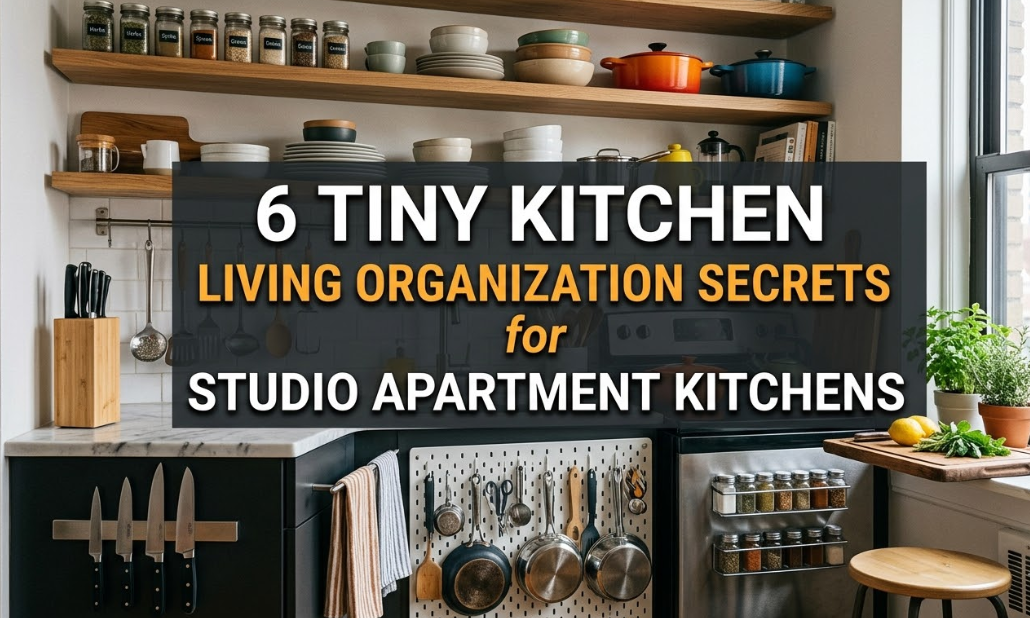
Lesson 2: Vertical Space Is the Hidden Storage Goldmine
Most tiny kitchens suffer from one big problem: unused vertical space.
When I reset my kitchen, I realized that my cabinets only used half their available height.
So I started thinking vertically.
Vertical Storage Ideas That Changed My Kitchen
| Storage Solution | What It Stores | Benefit |
|---|---|---|
| Wall hooks | Pots, utensils | Frees cabinet space |
| Magnetic knife strip | Knives | Safe and accessible |
| Stackable shelves | Plates and bowls | Doubles cabinet capacity |
| Over-door racks | Pantry items | Uses unused doors |
| Hanging baskets | Fruits and vegetables | Keeps counters clear |
Example Storage Layout
Wall Area
---------
Hooks → Pans
Magnetic Strip → KnivesCabinet Interior
----------------
Top Shelf → Rarely used appliances
Middle Shelf → Plates and bowls
Bottom Shelf → Daily cookware
Vertical storage effectively doubles usable space without expanding the kitchen.
Lesson 3: Fewer Tools, Better Tools
One surprising discovery during my reset was how many unnecessary kitchen tools I owned.
Some gadgets had only been used once.
Tiny kitchens require multi-purpose tools instead of single-purpose gadgets.
Tools I Removed
| Gadget | Reason for Removal |
|---|---|
| Avocado slicer | Knife works better |
| Egg separator | Shell method works fine |
| Large blender | Too bulky for daily use |
| Single-purpose choppers | Knife already handles it |
Tools That Stayed
| Tool | Why It Works |
|---|---|
| Chef’s knife | Handles most cutting tasks |
| Cast iron skillet | Oven, stove, searing |
| Silicone spatula | Cooking and baking |
| Medium saucepan | Multiple uses |
Minimal Kitchen Tool Chart
| Tool Category | Ideal Quantity |
|---|---|
| Knives | 2–3 |
| Pots/Pans | 3–4 |
| Mixing bowls | 2 |
| Cooking utensils | 5–6 |
Reducing tools made cabinets easier to manage and improved workflow.
Lesson 4: Clear Counters Create a Bigger Kitchen
One of the biggest visual tricks in tiny kitchens is keeping counters clear.
When too many items live on counters, the kitchen feels smaller than it actually is.
Before my reset, my counters looked like this:
Coffee machine
Knife block
Toaster
Oil bottles
Utensil jar
Cutting board
After reorganizing, only two items stayed.
Countertop Rule
Keep only daily-use appliances visible.
Counter Declutter Comparison
| Before Reset | After Reset |
|---|---|
| 6 items | 2 items |
| Crowded cooking area | Open workspace |
| Hard to clean | Quick wipe-down |
| Visually small kitchen | Larger appearance |
My Final Counter Setup
| Item | Reason |
|---|---|
| Coffee maker | Used daily |
| Wooden cutting board | Prep station |
Everything else went into cabinets or wall storage.
The Tiny Kitchen Efficiency Formula
During the reset, I noticed a pattern that improved organization dramatically.
Kitchen Efficiency Formula
| Factor | Impact |
|---|---|
| Less clutter | Faster cooking |
| Clear zones | Better workflow |
| Vertical storage | More capacity |
| Minimal tools | Easier cleaning |
When these factors combine, even the smallest kitchen becomes functional.
Tiny Kitchen Storage Layout Example
Below is a sample storage map inspired by my own kitchen reset.
| Area | Storage Solution | Purpose |
|---|---|---|
| Wall above stove | Hanging rail | Cooking utensils |
| Cabinet top shelf | Baskets | Rare appliances |
| Cabinet middle | Stackable racks | Plates |
| Sink cabinet | Pull-out bins | Cleaning supplies |
| Fridge side | Magnetic rack | Spices |
Weekly Tiny Kitchen Maintenance Routine
Organization doesn’t last forever without maintenance.
Here’s the quick routine that keeps my kitchen functional.
| Task | Frequency | Time Required |
|---|---|---|
| Counter reset | Daily | 2 minutes |
| Pantry check | Weekly | 10 minutes |
| Fridge clean | Weekly | 10 minutes |
| Cabinet review | Monthly | 20 minutes |
Even small maintenance habits prevent clutter from returning.
Unexpected Benefits of My Tiny Kitchen Reset
The biggest surprise was how much my relationship with cooking improved.
Benefits I Experienced
| Benefit | Explanation |
|---|---|
| Faster meal prep | Tools always accessible |
| Less stress | No clutter |
| Easier cleaning | Clear surfaces |
| More creativity | Organized space |
A tiny kitchen doesn’t have to feel restrictive. In fact, it can become incredibly efficient when organized intentionally.
Tiny Kitchen Reset Checklist
If you want to try your own reset, use this checklist.
Tiny Kitchen Reset Plan
| Step | Action |
|---|---|
| 1 | Empty every cabinet |
| 2 | Sort items by category |
| 3 | Remove duplicates |
| 4 | Create cooking zones |
| 5 | Install vertical storage |
| 6 | Reduce countertop clutter |
| 7 | Assign a place for everything |
This simple process can transform even the smallest kitchen.
Final Thoughts
Resetting my tiny kitchen completely changed how I use the space. What once felt cramped and frustrating is now efficient and calm.
The four lessons that made the biggest difference were:
- Create clear kitchen zones
- Use vertical storage
- Reduce unnecessary tools
- Keep counters clear
Tiny kitchens don’t require bigger cabinets or expensive renovations. Often, they simply need better systems and smarter organization.
Once every item has a place and every space has a purpose, even the smallest kitchen can feel functional, comfortable, and surprisingly spacious.
Frequently Asked Questions (FAQs)
1. How do I organize a very small kitchen with limited cabinets?
Start by decluttering unused tools and creating dedicated zones for cooking tasks. Use vertical storage like hooks, magnetic strips, and stackable shelves to maximize cabinet capacity.
2. What are the best storage solutions for tiny kitchens?
Some of the most effective options include wall hooks, over-door organizers, magnetic knife strips, stackable cabinet shelves, and hanging baskets for fruits and vegetables.
3. How many kitchen tools should a tiny kitchen have?
A functional tiny kitchen typically needs only 3–4 pots or pans, 2–3 knives, a few utensils, and basic mixing bowls. Multi-purpose tools are better than single-use gadgets.
4. How do I keep my tiny kitchen from becoming cluttered again?
Follow a weekly maintenance routine. Reset counters daily, review pantry items weekly, and reassess kitchen tools every few months to remove items you no longer use.
5. Are open shelves good for tiny kitchens?
Yes, open shelves can make a kitchen feel larger and provide easy access to everyday items. However, they work best when items are neatly organized and not overcrowded.
6. What is the biggest mistake people make in small kitchens?
The most common mistake is keeping too many kitchen gadgets and appliances. Excess tools create clutter and reduce usable space, making cooking more difficult.