7 Proven Tiny Kitchen Living Storage Layouts That Maximize Every Inch
Living with a small kitchen can feel like trying to cook inside a closet. Limited cabinet space, narrow counters, and overcrowded drawers can quickly turn everyday cooking into a frustrating experience. Yet millions of people—especially those living in studio apartments, tiny homes, or compact city apartments—face this challenge daily.
But a small kitchen does not have to mean limited functionality. In fact, many tiny kitchens can become more efficient than large kitchens when designed properly. The secret lies in smart layouts, intentional storage placement, and space-maximizing strategies.
This guide explores 7 proven Tiny Kitchen Living storage layouts that help maximize every inch of space while keeping your kitchen functional, organized, and visually appealing. Each layout is based on practical design principles used by professional organizers, interior designers, and tiny home builders.
Whether you live in a studio apartment, micro-apartment, or small home kitchen, these layouts will help you transform your limited kitchen space into a highly efficient cooking environment.
Why Storage Layout Matters in Tiny Kitchens
Before diving into the layouts, it’s important to understand why layout design matters more than storage quantity.
In small kitchens, the challenge is not simply adding more cabinets. Instead, the key is optimizing how storage is arranged so that everything is accessible without wasting valuable space.
Key Tiny Kitchen Storage Principles
| Principle | Explanation | Example |
|---|---|---|
| Vertical Storage | Use wall height instead of floor space | Tall cabinets or shelves |
| Multi-Purpose Furniture | Items serving more than one function | Storage island + prep station |
| Zone Organization | Group items by cooking tasks | Baking tools in one zone |
| Visibility | Easy-to-see storage prevents clutter | Open shelving |
| Accessibility | Frequently used items within reach | Wall-mounted racks |
When these principles guide the layout, even the smallest kitchens can become surprisingly efficient.
Layout Efficiency Comparison
Below is a quick comparison of how different storage layouts perform in tiny kitchens.
| Layout Type | Best For | Storage Efficiency | Space Usage |
|---|---|---|---|
| Vertical Wall Storage | Ultra-small kitchens | Very High | Excellent |
| Galley Storage Layout | Narrow kitchens | High | Excellent |
| Corner Maximizer Layout | Square kitchens | High | Good |
| Open Shelf Layout | Studio apartments | Medium | Excellent |
| Rolling Storage Layout | Flexible kitchens | Medium | Very Good |
| Hidden Cabinet Layout | Minimalist kitchens | High | Good |
| Multi-Zone Layout | Serious home cooks | Very High | Excellent |
Now let’s explore these 7 proven layouts in detail.
1. Vertical Wall Storage Layout
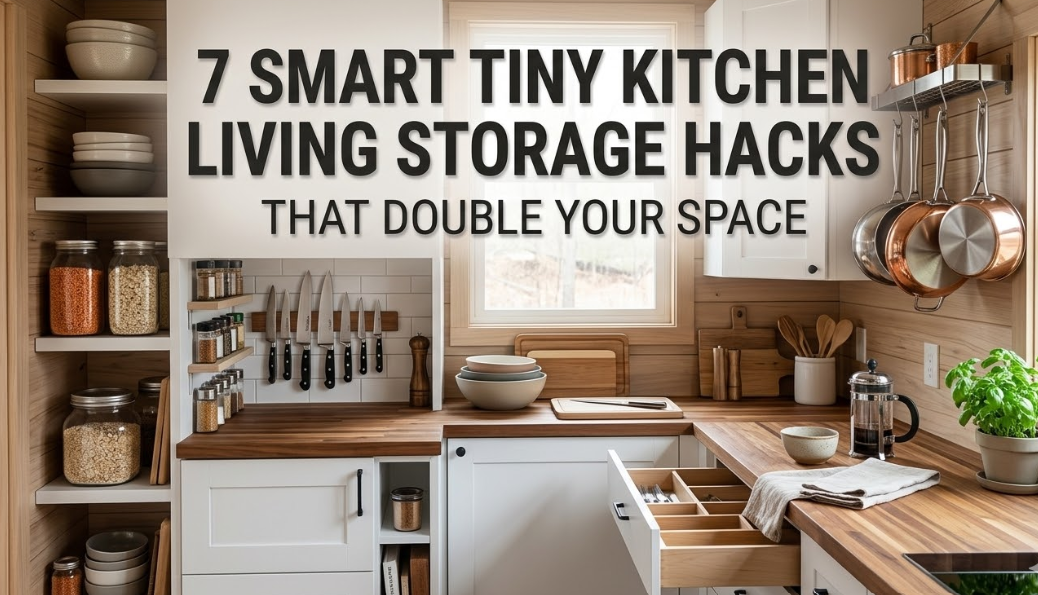
One of the most powerful ways to increase storage in a tiny kitchen is by using vertical space. Many kitchens waste valuable wall height above cabinets, refrigerators, and counters.
The vertical wall layout turns these empty areas into functional storage zones.
How It Works
Instead of relying only on lower cabinets, the vertical layout uses:
- Tall cabinets reaching the ceiling
- Hanging racks
- Wall-mounted rails
- Stackable shelves
Typical Vertical Storage Structure
| Height Zone | Storage Type | Best Items |
|---|---|---|
| Ceiling Level | Rare-use storage | Holiday cookware |
| Upper Wall | Cabinets or shelves | Pantry goods |
| Mid Wall | Hanging racks | Utensils |
| Counter Level | Everyday access | Spices |
Advantages
- Maximizes unused wall space
- Keeps counters clear
- Improves organization visibility
Real-Life Example
Many tiny apartments use ceiling-height cabinets combined with a ladder or step stool to create a pantry that stores months of supplies without occupying floor space.
Pro Tip
Install magnetic knife strips and rail systems on walls to free drawer space.
2. The Galley Storage Layout
The galley kitchen layout is common in small apartments. It features two parallel counters with a walkway between them.
While narrow, this layout can become extremely efficient with proper storage planning.
Key Storage Strategy
In a galley layout, one side should be optimized for food prep, while the other side focuses on storage and appliances.
Galley Storage Distribution
| Side | Primary Function | Storage Type |
|---|---|---|
| Left Wall | Cooking | Utensil drawers |
| Right Wall | Storage | Pantry cabinets |
| Upper Cabinets | Ingredients | Dry food |
| Lower Cabinets | Cookware | Pots & pans |
Why It Works
This layout minimizes movement while cooking. Everything stays within reach, which is ideal in tight spaces.
Storage Boost Tip
Add pull-out pantry drawers between appliances to create hidden storage.
3. Corner Maximizer Layout
Corners are one of the most underused areas in small kitchens. Traditional cabinets often create deep spaces where items get lost.
The corner maximizer layout transforms these awkward spaces into efficient storage.
Popular Corner Storage Solutions
| Solution | Description | Best Use |
|---|---|---|
| Lazy Susan | Rotating shelves | Spices |
| Pull-Out Corner Shelves | Sliding shelves | Pots |
| Diagonal Cabinets | Angled cabinet doors | Pantry items |
| Magic Corner System | Advanced pull-out racks | Large cookware |
Benefits
- Uses dead corner space
- Improves accessibility
- Increases storage capacity
Example Setup
A tiny kitchen with two corner cabinets can add 30–40% more usable storage with pull-out systems.
4. Open Shelf Storage Layout
Many tiny kitchens benefit from open shelving instead of bulky cabinets.
Open shelves create visual space and improve accessibility.
Best Items for Open Shelving
| Shelf Level | Suggested Storage |
|---|---|
| Top Shelf | Decorative bowls |
| Middle Shelf | Plates & glasses |
| Lower Shelf | Everyday items |
Advantages
- Makes kitchen appear larger
- Easy access to daily items
- Encourages minimalism
Potential Drawback
Open shelves require consistent organization to avoid visual clutter.
Design Tip
Use uniform containers and jars to keep the shelves visually clean.
5. Rolling Storage Layout
In extremely tight kitchens, fixed storage can limit flexibility. Rolling storage introduces movable units that adapt to your needs.
Examples of Rolling Storage
| Item | Function |
|---|---|
| Rolling kitchen cart | Prep + storage |
| Rolling pantry | Narrow food storage |
| Under-counter cart | Hidden appliance storage |
Advantages
- Mobile workspace
- Flexible storage
- Perfect for rental apartments
Practical Use
A slim rolling pantry can fit between the refrigerator and wall, adding up to 10 extra shelves in only a few inches of space.
6. Hidden Cabinet Layout
Hidden storage helps maintain a clean and minimalist kitchen appearance.
In this layout, many storage areas are disguised within panels or multi-purpose furniture.
Hidden Storage Ideas
| Hidden Feature | Storage Inside |
|---|---|
| Toe-kick drawers | Flat tools |
| Island cabinets | Appliances |
| Fold-out counters | Cutting boards |
| Bench seating | Pantry storage |
Benefits
- Reduces visible clutter
- Maximizes overlooked spaces
- Maintains sleek design
Hidden storage is especially popular in tiny homes and micro apartments where every inch must serve a purpose.
7. Multi-Zone Storage Layout
For people who cook often, the best approach is creating activity zones.
Each zone stores tools related to a specific kitchen task.
Common Kitchen Zones
| Zone | Stored Items |
|---|---|
| Prep Zone | Knives, cutting boards |
| Cooking Zone | Pots, pans |
| Baking Zone | Measuring tools |
| Cleaning Zone | Dish soap, towels |
Advantages
- Faster cooking workflow
- Less searching for tools
- Improved organization
Example Workflow
A multi-zone layout ensures that when you begin cooking, everything needed is within arm’s reach.
Storage Capacity Chart
Below is an estimate of how much storage improvement each layout can provide.
| Layout | Estimated Storage Increase |
|---|---|
| Vertical Wall Layout | 40–60% |
| Galley Storage Layout | 30–50% |
| Corner Maximizer | 20–40% |
| Open Shelf Layout | 20–30% |
| Rolling Storage Layout | 15–35% |
| Hidden Cabinet Layout | 25–45% |
| Multi-Zone Layout | 35–55% |
Combining several layouts can often double the usable storage in a small kitchen.
Smart Accessories That Improve Tiny Kitchen Layouts
Storage accessories can dramatically enhance any layout.
Essential Tiny Kitchen Tools
| Tool | Purpose |
|---|---|
| Stackable containers | Vertical pantry storage |
| Over-cabinet hooks | Extra hanging space |
| Magnetic spice jars | Wall storage |
| Drawer organizers | Reduce clutter |
| Expandable shelves | Double cabinet capacity |
Even a few of these upgrades can significantly improve storage efficiency.
Tiny Kitchen Organization Routine
Maintaining an organized tiny kitchen requires a simple routine.
Weekly Kitchen Reset Checklist
| Task | Frequency |
|---|---|
| Declutter counters | Weekly |
| Reorganize drawers | Monthly |
| Remove unused items | Quarterly |
| Pantry check | Monthly |
Regular maintenance ensures that storage layouts continue working efficiently.
Final Thoughts
Living with a small kitchen does not mean sacrificing comfort or efficiency. In fact, many tiny kitchens become better organized than larger ones when designed with thoughtful layouts.
By implementing these 7 proven Tiny Kitchen Living storage layouts, you can transform even the smallest cooking space into a practical, organized, and enjoyable kitchen.
The most successful tiny kitchens combine several strategies—vertical storage, corner solutions, movable units, and activity zones—to ensure every inch is used wisely.
With the right layout and smart storage tools, your tiny kitchen can become a space where everything has a place and cooking feels effortless.
Frequently Asked Questions
1. What is the best layout for extremely small kitchens?
Vertical storage layouts are usually the best for extremely small kitchens because they use wall height instead of limited floor space.
2. How can I add storage without remodeling my kitchen?
You can add rolling carts, magnetic racks, over-door organizers, and stackable shelves without making permanent changes.
3. Are open shelves better than cabinets in small kitchens?
Open shelves can make a kitchen feel larger and provide easy access, but they require careful organization to prevent clutter.
4. How do I organize a tiny kitchen pantry?
Use clear containers, stackable bins, and vertical shelf dividers to maximize pantry storage.
5. What is the biggest mistake in small kitchen storage?
One of the biggest mistakes is ignoring vertical space. Many kitchens waste valuable storage by leaving wall areas unused.
6. How often should I declutter a tiny kitchen?
A monthly decluttering routine works best. Small kitchens fill up quickly, so regular organization keeps them functional.