Meta Description: Small kitchen living storage tips that really work — 11 creative, nearly free ways to make the most out of every square inch in your small kitchen.
11 Tiny Kitchen Living Storage Tricks I Wish I’d Known Sooner
If you have a small apartment, or a studio, or if you just happen to have the size of kitchen that could fit in your closet, you probably know what I mean. There’s never enough counter space. The cabinets overflow. And somehow, however often you reorganize, it still seems like chaos.
The good news? A tiny kitchen needn’t feel confining or chaotic. With some tiny kitchen living storage hacks up your sleeve, you can utilize even the smallest space into something that works for you.
These are not complicated renovations. You won’t require a contractor or a large budget. These are practical tricks that anyone can do, and real people use every single day — and once you try them you’ll wonder how you lived your life before.
Let’s get into it.
Why Small Kitchen Storage Isn’t Such a Small Deal
Small kitchens are more common than you think. Many thousands of people live in studio apartments, tiny homes, or older houses where the kitchen was never configured with the kind of cooking we do now.
The problem isn’t just aesthetic. Poor storage makes cooking harder. It prolongs cleaning up. It induces stress every time you enter that room.
Home organization studies even reveal that a messy kitchen can elevate stress levels and encourage people to dine out more. That means poor storage doesn’t just affect your countertops — it can affect your health and your wallet, too.
The answer isn’t necessarily more space. Sometimes it’s simply better use of the space you already have.
Trick 1 — Use Your Walls to Go Vertical
Most everyone uses their cabinets and counters, and then they quit. What about all the stuff above your eyeline? Or the blank wall space next to your stove?
Walls are a huge asset in a small kitchen.
Here’s what you can do:
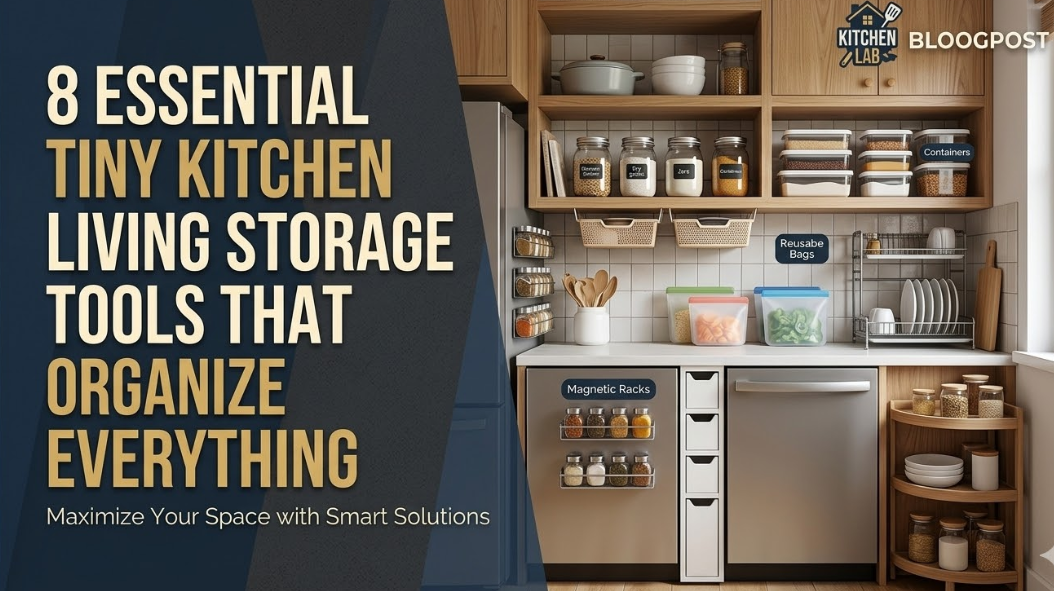
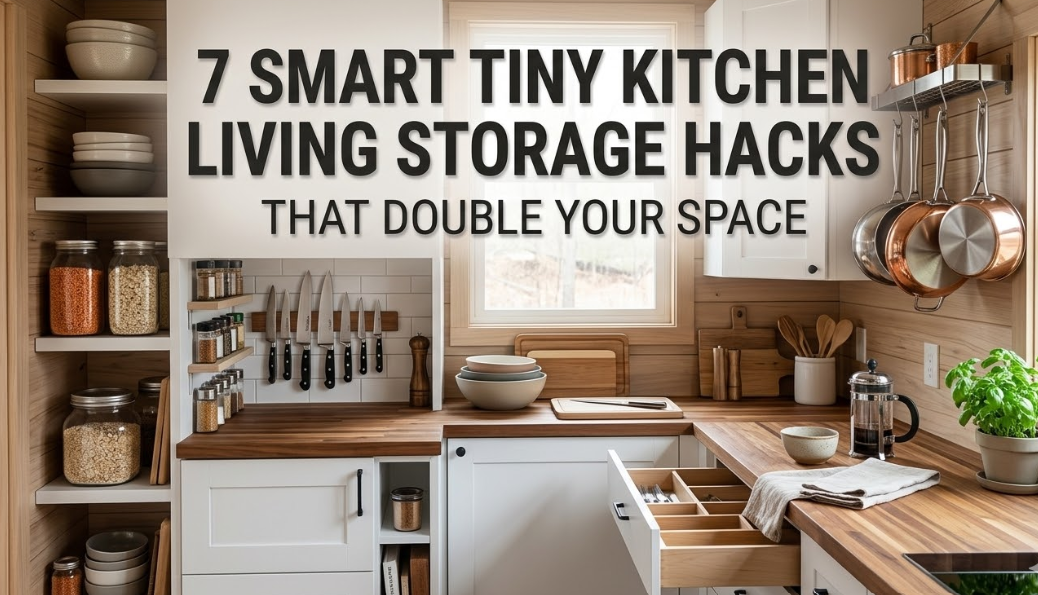
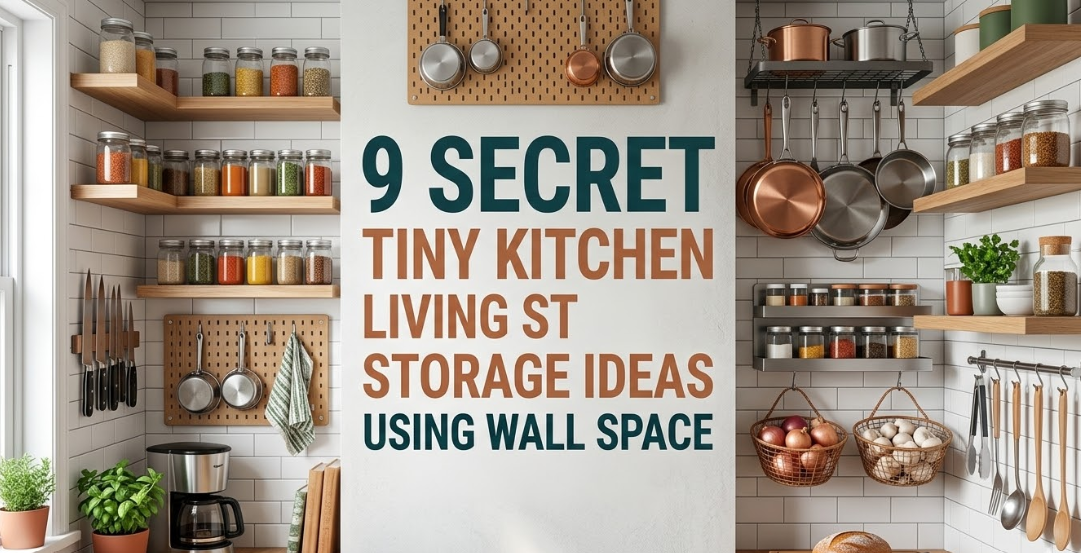
- Hang floating shelves over your counter for spices, oil, and appliances
- Hang pots, pans, and utensils on a pegboard mounted to one wall
- Replace a bulky knife block with magnetic knife strips
- Add hooks under your upper cabinets for mugs or small baskets
Going vertical opens up your counter in no time. A wall shelf can provide room equal to an entire cabinet drawer.
Pro tip: Go with matching containers on your wall shelves. It looks intentional and clean, not chaotic.
Trick 2 — Repurposing the Inside of Cabinet Doors
Open your kitchen cabinet. Then look at the inside of that door. What do you see? Almost nothing — just dead space.
Cabinet doors are one of the most underutilized storage spaces in a small kitchen.
You can add:
- Small adhesive hooks for measuring spoons or pot lids
- Slim over-door organizers for spice packets and foil rolls
- Wall-mounted racks for cutting boards or baking sheets
- A tiny whiteboard or chalkboard for making a grocery list
This trick costs almost nothing. You can find a simple over-the-door organizer at any home store for $10–$20. But the space it creates feels huge.
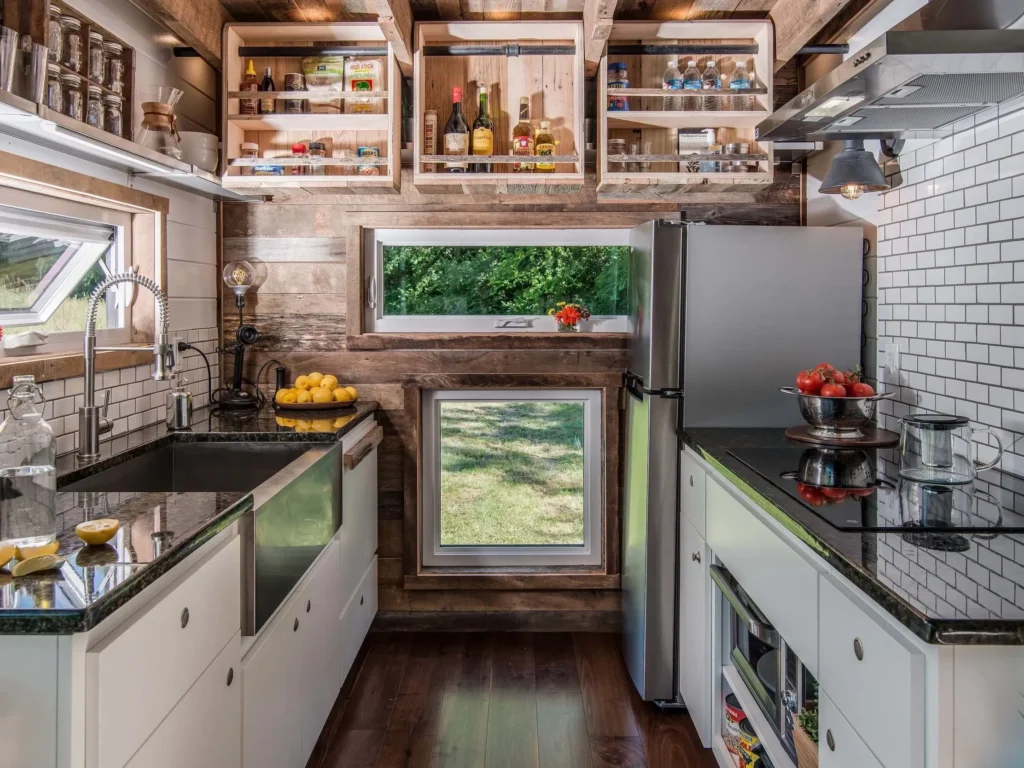
Trick 3 — Stack Everything You Can
Random fun fact: most kitchen items stack, but most people don’t stack them.
Pots nest inside each other. Bowls stack. Plates stack. Food containers stack. Cutting boards can stack up vertically in a rack.
Stackable Storage Ideas That Work
| Item | Stacking Solution |
|---|---|
| Pots and pans | Nested sets with removable handles |
| Food storage containers | Matched sets with interlocking lids |
| Plates and bowls | Regular stacks in cupboards |
| Canned food | Tiered shelf risers |
| Spices | Stackable spice racks or tiered organizers |
Investing in just a matching set of stackable food storage will alone open up an entire cabinet shelf. That may sound small, but it makes a big difference.
Trick 4 — Add a Rolling Cart or Kitchen Island
If you have even a few square feet of floor space, a rolling cart is transformative.
A small kitchen cart or island provides you with:
- Additional counter space when you need it
- Storage shelves underneath
- An area to store commonly used objects at your fingertips
- Flexibility — you can move it out of the way when not in use
Seek out carts with butcher block tops. They’re sturdy, they look great, and they provide you with a genuine workspace that most tiny kitchens sorely lack.
Some carts even have built-in wine racks, drawers, or towel bars — so one little piece of furniture can do the work of three or even four separate storage solutions.
Budget option: IKEA’s RÅSKOG cart is under $30 and is a great solution for keeping fruits, vegetables, or kitchen supplies organized.
Trick 5 — Reimagine Your Junk Drawer (Or Get Rid of It for Good)
Almost every kitchen has a junk drawer. You know the one. It’s packed with batteries, rubber bands, ancient takeout menus, mystery keys, and items you haven’t thought about in two years.
In a little kitchen, you simply have no room for a junk drawer.
Every millimeter of storage area must justify its existence. Here’s what to do instead:
- Empty the entire drawer
- Toss everything you haven’t used in 6 months
- Put things that belong in different rooms back where they go
- Use a small drawer organizer for the things that really do belong in the kitchen
Once you do this, you’ll often find that the junk drawer turns into a working utensil drawer or a tool drawer — providing useful storage space instead of a graveyard for random stuff.
Trick 6 — Mount Things Under Your Shelves and Cabinets
The area directly beneath your shelves and upper cabinets is sometimes overlooked. But it’s actually very useful.
You can mount:
- Paper towel holders below a cabinet (instead of wasting counter space)
- Small trays or baskets on the undersides of shelves
- A mounted can opener
- Hooks for mugs or small utensils
Under-shelf baskets are especially great. They attach to existing shelves without drilling and instantly double your shelf space. One shelf becomes two.
This is one of those tiny kitchen living storage tricks that feels too easy to make a difference — until you try it. Then you’ll be installing under-shelf baskets everywhere.
Trick 7 — Plan Your Fridge Space Smartly
The exterior of your fridge is magnetic. In other words, it’s storage space you’re probably not using.
Magnetic fridge-side organizers include:
- Spice racks
- Paper towel holders
- Small baskets for snacks or packets
- Magnetic knife strips
- Notepad holders and pen cups
This is perfect for the side of your fridge that faces the kitchen. Skip the counter spice rack and stick it to the fridge instead.
Inside the fridge, stackable bins and lazy Susans (spinning trays) can help you see everything and reach it easily. A lazy Susan in the back corner of your fridge ensures nothing gets lost and forgotten.
Quick Fridge Organization Chart
| Zone | What to Store There |
|---|---|
| Top shelf | Leftovers, drinks, ready-to-eat foods |
| Middle shelf | Dairy, eggs, deli meats |
| Bottom shelf | Raw meats (on a tray to avoid drips) |
| Crisper drawers | Fruits and vegetables (separate when possible) |
| Door shelves | Condiments, juices, butter |
| Fridge side (magnetic) | Spices, paper towels, small snacks |
Trick 8 — Make Use of Your Pantry Space (Or Create One If You Don’t Have It)
Not every tiny kitchen has a pantry. But that doesn’t mean you can’t have one.
If you have a pantry:
Use shelf risers, lazy Susans, and clear bins. Label everything. Keep what you use most at eye level. Move items you use less often to the top or bottom.
If you don’t have a pantry:
Create one. Let a tall, narrow cabinet or bookshelf in an adjacent room (like a hallway or dining area) serve as your pantry. Pantry-style cabinets, available at IKEA and many other stores for less than $100, work beautifully.
You can also use an over-the-door organizer on a nearby closet door for dry goods and snacks — just another easy tiny kitchen living storage hack that costs virtually nothing. For even more inspiration on making small spaces work harder, Tiny Kitchen Living is a great resource packed with practical ideas.
Signs Your Pantry Needs Reorganizing
- You can’t see what’s in the back
- Things fall out when you open the door
- You regularly buy duplicates of things you already have
- Expired food keeps showing up
If you saw yourself in that list, a pantry reorganization session will change your kitchen life.
Trick 9 — Downsize Your Appliances (and Store Them Wisely)
Large appliances devour small kitchens.
That giant stand mixer you break out once a year? It’s sitting on your counter all day, every day, occupying a quarter of your workspace. That big blender? Same problem.
Here’s the plain and simple truth about small kitchen appliances:
Keep on the counter: Only appliances you use 3–4 times a week or more. Coffee maker, toaster — maybe. That’s probably it.
Store in a cupboard: Appliances you use weekly or monthly. Get them off the counter.
Give away or sell: Appliances you haven’t used in over a year. Someone else needs them more than your cabinet does.
You can also look for multi-use devices. An Instant Pot, for instance, replaces a slow cooker, pressure cooker, rice cooker, and steamer — four appliances in one footprint.
Multi-Use Appliance Swaps
| Replace These | With This |
|---|---|
| Slow cooker + pressure cooker + rice cooker | Instant Pot or multi-cooker |
| Blender + food processor | High-powered blender with attachments |
| Toaster + small oven | Toaster oven with air fry function |
| Separate hand mixer + stand mixer | One compact stand mixer |
Trick 10 — Use Tension Rods in Creative Ways
Tension rods are one of the most underrated tiny kitchen tools on the planet.
Most people think of them as curtain rods. But in the kitchen, they’re supremely versatile.
Creative uses for tension rods in a small kitchen:
- Place one horizontally inside a cabinet to hang spray bottles upside down (great for cleaning supplies stored under the sink)
- Use two parallel rods in a deep cabinet to create dividers for baking sheets and cutting boards
- Add one under the sink to hang cleaning cloths or rubber gloves
- Use a short one inside a drawer to keep lids from sliding around
- Hang one across the inside of a cabinet to create a small hanging storage area for pot lids
You can pick up a pack of tension rods for $5–$10. According to Good Housekeeping’s kitchen organization guide, simple tools like these are among the most effective ways to create functional storage in small spaces. The amount of organization they create is worth ten times that.
Trick 11 — Set Up a Dedicated Zones System
This final trick doesn’t relate to any particular product. It’s a mindset shift — and it might be the most important one on this list.
Every tiny kitchen needs zones.
A zone is a dedicated area for a specific kind of task or item. When everything has a zone, everything has a home. And when everything has a home, your kitchen stays organized almost automatically.
The 5 Basic Kitchen Zones
Zone 1 — The Cooking Zone Close to the stove. Use this area for pots, pans, oils, spices, and cooking utensils. Everything you use to cook should only be one or two steps away from the burners.
Zone 2 — The Prep Zone Close to your cutting board and main counter space. Knives, cutting boards, and prep bowls go here. This is where food gets ready before it cooks.
Zone 3 — The Cleaning Zone Near the sink. Store dish soap, sponges, drying rack, and cleaning supplies. All the stuff that gets used after cooking lives here.
Zone 4 — The Food Storage Zone Pantry, pantry cabinet, or designated shelf. All your dry goods, canned foods, and packaged items live here — and nowhere else.
Zone 5 — The Eating Zone Near the table or counter where you eat. Plates, glasses, and silverware live here, close to where you actually use them.
After you set up your zones, putting things back where they belong becomes effortless. Things always return to the same place, and the kitchen stays organized without constant effort.
Putting It All Together — A Simple Action Plan
You don’t have to do all 11 tricks at once. That would be overwhelming.
Here’s one straightforward way to begin:
Week 1: Declutter. Tackle the junk drawer. Remove appliances you never use. Toss expired food.
Week 2: Go vertical. Add a wall shelf or pegboard. Put under-shelf baskets where you can.
Week 3: Organize your zones. Group like with like — put items together based on where you use them.
Week 4: Add tools. Get tension rods, lazy Susans, stackable containers — whatever addresses your biggest pain points.
Small steps, real results. In a month’s time, your kitchen will feel entirely different.
FAQs About Tiny Kitchen Storage
Q: How do I add storage to a small kitchen on a budget?
Start with what you already have. Declutter first — removing what you don’t need is absolutely free and clears space instantly. Then add inexpensive gear: tension rods, over-door organizers, adhesive hooks. If you are strategic, you can transform a small kitchen for $50 or less.
Q: How can I best store pots and pans in a tiny kitchen?
Nesting pot sets are your best option. They stack within one another and occupy a fraction of the room that separate pots do. If you have wall space, a mounted pegboard with S-hooks lets you hang pots and pans completely off your shelves and counter.
Q: How can I maintain organization in my tiny kitchen long-term?
The zone system is the secret to long-term organization. When everything has a home, you always know where to put it back. Combine that with a 10-minute monthly reset of your kitchen, and you’ll stay organized without constant effort.
Q: Can I add an island to a tiny kitchen?
Yes, but only if there’s at least 3 feet of walkway space around it. For small kitchens, a rolling cart is the most versatile option — you gain the additional counter and storage space when you want it, and you can move it away when you don’t.
Q: What should I keep on my kitchen counter vs. in cabinets?
Only keep things on the counter that you use every single day. The coffee maker, perhaps a knife block or magnetic strip, and a fruit bowl if you eat fruit daily. Everything else belongs in a cabinet or drawer. An uncluttered counter makes your kitchen feel twice as large.
Q: Are floating shelves sturdy enough to hold heavy kitchen items?
It depends on installation. Correctly mounted floating shelves secured into studs are capable of holding 50+ pounds. For heavy things like cast iron or stacks of plates, ensure shelves are anchored into wall studs and not just drywall. When in doubt, use a stud finder before mounting.
Q: How do I organize a tiny kitchen without a pantry?
Opt for a narrow, tall cabinet or bookshelf in the next room. Over-door organizers on adjoining closet doors are terrific for dry goods. Deep drawer organizers in lower kitchen cabinets can also take the place of pantry shelving. Make sure everything is clearly labeled so things can always be found.
Final Thoughts — Your Small Kitchen Has More Potential Than You Know
Living with a tiny kitchen can be frustrating. But the fact is, some of the most efficient and functional kitchens in the world are small ones. The difference is not square footage — it’s the way that space is used.
These 11 tiny kitchen living storage tricks are all things real people use in actual homes. They don’t require a renovation. You don’t need a huge budget. They just need a bit of creativity and an open mind about your space.
Start with one trick. See how it changes things. Then try another.
Before long, your little kitchen won’t just seem doable — it’ll feel like it was made specifically for you.