Meta Description: Tiny kitchen living organization mistakes can quietly compress your space even further. Turns out, there are 9 common mistakes that can be fixed easily to finally make your small kitchen smarter.
9 Kitchen Living Organizational Mistakes That Make Small Kitchens Even Worse
Small kitchens can seem like a jigsaw puzzle. Every inch matters. But here’s the thing — most people aren’t losing space because their kitchen is small. They’re losing it all due to one or two of those sneaky organization mistakes that compound the problem even further.
If you’ve ever felt your kitchen is never not cluttered, no matter how hard you scrub, this article is for you. These tiny kitchen living organization mistakes are really common — and the good news is, they’re all fixable.
Let’s go through them all, in order.
The Problem With Small Kitchen Organization in the First Place
Before diving into the mistakes, it’s useful to know how small kitchens become so chaotic.
Most people organize by habit, not design. They put things where they always put things. They purchase storage products without an agenda. They attempt to apply a big-kitchen lifestyle to a small-kitchen reality.
The result? A jammed, cluttered, and unmanageable kitchen.
The solutions aren’t about spending a lot of money or doing a full renovation. They’re about the way you think about your space.
Mistake #1: Oversized Stuff in Undersized Space
This one seems obvious, but it’s the cause of nearly every small kitchen problem.
The tiny space collapses under the weight of it all when you try to fit everything — every appliance, every gadget, every “just in case” item — into a small kitchen.
The Clutter Trap
Most people hold on to kitchen things “just in case.” A waffle iron you use twice a year. Three spatulas. An unused blender for the past few months.
Each item you own uses up physical space AND mental real estate. A clean kitchen looks messy when counters and cabinets are crammed.
What to Do Instead
Do a ruthless audit. Pull everything out. If you haven’t used it in six months, it probably doesn’t belong in your kitchen.
Ask yourself:
- Do I reach for this at least once per month?
- Do I have another tool that accomplishes the same thing?
- Is there somewhere else I can put this in my house?
Decluttering is not the same thing as throwing things away. It’s about creating space for what really matters.
Mistake #2: Not Taking Advantage of Vertical Space on Walls and Cabinets
The majority of small kitchen living organization plans center on countertops and drawers. But the walls? Totally forgotten.
Vertical space is precious gold in a small kitchen. There’s usually a surprising amount of space, from backsplash to ceiling, that most people never take advantage of.
The Low-Thinking Trap
When we’re organizing, our brains usually move horizontally — left to right, shelf by shelf. But in a small kitchen, thinking upward changes everything.
Easy Vertical Storage Wins
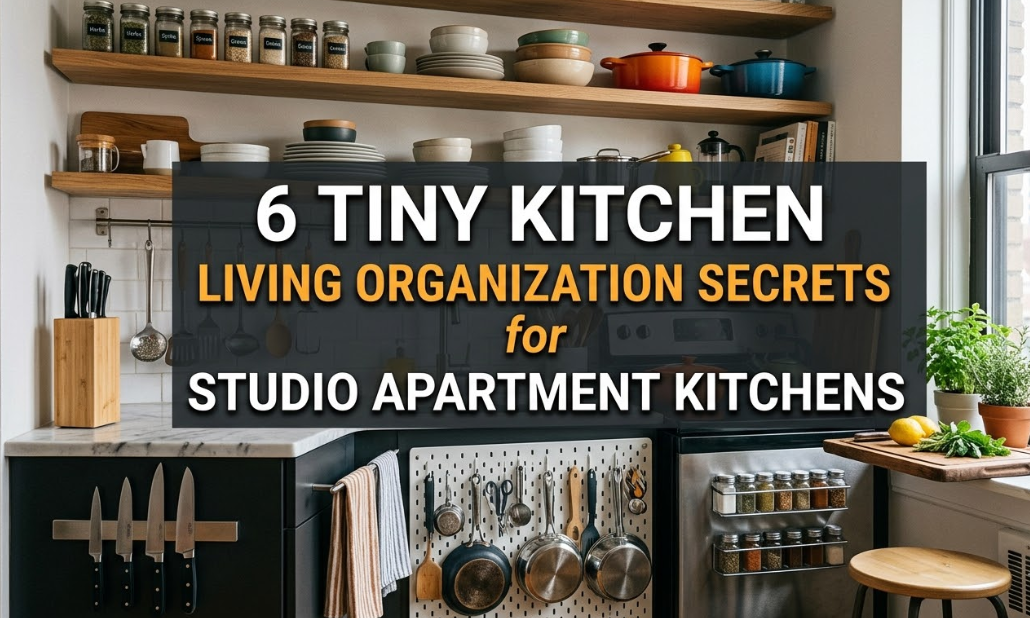
- Wall-mounted magnetic knife strips instantly clear drawer space
- Pegboards allow you to hang pots, pans, utensils — even small shelves
- Floating shelves above counters provide storage without a footprint on your floor or counter
- Use space above cabinets to store infrequently used items in baskets or bins
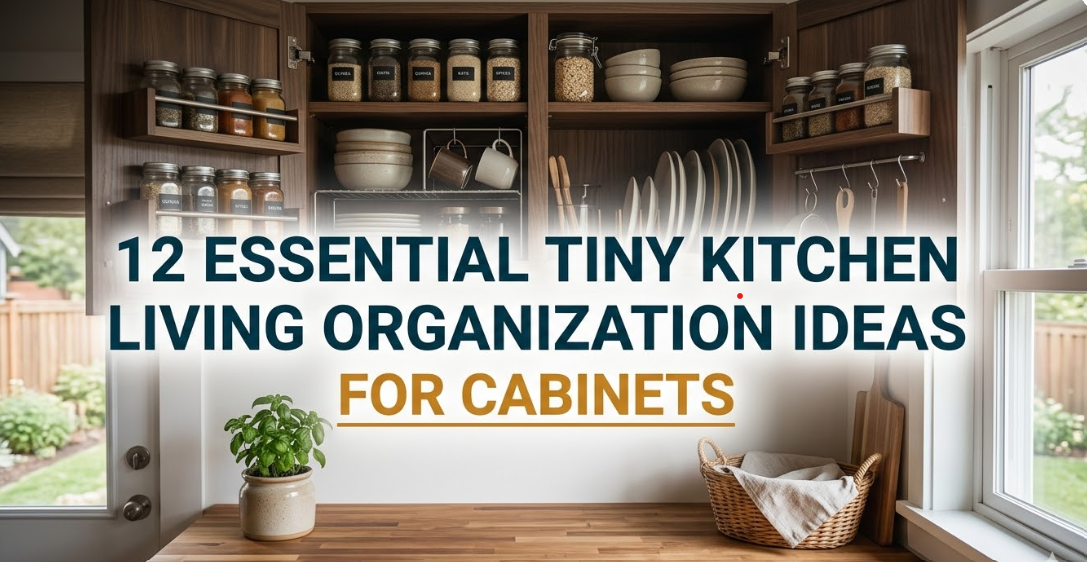
- Inside cabinet doors, hook rails hold lids, wraps, and cleaning supplies
Going vertical isn’t just practical. It might actually make your kitchen appear tidier and less haphazard.
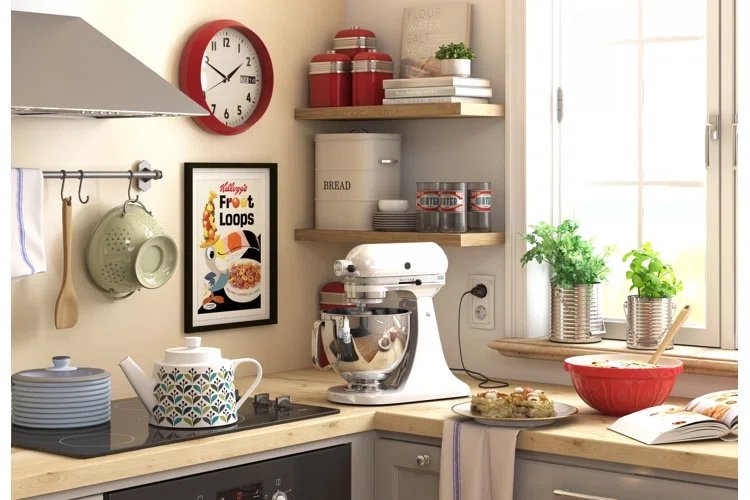
Mistake #3: Purchasing Storage Products Without a Plan
Walk into any home goods store, and the temptation is there to purchase every cute basket, organizer, and bin you come across. But purchasing storage without an action plan is one of the biggest tiny kitchen living organization mistakes folks make.
The “More Bins” Illusion
More containers do not equal more organization. In fact, they frequently compound the problem. You wind up with organizers that don’t fit your drawers, bins too large for your shelves, and baskets that hold things you don’t even need.
Measure First, Buy Second
Here is what you need to do before buying anything:
| Step | Action |
|---|---|
| 1 | Measure your drawers, shelves, and cabinet interiors |
| 2 | Determine exactly what has to be stored |
| 3 | Research products with those specific dimensions |
| 4 | Read reviews from people who have small kitchens |
| 5 | Buy only what solves a specific problem |
This strategy obviously requires more time upfront. But in the long run, it saves you money, frustration, and wasted space.
Mistake #4: Leaving Appliances on the Counter You Don’t Use Much
Countertops are prime real estate in a small kitchen. Every square inch of counter space has an impact on how easily you can cook, prep, and move around.
The Appliance Creep Problem
It starts innocently. You leave the toaster out because you use it every single morning. Then the coffee maker. Then the air fryer. Then the stand mixer. Before long, there’s no space anywhere to actually chop a vegetable.
It’s called appliance creep — and it’s alarmingly common in small kitchens.
The Counter Rule
One simple rule to live by: Only appliances you use every day get a permanent spot on the counter.
Everything else gets stored. Yes, even if it’s slightly irritating to pull it out every time. The trade-off in counter space makes it well worth it.
If you’re short on cabinet space, think about:
- A rolling cart with a shelf for appliances
- An appliance garage (a cupboard specifically for hiding small appliances)
- Keeping large items in a different room and only taking them to the kitchen when necessary
Mistake #5: Ignoring the Inside of Cabinet Doors
Open any cabinet in a typical small kitchen, and you’ll see the inside of the door entirely blank. That’s dead space — and a lot of it.
The Hidden Storage You Walk Past Every Day
Cabinet doors are flat, durable surfaces that can hold quite a bit. Most people just never think to use them.
Simple Door Storage Ideas
- Over-door organizers for spices, foil, and plastic wrap
- Small hooks for measuring spoons, pot holders, or bag clips
- Mounted racks for cutting boards and baking sheets
- Adhesive pockets for small items like twist ties or batteries
- A small chalkboard or whiteboard for grocery lists or meal planning
These additions cost very little and provide meaningful storage in a space you already have.
Mistake #6: Storing Things Where It’s Convenient, Not Where It Makes Sense
This is a subtle yet powerful mistake. It’s a matter of logic — or rather, the absence of it in most kitchen configurations.
The “Where It Fits” Problem
People often store things wherever there’s room, not where an item actually gets used. Pots end up across the kitchen from the stove. Spices live on the opposite side of the counter from where you cook. Coffee mugs sit two cabinets away from the coffee maker.
Every time you make food, you are taking dozens of extra little trips. That’s tiring in a large kitchen. In a small one, it creates perpetual havoc.
Zone-Based Organization
The solution: organize by zones — clusters of items grouped by where and when they’re used.
| Zone | Items That Should Live There |
|---|---|
| Cooking Zone (near stove) | Pots, pans, spatulas, spices, oils |
| Prep Zone (near counter) | Knives, cutting boards, mixing bowls |
| Coffee/Drink Zone | Mugs, coffee maker, tea bags, sugar |
| Cleaning Zone (near sink) | Dish soap, sponges, towels, trash bags |
| Food Storage Zone (near fridge) | Containers, wraps, bags |
Cooking goes smoother, and the kitchen just feels more manageable when everything lives where it’s actually used. If you’re looking for more practical tips and ideas built around compact spaces, Tiny Kitchen Living is a great resource dedicated entirely to making small kitchens work smarter.
Mistake #7: Ignoring the Under-Sink Space
The cabinet under the kitchen sink is one of the most underused and disorganized spaces in any tiny kitchen. It’s an awkward place to get to, filled with pipes, and often becomes a catchall for cleaning supplies.
Turning Chaos Into Storage
With the right strategy, under-sink storage can be truly functional. The secret is to work around the pipes, not ignore them.
Under-Sink Organization Tips
- Install adjustable shelves that fit around the plumbing
- Add stackable bins or drawers for cleaning supplies
- Hang spray bottles upside down on a tension rod — it opens up so much floor space inside the cabinet
- Keep a small caddy stocked with your most-used cleaning items that you can easily pull out
- Make use of the door for extra storage with an over-door organizer
Once this space is set up, you’ll wonder how you lived without it.
Mistake #8: Storing Food in Containers That Don’t Match
This seems harmless enough, but mismatched containers are a real space-wasting problem in any small kitchen.
The Container Chaos Cycle
You buy one set. Lids get lost. You buy another brand. They don’t stack together. Each time you open the cabinet, it’s an avalanche of plastic.
Why Matching Containers Matter
Matching containers — particularly square or rectangular ones — stack and nest effectively. Round containers waste corner space. Mismatched ones waste all space because they won’t stack predictably.
According to The Container Store’s organization experts, switching to a uniform container system is one of the highest-impact changes you can make in a small kitchen.
| Container Type | Space Efficiency | Stackability |
|---|---|---|
| Round plastic (mixed brands) | Low | Poor |
| Square/rectangular (matching set) | High | Excellent |
| Glass with locking lids (matching) | High | Good |
| Zip-lock bags | Medium | N/A |
Investing in just one decent matching set — even a budget-friendly one — will instantly make your food storage cabinet more functional and less of a headache.
Mistake #9: Thinking That Organizing Is a One-Time Thing
Here’s the big mistake that makes all the others go wrong: creating an organization system and never looking at it again.
The “Set It and Forget It” Myth
Organization is not a one-time activity. It’s an ongoing habit. Life changes. Needs change. Groceries shift. New things arrive. Old things accumulate.
Even the best-organized small kitchen falls back into chaos after a couple of weeks without regular upkeep.
Building a Simple Maintenance Routine
You don’t have to do a huge weekly deep dive. It takes small, consistent habits.
Daily habits:
- Always return things to their exact place after using them
- Wipe down counters before bed
- Address dishes on the same day — don’t let them build up
Weekly habits:
- Do a quick scan of every cabinet and drawer
- Remove anything that doesn’t belong
- Check food storage for expired items
Monthly habits:
- Take stock of your zones — are they still effective?
- Get rid of any new clutter that has crept in
- Assess whether your storage solutions are still serving you
Consistent small actions trump massive sporadic overhauls every time.
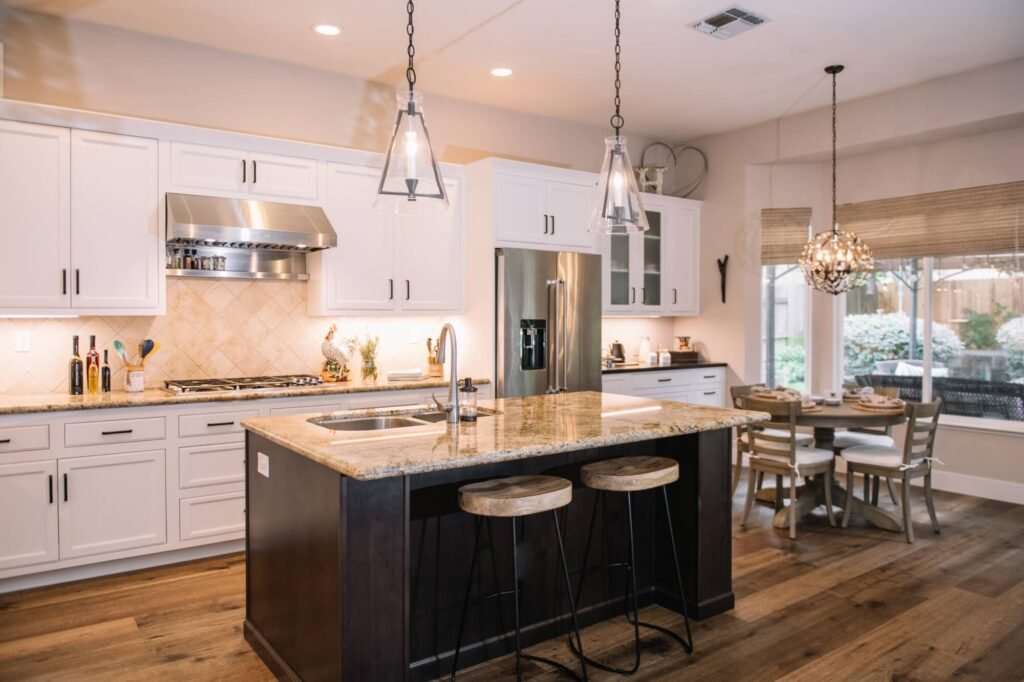
Overview of All 9 Mistakes and Their Fixes
| # | Mistake | Quick Fix |
|---|---|---|
| 1 | Keeping too much stuff | Declutter ruthlessly every few months |
| 2 | Ignoring vertical space | Add shelves, hooks, and pegboards |
| 3 | Buying storage without a plan | Measure first, then buy with purpose |
| 4 | Too many appliances out on the counter | Counter space = daily-use items only |
| 5 | Bare cabinet door interiors | Add over-door organizers and hooks |
| 6 | Storing things where they fit, not where they belong | Organize by zones |
| 7 | Messy under-sink cabinet | Use adjustable shelves and tension rods |
| 8 | Mismatched food containers | Switch to one matching, stackable set |
| 9 | No maintenance routine | Build simple daily and weekly habits |
Bonus Tips for Expanding the Feel of a Tiny Kitchen
In addition to fixing these nine mistakes, a few extra touches can make a small kitchen feel more open and organized.
Light and Color Matter
Dark cabinets and walls soak up light, making small spaces feel even smaller. Light colors — whites, soft grays, pale blues — reflect light and visually expand the space.
If repainting isn’t in the cards, try under-cabinet lighting. It makes an oddly large difference.
Use Clear Storage Where Possible
Clear bins, jars, and containers allow you to see what you have at a glance. No digging. No guessing. It saves time and lessens the urge to overbuy things you already own.
Keep Counters as Clear as You Can
Even if you fix all nine of those organization mistakes above, cluttered counters will still make your kitchen feel small and stressful. Make it a rule: counters are for working, not for storing.
FAQs About Tiny Kitchen Living Organization
Q: What’s the best way to organize a very small kitchen from scratch?
Do a full declutter before purchasing a single storage product. Empty out everything from every cabinet and drawer. Only put back what you actually use. Then sort by zones, measure your spaces, and find storage solutions that suit your specific needs.
Q: What is the single best investment you can make for a small kitchen?
Vertical storage. Whether you go with a pegboard, floating shelves, or an over-the-door organizer, going vertical frees up counter and floor space for storage.
Q: How frequently do I need to reorganize my tiny kitchen?
Once or twice a year for a deep reorganization is usually enough — if you keep it up with daily and weekly habits. Even the best systems fall apart without maintenance within a month.
Q: Are pricey organizers worth it for small kitchens?
Not necessarily. The best small kitchen organization tools can be incredibly affordable — tension rods, adhesive hooks, clear bins, and matching containers are all found at budget-friendly prices. Emphasize fit and function over brand or look.
Q: Can tiny kitchen living organization actually make a kitchen feel bigger?
Absolutely. Organization doesn’t change the square footage, but it completely changes how a space feels. A tidy small kitchen feels more functional and less stressful than a larger one that’s chaotic and cluttered.
Q: What’s the biggest tiny kitchen living organization mistake people make?
Keeping too much stuff. Most small kitchen issues stem from trying to squeeze too many items into too little space. Decluttering is always the first and most important step.
Wrapping It All Up
Having a small kitchen shouldn’t feel like a battle. The difference between a frustrating little kitchen and one that is actually functional almost always comes down to organization — not size.
All nine of the tiny kitchen living organization mistakes covered in this article are super common. But they’re all completely fixable, almost always without spending much money or time.
Start with one mistake. Fix it this week. Then tackle the next one.
Small shifts, made consistently, add up to a kitchen that finally serves you — rather than the other way around.
Your kitchen is small. Your frustration doesn’t need to be.