11 Tiny Kitchen Living Design Ideas That Feel Surprisingly Spacious
I’ve spent the last fifteen years squeezing kitchens into apartments that most people would call closets. My first place in Brooklyn had a galley so narrow I had to turn sideways to load the dishwasher, and yet somehow, after a few tweaks, friends would walk in and say, “Wait, this feels bigger than my living room.” That’s the magic of tiny kitchen living done right. You’re not adding square footage; you’re stealing it back from the air itself. These eleven ideas have worked for me, for clients in Karachi high-rises, for studio dwellers in Tokyo, and for that couple in a converted shipping container outside Lisbon. None of them require knocking down walls. All of them make the space feel like it’s breathing.
The secret nobody tells you is that “spacious” is mostly an optical illusion plus a little psychology. Our brains judge size by light, lines, and how much stuff our eyes have to process. Mess with those three things and suddenly a six-by-eight kitchen feels like it belongs in a magazine spread. Let’s walk through the ideas one by one, the way I actually explain them to clients while we’re standing in the middle of their tiny space, coffee in hand, measuring tape dangling from my back pocket.
- Choose a Light and Airy Color Scheme I always start here because paint is the cheapest, fastest win. Forget the deep navy everyone loves on Pinterest; in a tiny kitchen it turns the walls into a cave. Instead, go for colors that almost disappear. My go-to palette is a warm white with the tiniest hint of greige (Benjamin Moore’s Simply White mixed with a drop of Edgecomb Gray) on the walls and a slightly cooler white on the ceiling. The ceiling color tricks the eye upward. I once painted a client’s 140-square-foot kitchen-living combo in these tones and she texted me three weeks later saying she kept forgetting where the walls ended.
Don’t stop at flat white, though. Add a whisper of gloss on the trim and cabinets so light bounces around like it’s at a disco. In one Karachi apartment I worked on, the owner was terrified of anything too “sterile,” so we used a soft sage green on the lower cabinets only. The upper half stayed white. That tiny band of color grounded the space without closing it in. The trick is to keep 80 percent of the surfaces in the lightest tones possible. Suddenly your eight-foot ceiling feels like twelve. And yes, I test every single color in the actual room at different times of day because what looks airy at 10 a.m. can feel dingy at 7 p.m. when the fluorescent tube above the sink is the only light source.
- Incorporate Mirrors and Reflective Surfaces Mirrors are my secret weapon. Not the full-wall gym kind; that’s too obvious and a little tacky. Instead, I use small, strategic pieces. In one studio I lined the backsplash with antique mirrored tiles cut into subway size. The reflection doubled the light from the single window and made the tiny counter look twice as deep. Another time I hung a tall, narrow mirror on the wall opposite the stove, framed in thin black metal so it looked like a window. Guests literally asked where the extra room was.
Stainless steel appliances help too, but not the fingerprint-magnet kind. I look for matte or brushed finishes now; they reflect softly instead of glaring. Even a polished concrete countertop or a glass-front cabinet door does the job. The psychology here is simple: your brain sees depth where there’s reflection. I once watched a skeptical husband walk into his wife’s newly mirrored kitchen and stop mid-sentence. He just stared, then said, “Okay, I get it now.” That moment is why I keep pushing reflective surfaces even when clients think it sounds gimmicky.
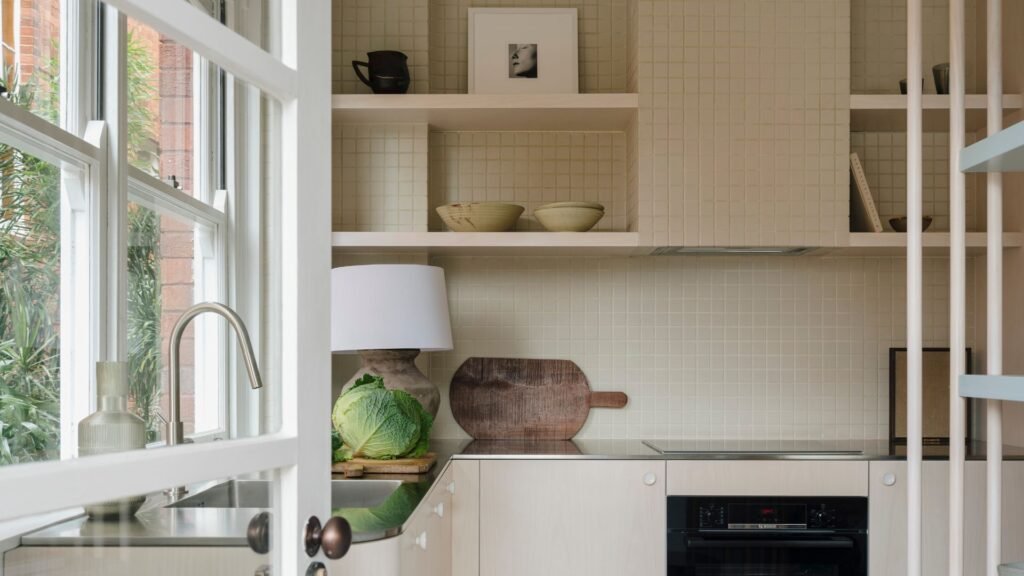
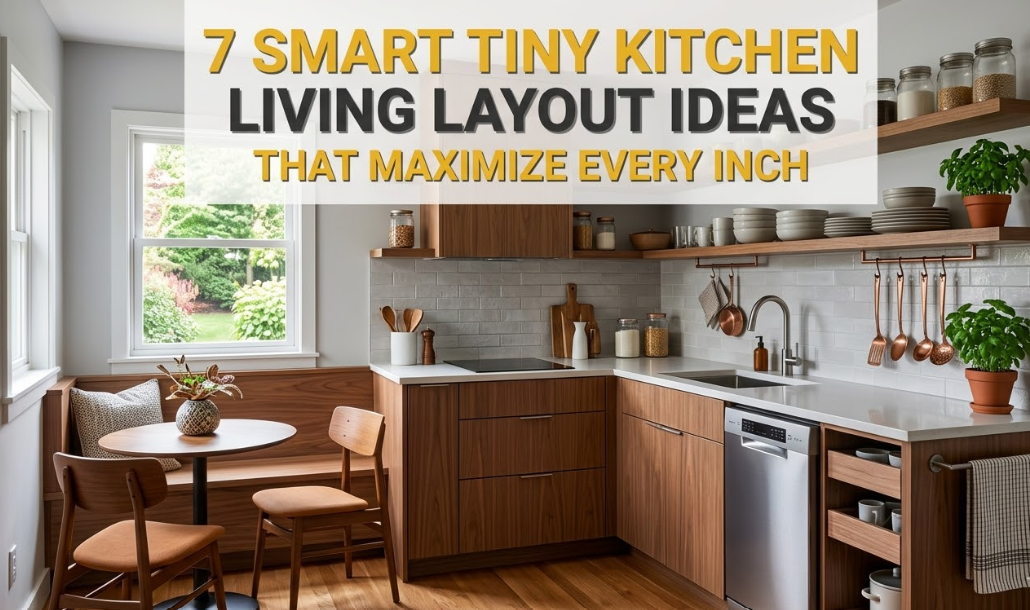
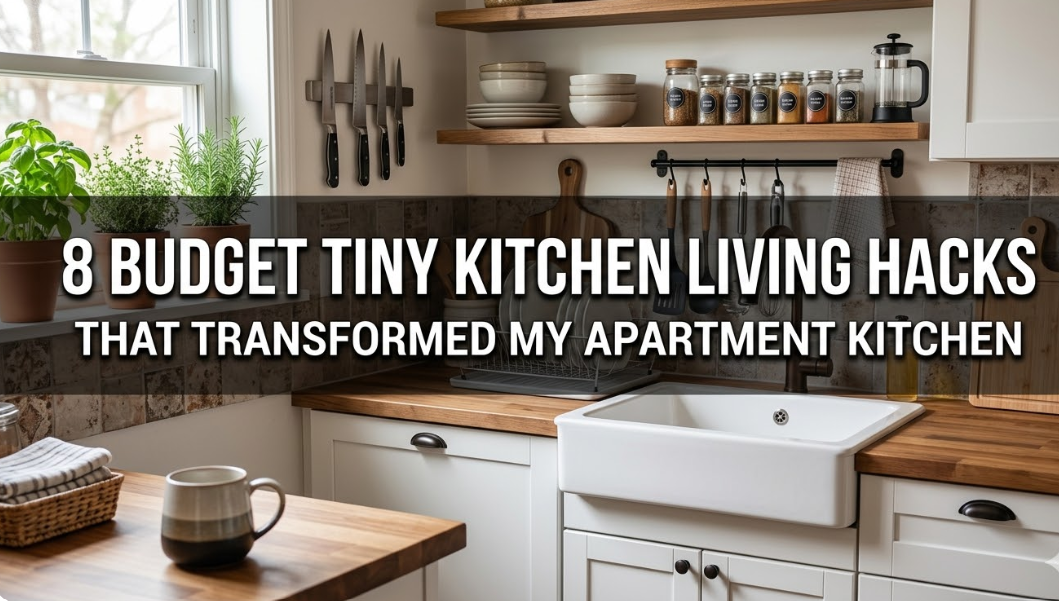
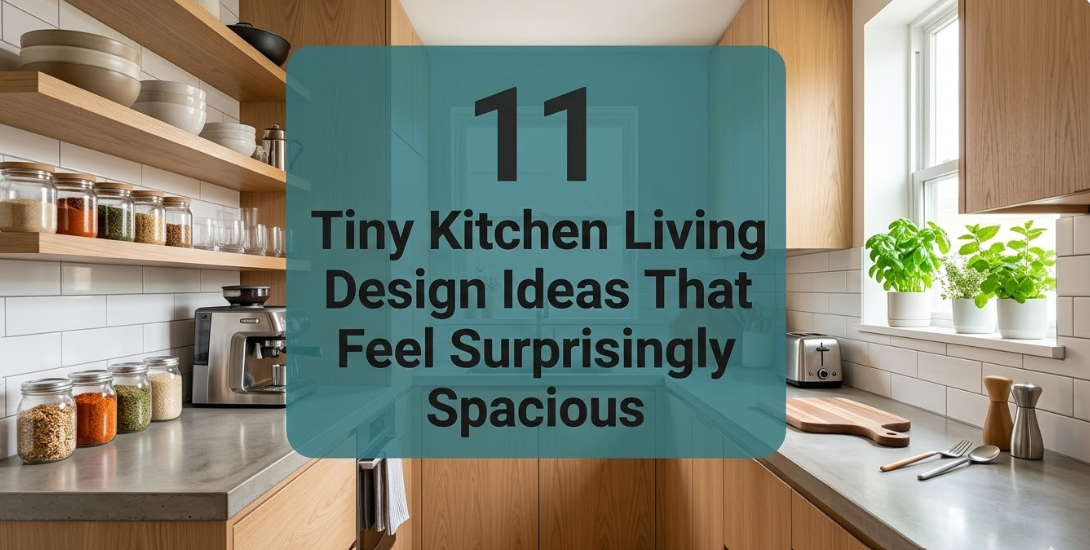
- Opt for Open Shelving Over Bulky Cabinets Upper cabinets are space thieves. They sit there like big wooden boxes shouting “this room is small.” I rip them out whenever the client will let me. In their place go floating shelves made from reclaimed wood or slim metal brackets painted to disappear. Suddenly the wall becomes part of the room instead of a barrier.
I learned this lesson the hard way in my own first apartment. I took down the ugly oak cabinets and put up three long pine shelves. I kept only the prettiest dishes on display, everything else went into lower drawers. The kitchen gained what felt like two extra feet of breathing room. People always worry about dust, but honestly, in a tiny space you’re cleaning more often anyway. The visual lightness is worth it. For clients who still want some hidden storage I suggest glass-front cabinets on one wall only. The transparency keeps the airy feeling while letting them hide the ugly cereal boxes.
- Invest in Multi-Functional Furniture Pieces In tiny kitchen-living setups the island is king, but it has to earn its keep. I design islands that pull out into dining tables, or that have hidden stools that tuck underneath like a magician’s trick. One of my favorite pieces was a custom island with a butcher-block top that slid over to become a desk for the living area. The client worked from home and cooked in the same square footage without ever feeling crowded.
Drop-leaf tables mounted on the wall are another lifesaver. They fold down flat when you’re just grabbing coffee, then pop up for two or four people when friends come over. I’ve even seen rolling carts that serve as extra counter space by day and a bar cart by night. The key is to look for furniture that changes shape without looking like it’s trying too hard. Nothing kills the spacious vibe faster than a clunky piece that screams “I’m multi-functional.”
- Maximize Vertical Space with Tall Cabinets and Shelves When floor space is limited, the only direction left is up. Floor-to-ceiling cabinets in a very slim profile can hold an astonishing amount without eating the room. I use Shaker-style doors painted the same color as the walls so they recede. Inside, I put pull-out pantries and spice racks that slide like drawers. One client in a 250-square-foot studio now stores her entire pantry, all her pots, and even her stand mixer without a single item visible on the counter.
Don’t forget the space above the fridge. Most people leave it empty; I build a cabinet there that matches the rest. Suddenly you’ve gained another cubic foot of storage and the fridge stops looking like a random box sitting in the middle of everything. Vertical lines also draw the eye upward, making ceilings feel higher. I always add crown molding painted the wall color to blur where the cabinet ends and the ceiling begins.
- Layer Your Lighting for Depth and Dimension Bad lighting is the fastest way to make a small kitchen feel like a dungeon. I never rely on one overhead fixture. Instead I create three layers: ambient, task, and accent. A slim linear LED recessed into the ceiling gives soft overall light. Under-cabinet strips illuminate the counters without shadows. Then I add a couple of small pendants over the island or a wall sconce that throws light upward.
In one renovation the client swore she didn’t need “fancy” lighting. We installed everything anyway. The first night she cooked dinner she called me almost laughing: “It feels like a restaurant in here.” Warm bulbs at 2700K are non-negotiable; anything cooler makes skin look green and the space feel clinical. Dimmers on every circuit are mandatory too. One flick and the whole kitchen can go from bright workspace to cozy evening glow.
- Use Glass and Transparent Materials Glass does for walls what mirrors do for light. I replace solid doors with frosted or fluted glass on upper cabinets so you can see shapes but not clutter. A glass dining table in the living area lets the floor pattern show through and keeps the room from feeling chopped up. Even a glass backsplash instead of tile can make the counter look deeper.
I once used a salvaged interior window between the kitchen and living area. It was just a simple wood frame with clear panes, but it allowed light to travel and let the eye move freely. The apartment felt like one continuous space instead of two tiny boxes. People worry about privacy, but in a kitchen-living setup you’re usually alone or with people you know. The openness wins every time.
- Keep It Minimal and Decluttered This one sounds obvious but it’s the hardest for most people. I make clients do the “one-year rule”: if you haven’t used it in twelve months, it goes. Then we photograph every single surface empty and tape the pictures inside the cabinets as a reminder. The counter holds only the coffee maker, a knife block, and maybe one pretty bowl of fruit. Everything else lives behind closed doors or on those open shelves we already talked about.
The visual weight drops dramatically. I remember a client who had every gadget known to man on display. After we cleared it she actually started cooking more because the kitchen felt inviting instead of overwhelming. Minimal doesn’t mean boring; it means every object earns its place with beauty or usefulness. That single rule transforms the feeling of space more than any fancy renovation.
- Bring in Natural Light with Smart Window Choices If you have even one window, treat it like the most valuable real estate in the apartment. I remove heavy curtains and replace them with sheer linen panels that can be pushed aside completely. Roller shades that disappear into the frame are another favorite because they don’t eat wall space when raised.
For clients with no windows at all (yes, it happens in some older buildings) I install a skylight tube or even a fake window with LED backlighting behind frosted glass. It sounds crazy until you see it. One tiny kitchen in a basement unit went from gloomy cave to bright bistro the day we added the light tube. Plants on the windowsill help too; they soften the edges and add life without taking floor space.
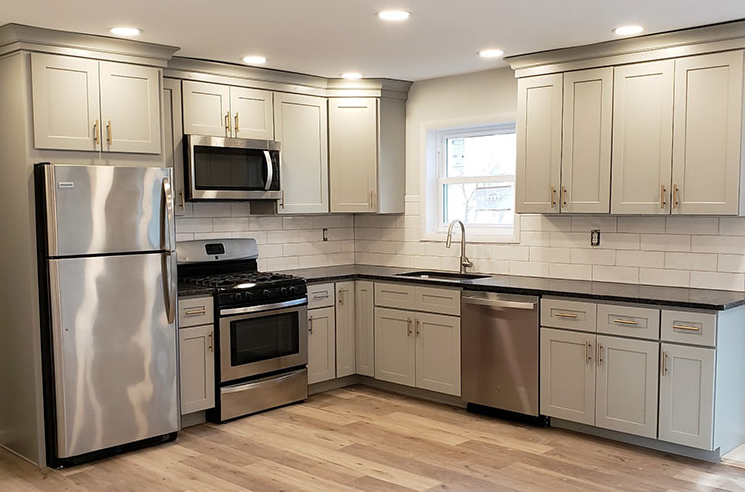
- Play with Patterns and Textures Strategically Stripes are your friend. Vertical stripes on a runner or wallpaper behind open shelves make the ceiling feel taller. A subtle herringbone floor in light wood pulls the eye across the room instead of stopping at the walls. I avoid big busy patterns on large surfaces; they make the space feel busy and therefore smaller.
Texture is where the magic hides. A rough linen roman shade next to smooth white cabinets creates interest without color. A matte black faucet against glossy white tile adds contrast that makes everything pop. In one project I used a textured concrete backsplash with tiny flecks of mica; it reflected light in a million directions and kept the kitchen from feeling flat. The brain loves subtle complexity; it distracts from the actual size.
- Integrate the Kitchen Seamlessly into the Living Area This is the big one for true tiny kitchen-living setups. I remove any visual break between the two zones. Same flooring throughout, same wall color, same trim details. The island becomes a bridge instead of a barrier. I extend the countertop a few inches into the living side and add a couple of bar stools that double as extra seating when guests are over.
In my favorite project the client had a galley kitchen opening into a tiny living room. We built a low half-wall that served as both counter and sofa back. Suddenly the spaces flowed together and the total square footage felt like one generous room instead of two cramped ones. The sofa faced the kitchen so conversation happened naturally while cooking. That single change turned a frustrating layout into the coziest apartment I’ve ever designed.
Putting it all together usually takes less money than people expect. I’ve done complete transformations for under $8,000 using mostly paint, new hardware, and clever storage. The real investment is time spent planning and editing your stuff. Start with one or two ideas that scare you the least (color and decluttering are usually safe bets) and live with them for a month. Then add another. Before you know it your tiny kitchen will be the room everyone gravitates to at parties.
I still get a kick out of watching people walk into these spaces for the first time. Their shoulders drop, their eyes widen, and they say the same thing every single time: “It doesn’t feel small at all.” That’s the whole point. You’re not fighting the square footage; you’re dancing with it. And once you learn the steps, tiny living stops feeling like a compromise and starts feeling like the smartest choice you ever made.