Meta Description: Silent thieves stealing your space in tiny kitchen living storage. Learn 6 common mistakes and easy solutions to reclaim every square inch of your small kitchen today.
6 Space-Wasting Tiny Kitchen Living Storage Mistakes
If you live in a small house or an apartment, then you already know the struggle. The kitchen feels crowded. Things pile up fast. And no matter how much you clean or organize, there never seems to be enough space.
The truth is, kitchen size is not typically the problem. It’s how the space is being utilized.
Most people repeat the same storage mistakes over and over without knowing it. These errors slowly devour space that could be working for you. The good news? All of them are fixable.
In this post, you’ll discover the 6 most common storage mistakes made in tiny kitchen living — and what to do instead. By the end, you’ll view your small kitchen as something entirely new.
Mistake #1: Neglecting the Space Above Your Cabinets
Step into most small kitchens and gaze upward. That space between the tops of the cabinets and the ceiling? It’s almost always empty.
That real estate is free — and 99 percent of people leave it in complete disarray.
Why People Skip It
It feels out of reach. It’s easy to forget. And for most people, to be frank, it never crosses their minds. But that gap — even if it measures just 12 to 18 inches tall — can contain a surprising amount of stuff.
What You Can Do Instead
That space can be used to keep things you do not need on a daily basis. Think:
- Seasonal baking pans
- Extra serving platters
- Less frequently used appliances such as a waffle maker or slow cooker
- Decorative baskets that hide clutter
Up there, baskets do the job particularly well. They help keep things neat and do in fact make the kitchen look more cohesive. If your kitchen décor has set colors, find baskets that go with it for a tidy, purposeful feel.
If there’s enough space, you can even add a second shelf on top of your current cabinets. A simple floating shelf with brackets can effectively double your high-up storage, no heavy renovation required.
Pro Tip: Label the baskets. Because you can’t easily look into them from the ground, a small tag on the front saves a lot of guesswork later.
Mistake #2: Keeping All Items at Counter Level
Counters in a small kitchen are precious. They’re your prep space, your working area, your breathing room. Yet so many people stack them with appliances, containers, and random items that do not belong there.
The Clutter Creep Problem
It starts with one thing. A coffee maker here. A toaster there. Then a fruit bowl, a knife block, a paper towel holder, a spice rack. Eventually you have just six inches of real workspace to work with.
It’s known as clutter creep — and it happens to almost everyone in tiny kitchens.
Reclaim Your Counter Space
Counters should be as clear as possible. Here’s a simple rule of thumb:
If you don’t use it every single day, it should not be sitting on the counter.
That fruit bowl? Hang it from the ceiling or install a wall-mounted fruit basket. That knife block? Replace it with a magnetic knife strip on the wall. That paper towel holder? Mount it under a cabinet.
Each thing you take off the counter opens up more space to actually cook and work.
| Common Counter Items | Better Storage Alternative |
|---|---|
| Knife block | Magnetic wall strip |
| Paper towel holder | Under-cabinet mounted holder |
| Spice rack | Inside cabinet door organizer |
| Coffee maker | Designated appliance shelf or cart |
| Fruit bowl | Wall-mounted or hanging basket |
| Cutting board | Vertical slot organizer inside a cabinet |
Removing even two or three things from your counter will drastically change how spacious your kitchen feels.
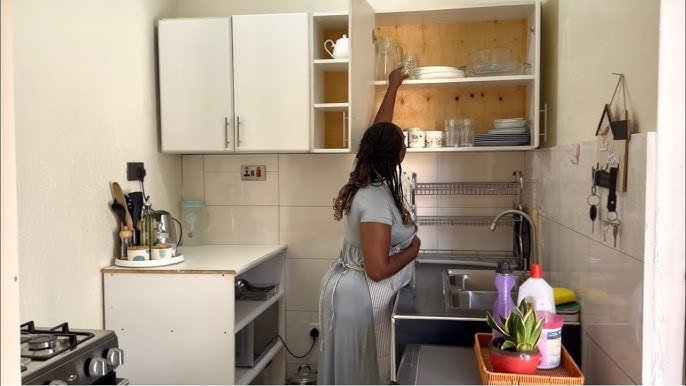
Mistake #3: Not Using Your Deep Cabinets Properly
Deep cabinets seem like a dream — until you discover everything in the back becomes a black hole. This is one of the most frustrating tiny kitchen living storage mistakes because it transforms a storage space into a dead zone.
The Back of the Cabinet Problem
You put something in the back. You forget it’s there. You buy another one. Now you have two. The cycle repeats.
All too often, unorganized deep cabinets only make the problem of living in a small kitchen worse.
Smarter Ways to Use Deep Cabinet Space
The trick is making the back of the cabinet accessible. Here are some ideas for how to do this:
Pull-out shelves: These glide out like a drawer, allowing you to see and reach everything inside. You can purchase pre-made ones or have them installed.
Lazy Susans: A rotating tray makes it easy to move items from the back to the front. Ideal for spices, canned goods, or condiments.
Stackable bins: Use open-front bins that stack on top of each other. You can pull out the whole bin to retrieve its contents.
Zone your cabinets: Organize things by frequency of use. Most-used items go in front. Less frequently used items go in the back.
A Simple Depth Rule
Consider your cabinet in three zones:
- Front zone (0–6 inches in): Daily use items
- Middle zone (6–12 inches in): Weekly use items
- Back zone (12+ inches in): Monthly or infrequent items
When everything has a zone, you stop losing things in the back — and you stop wasting the space you already have.
Mistake #4: Neglecting the Insides of Cabinet Doors
Open your cabinet door right now. What do you see on the inside? If the answer is nothing — just a flat, bare surface — a ton of storage potential is going completely to waste.
The Hidden Storage Surface You Walk Past Every Day
Cabinet doors, particularly in tiny kitchens, are among the most underutilized storage surfaces in any home. The inside of every door is basically a mini wall you can attach things to.
For more smart organization ideas built around small kitchen challenges, Tiny Kitchen Living is a great resource worth bookmarking.
What Works Best on Cabinet Doors
- Spice racks: Thin, tiered shelving mounted on the inside of the door keeps spices visible and off the counter.
- Pot lid holders: Lid storage can be a nightmare in small kitchens. An over-the-door lid organizer solves that problem instantly.
- Measuring cup hooks: A few small hooks allow you to hang measuring cups and spoons neatly.
- Cleaning supply pouches: The interior of the cabinet under the sink is ideal for a hanging pouch organizer that stores sponges, gloves, and sprays.
- Foil and wrap dispensers: Pop a slim dispenser on the door for easy tearing — no digging through a drawer.
Most of these solutions are low-cost. Many don’t require drilling — just adhesive strips or over-the-door hooks.
How Much Space Can You Actually Gain?
Here’s a rough estimate of what you can store by using door space across 6 cabinet doors in a typical small kitchen:
| Cabinet Door | Storage Added |
|---|---|
| Spice cabinet door | 20–30 spice jars |
| Pots and pans cabinet | 4–6 pot lids |
| Under-sink door | Cleaning supplies for 6+ products |
| Pantry door | Extra canned goods or snacks |
| Utensil cabinet door | Measuring tools, small gadgets |
| Baking cabinet door | Foil, wrap, parchment paper |
That’s a significant amount of storage from surfaces you weren’t using at all.
Mistake #5: Buying Storage Products That Don’t Fit Your Actual Life
This one stings because it involves spending money. Many people in small kitchens go out and purchase a slew of organizers, bins, and racks — only to be left wondering why their kitchen still feels chaotic.
The problem isn’t the products. It’s purchasing the wrong things for the wrong reasons.
The “Pinterest Kitchen” Trap
Social media is full of beautifully curated photos of tiny kitchens. It’s so easy to copy what you see. But those kitchens were staged for a photo. They weren’t necessarily organized for an actual person’s daily life.
Matching glass containers for every pantry item look beautiful — but if you hate washing them, you’ll stop using them within a week.
According to The Container Store’s organization experts, the most effective storage systems are ones that match your actual habits — not the habits you wish you had.
Questions to Ask Before You Buy Anything
Here’s a quick checklist to run through before buying any storage product for your tiny kitchen:
- Do I really have the right space for this? Measure first. Always.
- Am I actually going to use this the way it was intended? Be honest.
- Is this solving an actual problem I have, or does it only look nice?
- Is this easy to clean and maintain?
- Does it fit with how I already cook and move around my kitchen?
The Most Commonly Wasted Storage Purchases
| Product | Why It Often Gets Abandoned |
|---|---|
| Over-door pantry organizer | Too heavy, causes door not to close properly |
| Clear pantry bins | Hard to clean; items don’t fit neatly |
| Magnetic spice jars | Spices go stale faster; difficult to refill |
| Hanging pot rack | Too low (people bump heads); lacks ceiling clearance |
| Tiered cabinet shelf risers | Wrong size for cabinet depth |
The solution is straightforward: take measurements, read reviews from people with similar kitchen sizes, and purchase one item at a time to test before committing to a full system.
Mistake #6: Treating Vertical Wall Space as Decoration-Only Territory
In a tiny kitchen, walls are not just for art and backsplash tiles. They’re functional storage space — and most people never use them that way.
This is probably the greatest missed opportunity in small kitchen living.
Why Vertical Space Goes Unused
It feels permanent. People worry about putting holes in walls. They think mounting things looks messy or industrial. But the fact is, thoughtful wall-mounted storage can look just as stylish as a well-decorated kitchen — while adding serious function.
Wall Storage Ideas That Actually Work
Pegboards: A pegboard panel can hold your entire collection of pots, pans, utensils, and small tools. It’s adaptable — you can rearrange hooks any time. And it looks striking when done with intention and a purposeful color scheme.
Wall-mounted magnetic strips: Beyond knives, magnetic strips can hold metal spice tins, scissors, can openers, and other metal tools.
Floating shelves: A few floating shelves on an open wall can hold dishes, glasses, cookbooks, or décor items that would otherwise take up cabinet space.
Rail systems with hooks: A horizontal rail mounted on the wall — often called a kitchen rail or pot rail — holds hooks, baskets, and even small shelves. These are incredibly versatile in a tiny kitchen.
Chalkboard or whiteboard panels: Not technically storage, but a wall-mounted board for grocery lists and recipes keeps paper off the counter and frees up mental clutter too.
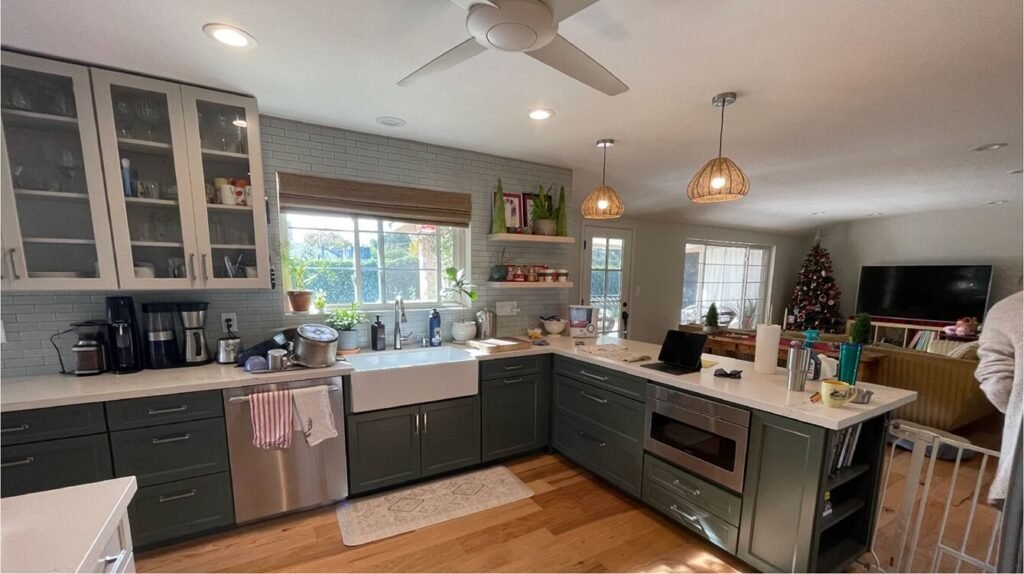
How to Get Started Without Feeling Overwhelmed
You don’t have to redo your entire kitchen. Begin with one wall — ideally the one closest to your primary cooking space. Mount one pegboard or add one floating shelf. See how it changes the flow of your kitchen before doing more.
In tiny kitchens, small and deliberate changes make a bigger impact than one massive overhaul.
What These Storage Mistakes Are Really Costing You
Here’s something most people don’t think about: wasted kitchen space isn’t just physical clutter. It creates mental clutter too.
Research on home organization has found that cluttered spaces increase anxiety, decrease concentration, and make people feel less in control. This effect is even more pronounced in a small home where the kitchen is often at the center of daily life.
When your tiny kitchen is well organized, cooking feels less like a chore. Mornings feel calmer. You waste less food because you can actually see what you have.
Fixing these six storage mistakes isn’t simply about cramming more stuff into less space. It’s about making day-to-day life feel smoother and more manageable.
Quick-Reference: All 6 Mistakes and Their Fixes
| Storage Mistake | Quick Fix |
|---|---|
| Neglecting above-cabinet space | Add baskets or a floating shelf up top |
| Overcrowding counters | Move non-daily items off the counter |
| Misusing deep cabinets | Use pull-outs, lazy Susans, and zone systems |
| Ignoring cabinet door insides | Add door-mounted racks, hooks, and organizers |
| Buying the wrong storage products | Measure first; test one product at a time |
| Wasting vertical wall space | Add pegboards, rail systems, or floating shelves |
How to Prioritize Your Kitchen Storage Fixes
If you’re feeling overwhelmed, don’t try to fix everything at once. Use this simple priority system:
Start here (free or very cheap fixes):
- Clear your counters of non-daily items
- Reorganize deep cabinets using the zone method
- Add hooks inside cabinet doors using adhesive strips
Do this next (low-cost upgrades under $30):
- Buy a lazy Susan for a corner or deep cabinet
- Add a magnetic knife strip to the wall
- Get a small pegboard for an empty wall section
Plan this for later (slightly bigger projects):
- Install pull-out shelves in deep cabinets
- Mount a floating shelf above a counter
- Purchase or build a kitchen cart for extra surface and storage
Breaking it down into manageable steps makes the whole process feel achievable — and you’ll start seeing results practically immediately.
FAQs: Tiny Kitchen Living Storage
Q: How can I make a small kitchen feel bigger without renovating? Clear your counters, use vertical wall space, and add under-cabinet lighting. These three changes alone can make a small kitchen feel noticeably more open.
Q: What’s the best storage solution for a kitchen with barely any cabinets? A freestanding kitchen cart or island provides extra counter space and storage. Pair it with a wall-mounted pegboard and over-door organizers to maximize what you do have.
Q: Should I buy a pot rack for a small kitchen? Only if you have adequate ceiling clearance. The conventional advice is at least 7 feet from the floor to the bottom of the rack. Measure carefully before purchasing and ensure the ceiling can support the weight.
Q: How do I organize a tiny kitchen pantry? Group items by category. Use clear bins so you can identify contents quickly. Place most-used items at eye level, less-used items above, and heavy items like canned goods on lower shelves.
Q: What’s the least expensive way to add storage to a tiny kitchen? Adhesive hooks on the insides of cabinet doors cost next to nothing and provide instant storage. A tension rod hung under the sink creates a hanging area for cleaning spray bottles. Both cost under $10 combined.
Q: Is open shelving a good idea for a small kitchen? Open shelving can help a small kitchen feel more expansive — but only if you keep things organized. Closed cabinets are more forgiving if you’re not the type to maintain a neat arrangement.
Q: How do I stop my tiny kitchen from feeling cluttered all the time? The underlying issue is often too much on the counter and too few designated spots for things. Assign everything a “home” — a specific place where it belongs — and develop the habit of returning items there after each use.
Wrapping It All Up
Tiny kitchen living storage mistakes are incredibly common — but none of them are permanent. Each of the six mistakes covered here has a practical, affordable fix that doesn’t require tearing out cabinets or calling a contractor.
The space above your cabinets, the insides of your cabinet doors, the walls around you — all of these are storage opportunities waiting to be used. Meanwhile, clearing your counters and rethinking how you use deep cabinet space can transform the way your kitchen functions every single day.
You don’t need a bigger kitchen. You just need to use the one you already have more wisely.
Make one change this week. Clear a counter. Add one hook. Tuck an item into a basket above the cabinets. In a small kitchen, small steps add up fast.
Before long, your kitchen will feel organized, calm, and genuinely functional — no matter how tiny it is.