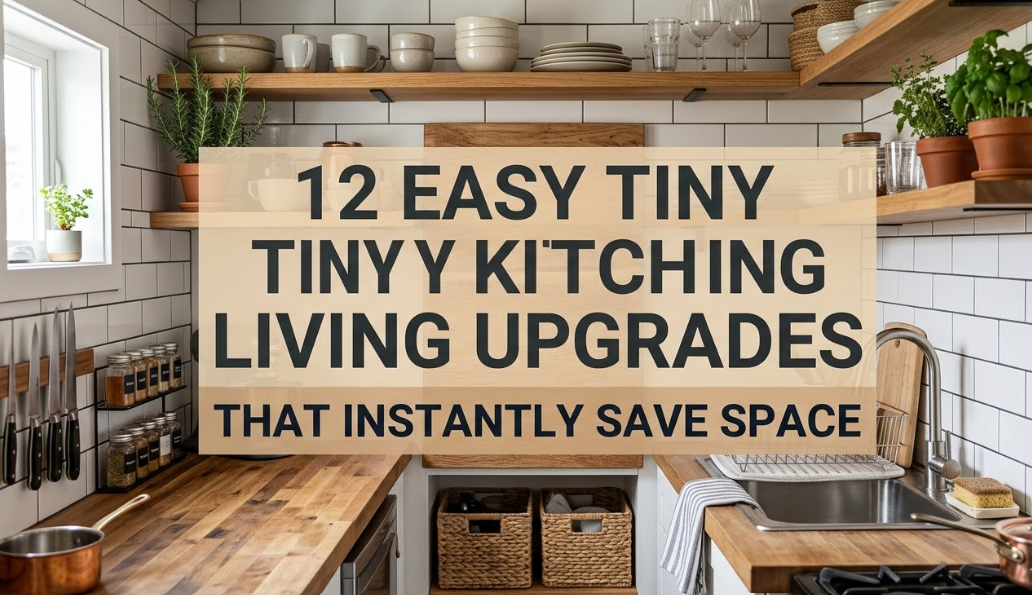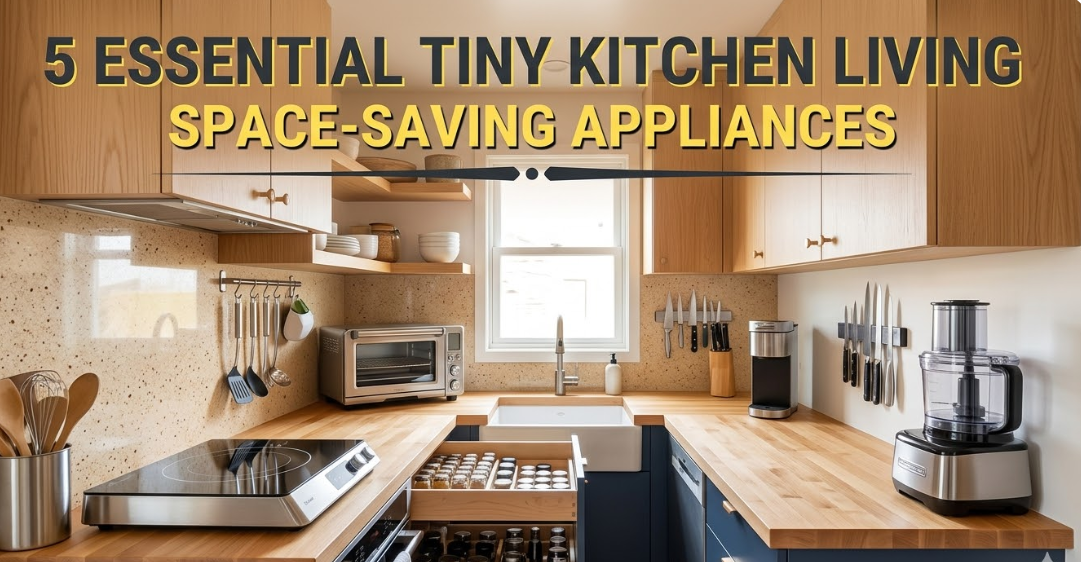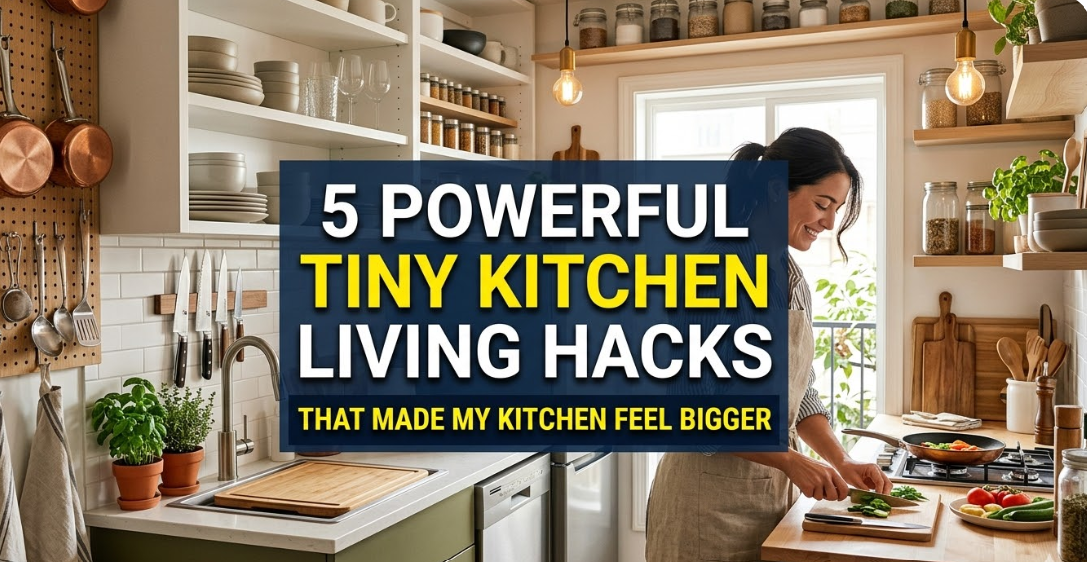
Let me tell you about the moment I truly hit rock bottom in my kitchen.
I was trying to make a simple stir-fry in my studio apartment. I needed my wok, but it was buried under a stock pot, which was wedged behind a colander, which had somehow ended up on top of my cutting board. I knocked everything over reaching for it. A can of chickpeas rolled under the fridge. My spatula was in a drawer so crammed I had to use two hands to yank it open.
I stood there in the middle of my tiny 8-foot kitchen surrounded by clattering chaos, and I thought — there has to be a better way.
Turns out, there absolutely is. And it doesn’t require a renovation, a bigger apartment, or spending a fortune. These are the 10 hacks I’ve actually tested, failed at first, refined over time, and now live by every single day.
1. Use the Inside of Cabinet Doors — Seriously, Stop Ignoring Them
Most people treat cabinet doors like they’re just… doors. They open, they close, end of story. That’s leaving some of the most valuable real estate in your kitchen completely untouched.
I stuck a small adhesive organizer on the inside of my cabinet door above the sink, and it now holds my dish soap, sponge holder, and a small scrubber. Zero counter space used. Zero.
You can go further with this:
- Spice racks mounted inside a cabinet door near the stove keep spices accessible without cluttering a drawer
- Pot lid holders (the wire ones from IKEA or Amazon) mount easily and free up an entire shelf
- Measuring cup hooks inside a baking cabinet so they’re not rattling around in a drawer
The key is using Command strips or proper adhesive mounts — nothing permanent that’ll mess up your rental.
2. The “One In, One Out” Rule for Kitchen Gadgets
Here’s a mistake I made in my first apartment: I thought more tools meant more capability. So I had a garlic press, a garlic rocker, AND a microplane. Three things that essentially did one job.
When your kitchen is tiny, gadgets are a liability, not an asset — unless they earn their spot.
My rule now: before anything new comes in, something has to leave. This sounds harsh, but it’s honestly transformed how my kitchen feels. I did a full audit once and pulled out 11 items I hadn’t touched in three months. Eleven. From a kitchen the size of a closet.
Keep the multitaskers:
- A box grater (replaces the microplane, cheese grater, and zester)
- A good chef’s knife (replaces most specialty knives)
- A Dutch oven (roasts, soups, braises, bread — one pot, endless uses)
If you’re curious about which tools are truly worth keeping, this breakdown of 6 Essential Tiny Kitchen Living Cooking Tools Every Small Kitchen Needs helped me trim my collection down without losing any real cooking ability.
3. Vertical Storage Is Your Best Friend — Go Up, Not Out
Most small kitchen organization fails because people think horizontally. They try to spread things across counters and shelves, and then they run out of room fast.
Think vertically instead.
Here’s a quick comparison of horizontal vs. vertical thinking:
| Horizontal Thinking | Vertical Thinking |
|---|---|
| Pots stacked inside each other | Pot rack mounted on wall or ceiling |
| Cutting boards lying flat | Cutting board divider standing upright |
| Mugs scattered on shelf | Hooks under cabinet for mugs |
| Spices in a drawer | Magnetic spice tins on fridge side |
| Canned goods stacked | Tiered shelf riser inside cabinet |
Every one of those vertical swaps either doubles or triples the usable space in that zone. I added a two-tier shelf riser inside my pantry cabinet and suddenly had room for twice as many cans without the avalanche effect.
Wall-mounted magnetic knife strips are another underused vertical hack. They clear an entire knife block off your counter and look surprisingly clean.
4. Mise en Place Isn’t Just for Chefs — It Saves Counter Space Too
I used to prep while cooking, which meant my counter was constantly buried in half-chopped onions, open spice jars, and rogue herb stems. It felt chaotic because it was chaotic.
Then I started doing mise en place — basically, prepping and organizing everything before the heat goes on.
Here’s how to actually do it in a tiny kitchen:
Step 1: Read the full recipe before touching anything. Know what you need.
Step 2: Pull out every ingredient and measure or prep them into small bowls or ramekins. Yes, this uses dishes. But it clears as you cook, not after.
Step 3: Set up your workspace in zones — one area for prep, one area right next to the stove for “ready to go” items.
Step 4: Clean as you go. Wipe down, put away empty packaging immediately.
The difference in how manageable my tiny kitchen felt once I adopted this approach was wild. Cooking went from stressful to actually enjoyable.
5. Magnetic Spice Tins on the Fridge Side — A Game Changer
The side of your fridge is probably blank right now. It doesn’t have to be.
Magnetic spice tins (I use a set from Kamenstein, but there are tons of options under $25 on Amazon) stick to the side of a metal fridge and completely clear out one of the messiest areas of any small kitchen — the spice situation.
Before I did this, I had a “spice drawer” that was more of a spice graveyard. Things were expired, duplicated, impossible to find. I’d be mid-cook looking for cumin and accidentally pull out cardamom twice.
Now I have 20 labeled tins on the side of my fridge. I can see every single one at a glance. I refill from bulk jars stored in one small cabinet. It takes up zero counter or drawer space.
Tip: Label the tops of the tins too, not just the sides, so you can see them when you’re looking down.
6. Stop Storing Things Where You Use Them — Store Them Near Where You Prep
This sounds counterintuitive, but stay with me.
Most people store cooking oil near the stove because they use it there. But think about where you actually reach for it — it’s during prep, when you’re putting things in the pan. Storing it at your prep station means fewer steps, less reaching, and a less cluttered stove area.
Same logic applies to:
- Salt and pepper → near the cutting board, not the back of the stove
- Cooking utensils → in a crock near where you plate food, not buried in a drawer
- Cutting board → standing upright next to where you chop, not flat in a stack
This is a micro-optimization that sounds silly until you actually try it. Then you wonder why you didn’t rethink this years ago.
If you’ve been making layout mistakes like these without realizing it, check out 4 Tiny Kitchen Living Cooking Mistakes I Made in My First Apartment — a lot of these habits are surprisingly common.
7. The “Counter is for Active Tasks Only” Rule
My counter used to be a dumping zone. Fruit bowl, coffee maker, toaster, knife block, paper towels, recipe cards, random chargers — all on a counter that was maybe 3 feet long.
I made one firm rule: nothing lives on the counter that isn’t used every single day.
This meant:
- Toaster moved to a cabinet (it comes out for weekend mornings)
- Fruit bowl moved to the top of the fridge
- Paper towels moved under the sink
- Knife block replaced with a magnetic wall strip
What stayed on the counter: coffee maker, dish rack (while drying, then put away), cutting board during meal prep.
The psychological difference this made was immediate. A clear counter makes even the smallest kitchen feel more manageable. You stop feeling claustrophobic the moment you walk in.

8. Tension Rods Belong in More Places Than You Think
Everyone knows tension rods for shower curtains. Fewer people know they’re secretly one of the best small kitchen tools you can buy for under $5.
Here’s where I use them:
Inside a deep cabinet: Mount a tension rod horizontally and hang spray bottles, cleaning supplies, or even small pans from it.
Under the sink: Two parallel tension rods create a shelf mid-cabinet for spray bottles, freeing up the floor of the cabinet below.
In a drawer: A vertical tension rod inside a deep drawer creates dividers for baking sheets, cutting boards, or pan lids.
Between shelves: A tension rod across the front of a shelf keeps awkward items (rolls of foil, parchment) from toppling out.
This costs about $4 at any dollar store and takes 30 seconds to install. No tools, no screws, no damage to the rental.
9. One-Pan Meals Aren’t Just Convenient — They’re a Small Kitchen Strategy
The dirty little secret of small kitchen living is that the fewer pans you dirty, the less chaos you manage, and the less space you need for cleanup.
I used to cook multi-component meals with four different pots going at once. Somewhere between draining pasta and sautéing vegetables, I’d run out of counter space and start balancing things on top of other things. Not great.
Shifting to mostly one-pan meals during the week genuinely changed my relationship with my kitchen. Sheet pan dinners, skillet meals, one-pot soups and pastas — these aren’t sacrifices in flavor. They’re smart cooking choices for your space.
Here’s a quick weeknight one-pan dinner formula that never fails me:
Protein + Vegetable + Flavor Base + Liquid = Done
Example: chicken thighs + broccoli + garlic and soy sauce + a splash of broth. Everything in one skillet, lid on, 20 minutes. One pan to wash.
For more ideas like this, the 11 Tiny Kitchen Living Recipes That Only Need One Pan list has been a regular part of my meal rotation.
10. Do a Monthly “Reset” — Not a Deep Clean, a Rethink
The last hack is more of a mindset shift, but it might be the most important one on this list.
Every month, I do what I call a “kitchen reset.” It’s not a deep clean — it’s a 20-minute critical look at what’s working and what’s not.
Here’s my reset checklist:
- [ ] Is there anything in the cabinets I haven’t touched in 4+ weeks?
- [ ] Is there a spot where clutter keeps coming back? Why?
- [ ] Are there tools I keep reaching for that aren’t where I reach?
- [ ] Is anything expired, broken, or just taking up space out of guilt?
The clutter always comes back in the same spots. For me, it was the counter next to the stove — things migrated there naturally. My reset forces me to address why instead of just tidying it over and over.
Tiny kitchens work beautifully when the systems make sense for how you actually live, not how you think you’re supposed to live. The monthly reset keeps that calibration honest.
Common Mistakes That Undo All Your Hard Work
Before you go implement all of this, here are the pitfalls I see people hit after getting organized:
Buying more storage products than you need. More bins and baskets aren’t the answer if you haven’t gotten rid of stuff first. Organize the excess and you just have organized excess.
Optimizing once and never revisiting. What worked in January might not work after you picked up a new cooking hobby or started buying in bulk. Kitchens are living spaces.
Ignoring the floor space under the sink. This is consistently the most underused, most disorganized zone in small kitchens. A simple two-tier under-sink organizer from IKEA (about $15) transforms it completely.
Keeping appliances “just in case.” If the waffle iron comes out twice a year, it doesn’t live in the kitchen. Store it in a closet and retrieve it when you need it.
Final Thoughts
Tiny kitchens are genuinely workable — not just survivable, but actually enjoyable — when you stop trying to use them like big kitchens and start designing systems that fit the actual space you have.
None of these hacks required a contractor or a Pinterest-perfect budget. Most of them cost under $20. A few of them were completely free — just a different way of thinking about a space I’d been frustrated with for months.
Start with one thing. Pick whichever hack felt most obvious when you read it, because that’s the one that’s already annoying you the most. Fix that first. Then come back for the next one.
Want to go even deeper on making your small kitchen feel bigger and work harder? Check out 8 Secret Tiny Kitchen Living Cooking Habits That Save Counter Space — a lot of the habits in there build directly on what we covered here.