I still remember the moment I hit my breaking point in my first studio apartment kitchen. I had just knocked over an entire stack of mismatched plastic containers, a bottle of olive oil slid off the counter and landed — miraculously — on my foot, and I couldn’t find the lid to my one good pan. All at the same time.
That tiny kitchen was maybe 40 square feet. One counter. Barely two cabinets. And I was trying to cook actual meals in it like a functional adult.
What followed was about two years of trial, error, embarrassing Googling, and a few purchases I deeply regret. But somewhere in all that chaos, I figured out what actually works. Not the Pinterest version of what works — the real, lived-in, “I eat here every day” version.
Here are the 12 organization tricks that genuinely changed how my small kitchen functions. Some of them are obvious in hindsight. Most of them I wish someone had told me sooner.
1. Stop Organizing by Category — Organize by Frequency 1️⃣
This sounds almost too simple, but it took me embarrassingly long to figure out. I used to group things together logically: all spices together, all baking stuff together, all pots and pans in one cabinet. Neat on paper. Terrible in practice.
The fix? Put the things you use every single day within arm’s reach, regardless of what category they belong to. My coffee mug, my one good knife, my cutting board, my go-to pan — they all live in the most accessible spots now. The flour and the cake pans I use once a month? They’re on the highest shelf, slightly inconvenient, and that’s perfectly fine.
Think of your kitchen in zones of frequency:
| Zone | Location | What Goes Here |
|---|---|---|
| Daily | Counter, lower cabinets | Coffee, oils, everyday pan, utensils |
| Weekly | Mid-level shelves | Pasta, canned goods, mixing bowls |
| Rarely | Top shelves, back of cabinets | Baking supplies, specialty tools |
Once I rearranged based on this system, I stopped digging through things every morning. It felt like a completely different kitchen.
2. The Drawer Organizer Saved My Sanity 2️⃣
I had one junk drawer that became a black hole. Rubber bands, mystery keys, takeout menus, a broken whisk, three lighters (I don’t smoke), and somehow two pairs of scissors. Every time I opened it, I lost 90 seconds of my life just searching.
A bamboo drawer organizer from Amazon — under $15 — fixed this completely. But the real trick wasn’t just buying the organizer. It was actually deciding what deserved to be in the drawer at all. I pulled everything out, put it on the counter, and made three piles: keep, toss, relocate.
The drawer now holds: a vegetable peeler, a can opener, measuring spoons, a small whisk, and a few twist ties. That’s it. Opening it now feels genuinely satisfying.
3. Vertical Space Is the Most Underused Real Estate in Any Small Kitchen 3️⃣
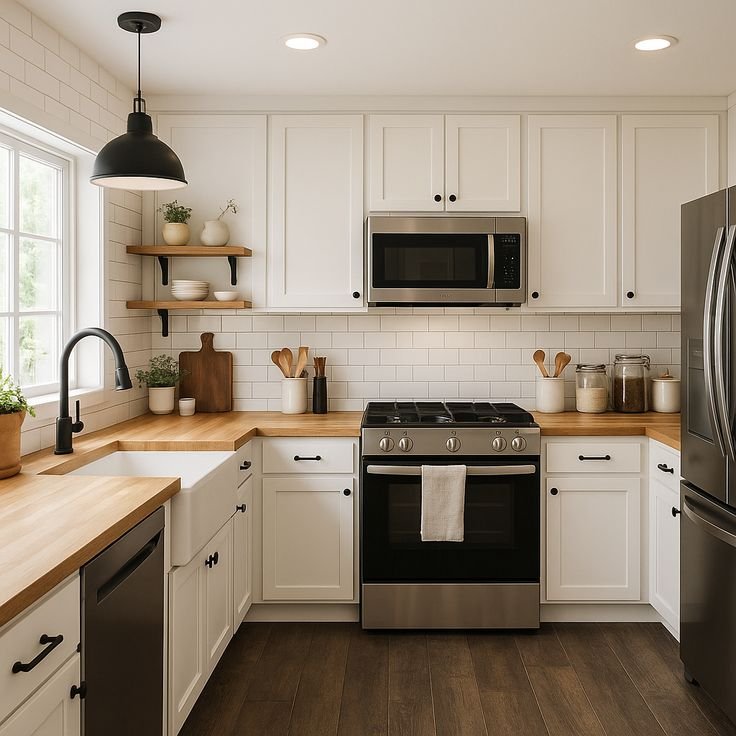
The walls. The insides of cabinet doors. The side of the refrigerator. These are all storage opportunities most people completely ignore.
I installed a simple magnetic knife strip on the wall above my counter — it freed up an entire drawer and made my knives weirdly easy to grab. Then I added a few adhesive hooks on the inside of my cabinet door for measuring cups and a small cutting board.
The side of my fridge holds a magnetic spice rack now. It looks a little industrial, honestly, but I don’t care because I can see every spice label at a glance without shuffling through a cabinet.
If you want to go deeper on this, check out these 9 secret tiny kitchen living storage ideas using wall space — there are some genuinely clever approaches in there that go beyond the basics.
4. Nest Everything That Can Be Nested 4️⃣
Bowls inside bowls. Pots inside pots. Colanders inside mixing bowls. If two things can share the same footprint, they should.
The mistake I used to make was keeping lids attached to everything. Pots with lids sitting on shelves take up twice the space they need to. I store all my lids vertically now — using a small file organizer (yes, the office supply kind) inside a cabinet. Each lid stands up on its side. You can see them all instantly, grab the right one, and the whole system takes up about 4 inches of horizontal space.
This one change alone felt like gaining a whole extra cabinet.
5. Stop Keeping Appliances You Use Less Than Once a Month on the Counter 5️⃣
The counter is prime real estate. It’s your workspace. And most people voluntarily sacrifice half of it to appliances that just… sit there.
I used to keep my stand mixer, my toaster, my blender, AND my coffee maker all on the counter. That left me with maybe 12 inches of actual working space. Twelve inches. For all food prep.
Now only the coffee maker lives on the counter permanently. The toaster comes out for toast and goes back into the cabinet. The blender lives in a lower cabinet and takes about 4 seconds to retrieve. The stand mixer is in a closet because I use it maybe five times a year.
Be ruthless about this. Your counter is for cooking, not for storing things that look kitchen-adjacent.
6. Label Everything — Even If You Think You’ll Remember 6️⃣
I thought labeling was for people who were slightly too organized. Then I put ground cumin in a container and confidently used it as chili powder in a recipe, and I’ve been labeling things ever since.
In a small kitchen, things get consolidated. You pour rice into a jar, pasta into a different jar, lentils into another. It all starts looking the same. A simple label maker (I use a Brother P-Touch, about $25) solves this completely and makes the whole kitchen feel more polished.
For the pantry shelf, I label the shelf edge, not just the container. That way, even when the container is gone, I know what belongs there and where to put the new one.
7. The “One In, One Out” Rule Is Non-Negotiable in Tiny Kitchens 7️⃣
Every time I bought a new kitchen tool, I’d find space for it somewhere. Stuff accumulated. By month eight in my apartment, I had five spatulas. Five. I genuinely don’t know how that happened.
The rule is simple: if something new comes in, something old goes out. Bought a new pan? The scratched non-stick one goes to the donation box, today, not “eventually.” Got a new set of spoons? Pick the weakest link from the current set and let it go.
This keeps the volume of stuff constant and prevents the slow creep of clutter that makes small kitchens feel impossible over time.
8. Use the Inside of Cabinet Doors — Seriously 8️⃣
This one took me too long to try because I assumed adhesive hooks wouldn’t hold weight or would damage the cabinet. Neither turned out to be true (as long as you use decent hooks and don’t overload them).
The inside of my upper cabinet door now holds:
- A small pocket organizer with foil, cling wrap, and parchment paper rolls
- A hook for my kitchen scissors
- A mini whiteboard where I write what I’m running low on
That last one sounds extra, but it means I actually buy the right things at the grocery store instead of coming home with a third jar of cumin.
9. Stackable Containers Are Worth Every Penny 9️⃣
I wasted so much cabinet space on mismatched plastic containers for about a year. Some didn’t seal properly. The lids never matched the bottoms. Stacking them was like playing a bad version of Tetris before every meal.
Switching to one uniform set of stackable glass containers — I went with OXO Good Grips — made an immediate, visible difference. Everything locks together. The lids are interchangeable. And they stack in a way that feels satisfying rather than precarious.
Yes, a good set costs more upfront. But the space you reclaim in your cabinet, and the time you stop wasting searching for lids, makes it worth it completely.
You might also want to look at these 8 essential tiny kitchen living storage tools that organize everything for a broader breakdown of what’s actually worth buying versus what’s just clever marketing.
10. Create a “Landing Zone” Right When You Walk In 🔟
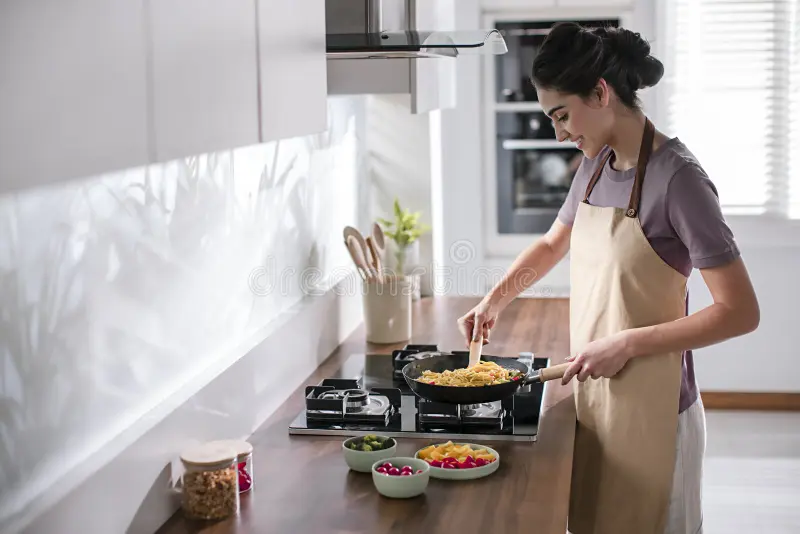
Okay, this one is slightly adjacent to the kitchen itself, but it matters enormously. In my apartment, the kitchen is the first room you walk through. I used to drop groceries, bags, mail, and random stuff right on the counter. Then I’d cook in whatever space was left.
I put a small rolling cart just inside the entryway — it cost about $35 at IKEA. Everything gets dropped there first. Groceries get sorted before they touch the kitchen counter. The counter stays clear, and the kitchen stays functional.
If your layout doesn’t allow this, even a designated basket or a hook system near the kitchen entrance does the same job. The point is to stop treating your kitchen counter as a catch-all landing spot for everything in your life.
11. The Tension Rod Trick for Under-Sink Storage 1️⃣1️⃣
Under the sink is a nightmare in most small kitchens. Pipes cut the space in weird ways, cleaning products fall over, and nothing ever feels stable.
Two tension rods mounted horizontally across the interior (the kind meant for shower curtains, but smaller) give you a suspended shelf for things like spray bottles — you hang them by the trigger over the rod. Suddenly your cleaning supplies are hanging neatly above the base of the cabinet, and the space below them is free for sponges, trash bags, and whatever else lives down there.
This cost me $8 and took about three minutes. It’s one of the most effective things I’ve done to reclaim storage space.
12. Do a Monthly “Reset” — Not Just When It Gets Bad 1️⃣2️⃣
Here’s the one nobody talks about: small kitchens don’t stay organized on their own. They drift. A few things get put back in the wrong spot, the counter collects two extra items, a cabinet gets a little crowded — and within a few weeks you’re back to feeling overwhelmed.
I do a 20-minute kitchen reset on the first Sunday of every month. Everything comes out of the counters and one problem cabinet. I wipe things down, I check what’s expiring, I put everything back deliberately. It sounds like a chore, but 20 minutes once a month is infinitely better than a full-day panic reorganization every six months.
A simple checklist I follow:
- [ ] Clear counters completely, wipe down
- [ ] Check fridge for expired items
- [ ] Consolidate half-empty packages in pantry
- [ ] Make sure lids match containers
- [ ] Return anything misplaced to its correct spot
- [ ] Write grocery list based on what’s low
It keeps the whole system from ever getting truly out of hand.
The Mistakes I Made That You Can Skip
Since we’re being honest here — these are the things I spent money or time on that didn’t help, and in some cases made things worse:
Over-buying storage products before organizing. I bought a bunch of bins before I knew what I actually needed to store. Half of them are in a bag in my closet right now, unused.
Trying to make it look like Instagram. Matching containers, open shelving arranged perfectly — it looks great in photos and feels miserable to maintain when you’re actually cooking every day. Function first, aesthetics second.
Ignoring the refrigerator. I got my cabinets perfectly organized and ignored the fridge for months. It became its own chaos zone. Fridge organization — clear bins, a lazy Susan for condiments — matters just as much.
Buying too many “multi-use” tools. Some of them are genius. But a lot of “this one tool does seven things” products do all seven things badly. I keep a short list of tools I actually trust and stopped chasing novelty gadgets.
One Last Thing
If you’re just starting out in a tiny kitchen and feeling overwhelmed, start with just two things: clear your counter down to one or two items, and get a drawer organizer. Those two changes alone will make the kitchen feel more manageable before you do anything else.
Everything else can be layered in over time. You don’t have to fix the whole kitchen in a weekend.
Small kitchens aren’t a limitation once you figure out how they work. They’re actually kind of great — less to clean, less to organize, and you can reach everything without moving your feet.
If you’re thinking about rearranging the layout itself to get more out of the space, this guide on 7 smart tiny kitchen living layout ideas that maximize every inch is a solid next step.
Also worth reading: 11 Easy Tiny Kitchen Living Storage Tricks I Wish I Knew Earlier