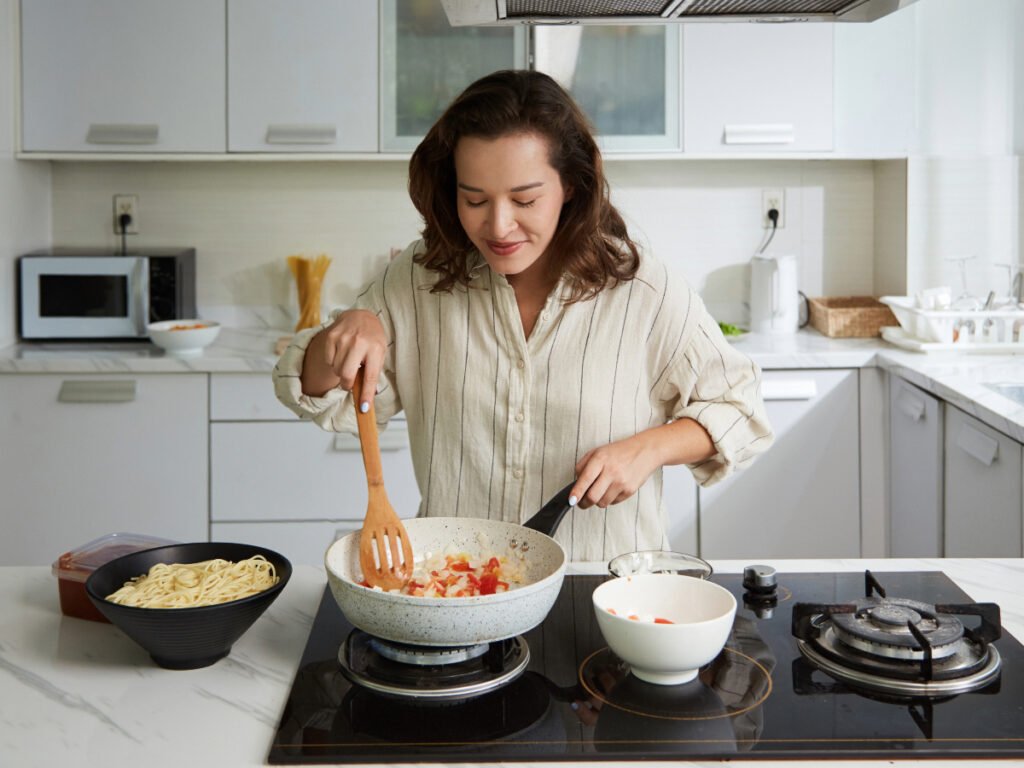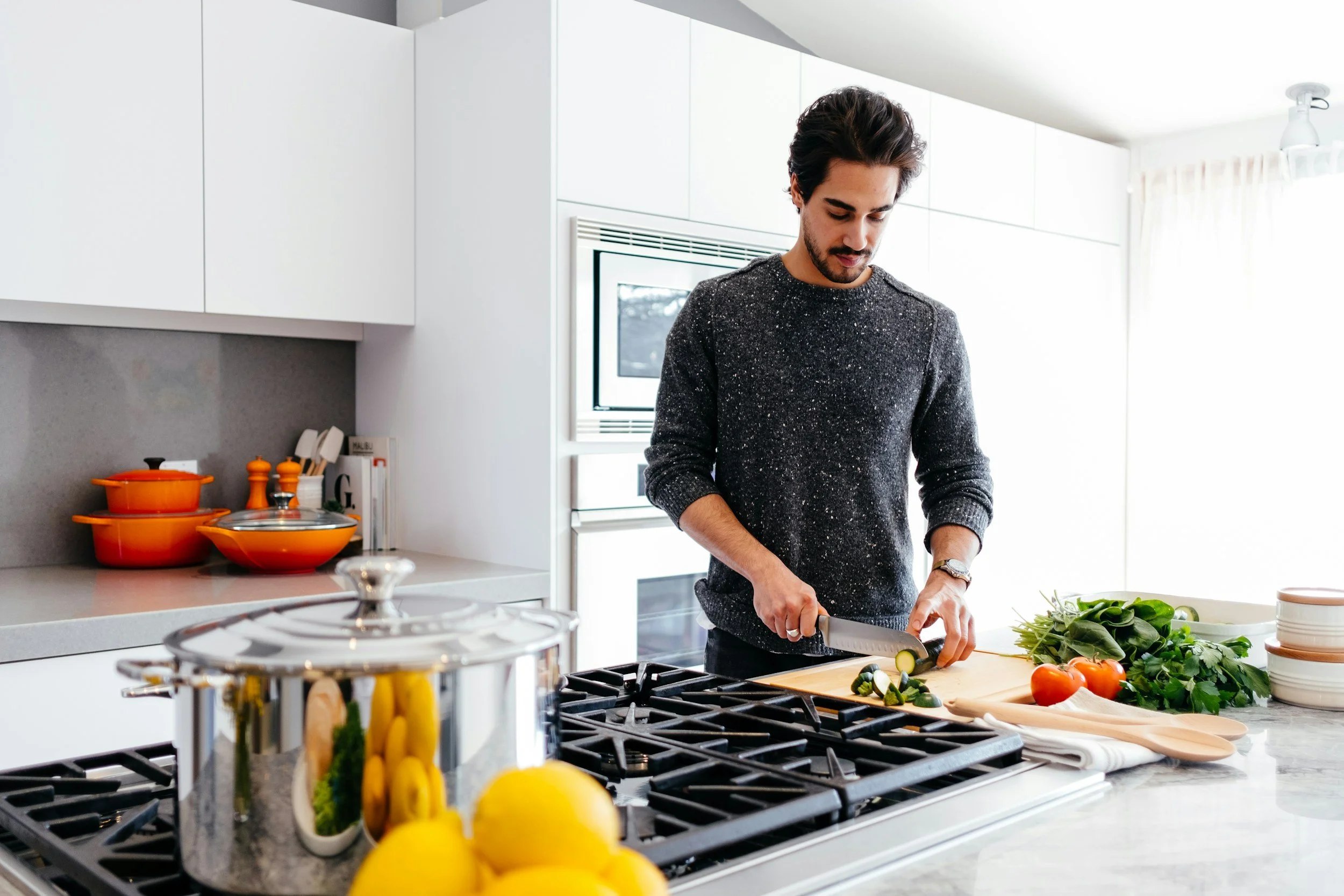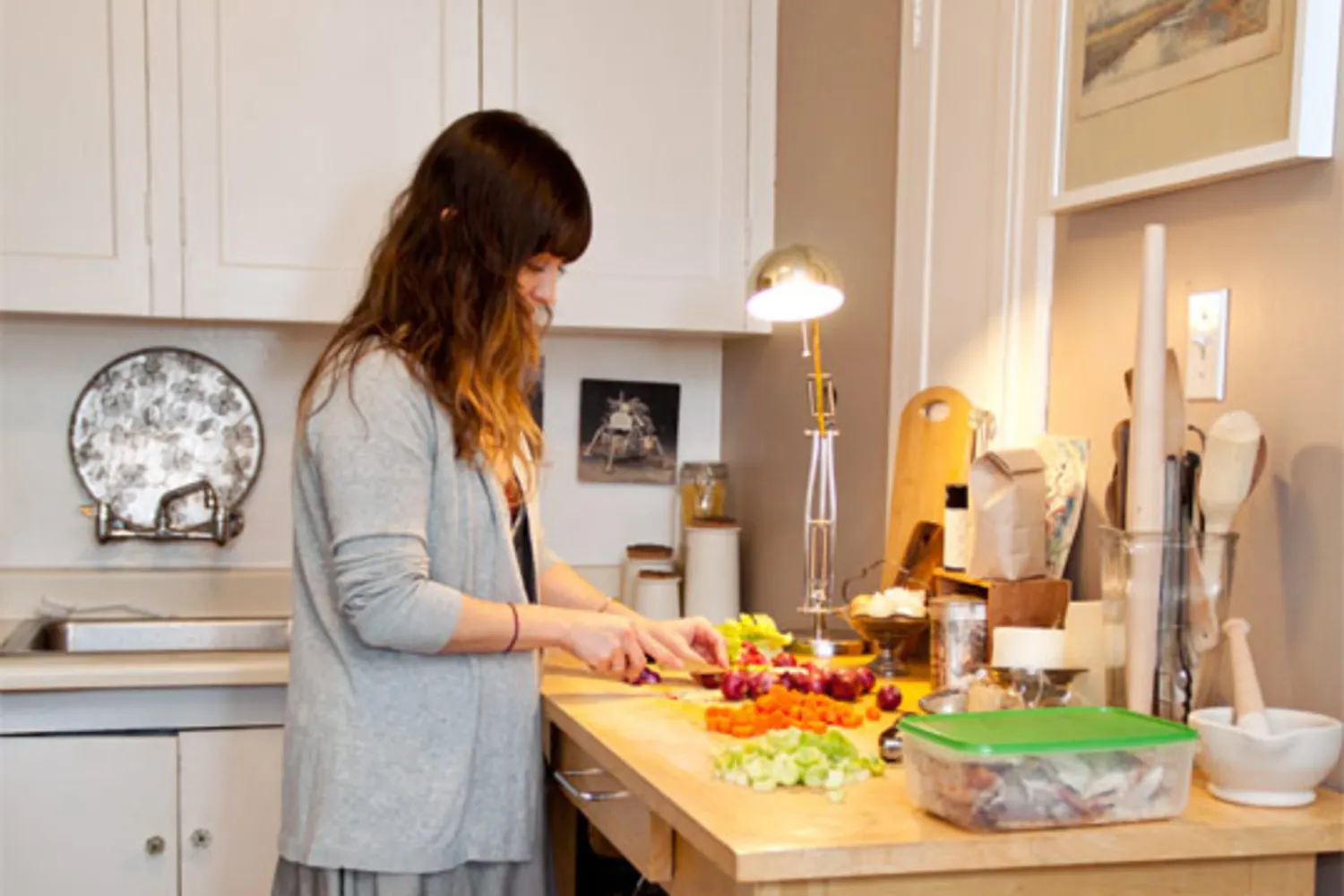
Honestly, the first few months I spent cooking in my studio apartment were a disaster. Not the food itself — but the process. I’d spend more time hunting for a lid, washing the only pan I had, or waiting for water to boil on a two-burner stove than I actually spent eating. It felt like the kitchen was fighting me.
Then I started making tiny adjustments. Not big renovations or expensive gadgets. Just small habits and tricks that quietly changed everything. Now I can throw together a proper dinner in 20 minutes and barely break a sweat. Here’s everything I’ve figured out — in the order it actually helped me.
1. Prep Everything Before You Touch the Stove
This one sounds obvious, but I ignored it for way too long. In a tiny kitchen, you don’t have the luxury of scrambling for ingredients while something’s sizzling. There’s no counter space for that chaos.
What changed things for me: I started doing 10 minutes of prep before turning on any heat. Chop the onion, measure the spices, open the cans, wash the veg — everything in little bowls or just lined up on the one patch of counter I have.
It feels slower at first. But once the heat is on, everything flows. No burning, no frantic searching, no burnt garlic because you couldn’t find the salt fast enough.
Try this: Use the inside of your cabinet doors as a reference space — tape up a quick list of what you need for your regular meals. Takes 30 seconds to scan before you start.
2. Own One Really Good Pan (And Stop Feeling Guilty About It)
For the longest time I had four pans crammed into a tiny cabinet, and I used exactly one of them. The others just fell on my feet when I opened the door.
The truth? In a tiny kitchen, one quality pan does almost everything. I went with a 10-inch stainless steel skillet and a small saucepan. That’s it. Eggs, stir-fries, sauces, sautéed vegetables — all one pan.
The mental shift that helped: stop thinking “I need the right pan for every job.” Start thinking “how do I make this pan work for every job?”
A cast iron skillet is another great option — heavy, yes, but it retains heat beautifully and can go from stovetop to oven. For tiny kitchens, oven-to-table cooking is a lifesaver.

3. Batch Cook Exactly Two Ingredients Per Week
I’m not one of those people who spends Sunday prepping 14 containers of food. That never lasted more than a week for me. But two ingredients? That I can do.
Pick one grain (rice, quinoa, pasta) and one protein (boiled eggs, shredded chicken, canned chickpeas). Cook double of both. That’s 3–4 meals handled.
Here’s how it plays out in real life:
- Monday: grain bowl with chickpeas + whatever veg I have
- Tuesday: egg fried rice with the leftover rice
- Wednesday: pasta salad with the chickpeas + a quick dressing
- Thursday: scrambled eggs on toast, chickpeas on the side
No complicated meal planning. Just two decisions that ripple across the week. You can check out more ideas like this in these easy tiny kitchen meals you can cook in 20 minutes.
4. Learn the 3-Minute Sauce Formula
Here’s something nobody told me early enough: most sauces follow the same basic formula. Once you know it, you stop following recipes for every single meal.
The formula:
- Fat (butter, olive oil, sesame oil)
- Aromatics (garlic, ginger, shallots)
- Liquid (broth, soy sauce, tomato, cream)
- Seasoning (salt, pepper, chili flakes, lemon)
- Optional thickener (cornstarch slurry, parmesan, a splash of pasta water)
That’s it. In under 5 minutes you can have a sauce that makes plain rice or pasta taste like something special. I use this almost every day. Garlic + butter + lemon + pasta water = dinner. Sesame oil + soy + ginger + honey = stir-fry sauce.
Once this clicks, you stop relying on recipe videos for every meal and start just… cooking.
5. Use Vertical Space for Drying and Staging
Counter space in a tiny kitchen is gold. Every inch counts. The mistake I made early on was treating my counter as a permanent home for things — the dish rack, the cutting board, the toaster.
The shift: everything on the counter should be temporary unless it’s used daily.
For drying dishes, I switched to an over-sink drying rack. It hangs above the sink and drips back in — zero counter footprint. For staging food during cooking, I started using the stovetop itself (unused burners) as temporary surface space.
These tiny kitchen storage tricks go into way more detail, but just clearing the counter of non-essentials bought me back almost a full foot of working space.
Other vertical wins:
- Magnetic knife strip on the wall = 2 fewer items in a drawer
- Hooks inside cabinet doors for measuring spoons
- A single wall-mounted shelf for oils and vinegars you grab daily
6. Time Everything Using Your Phone, Not Your Instincts
This tip sounds almost too simple, but it genuinely saved me from burning things more times than I can count.
When you’re cooking in a tiny space with things stacked close together, it’s easy to get distracted — check your phone, answer a message, do a quick tidy — and suddenly you smell something wrong.
I now set a timer for everything. Even things I “know” by heart. 3 minutes on the onions. 7 minutes on the chicken. 12 minutes on the pasta.
The Samsung Clock app, iPhone timer, or even Google Assistant all work fine. I also use the Alexa timer feature if I’m mid-chopping and can’t touch my phone. Hands-free timing in a tiny kitchen is underrated.
The bonus: timing things makes you faster. You start to realize certain steps don’t need babysitting, so you use that time to wash up as you go. Tiny kitchen tip gold: clean as you cook, not after.

7. Master 5 Core Recipes, Not 50
The biggest time trap I fell into early on was trying to cook something new every night from scratch. New recipe = reading, ingredient hunting, first-time mistakes. It took way longer than it should have.
What actually saved time: picking 5 recipes I genuinely liked, learning them cold, then rotating them. Here’s the kind of lineup that works well in a tiny kitchen:
V
visualize
V
visualize show_widget
https://7b26c6235f349e78ec9434f4aba3d70c.claudemcpcontent.com/mcp_apps?connect-src=https%3A%2F%2Fesm.sh+https%3A%2F%2Fcdnjs.cloudflare.com+https%3A%2F%2Fcdn.jsdelivr.net+https%3A%2F%2Funpkg.com&resource-src=https%3A%2F%2Fesm.sh+https%3A%2F%2Fcdnjs.cloudflare.com+https%3A%2F%2Fcdn.jsdelivr.net+https%3A%2F%2Funpkg.com+https%3A%2F%2Fassets.claude.ai&dev=true
Once you know these five cold — meaning no recipe needed, no measuring everything exactly — you’re cooking on autopilot. And autopilot in a tiny kitchen means meals in 20 minutes, maximum washing up, and zero stress.
The Mistakes I Made So You Don’t Have To
A quick rundown of the stuff that cost me time before I figured things out:
Keeping a full spice rack out on the counter. Looks cute, takes up space, gets greasy. Move everything you use less than twice a week into a drawer or cabinet. Keep only salt, pepper, and one or two daily-use spices within arm’s reach.
Washing the pan between every step. You don’t need to. Build layers of flavor. Cook the onion, then the protein, then deglaze with liquid. Same pan, richer flavor, half the dishes.
Using too much water for pasta. A smaller pot boils faster. You don’t need a massive stockpot. Use just enough water to cover the pasta, salt it well, and you’ll be done 5 minutes faster.
Ignoring the oven. Tiny kitchen people often forget they have an oven. It’s hands-off cooking — put stuff in, set a timer, go do something else. Sheet pan meals are one of the best strategies for a one-room apartment.
A Few Things Worth Having (That Don’t Take Up Space)
You don’t need a lot of tools. But a few small investments genuinely changed my cooking routine:
- OXO silicone spatula — works on any pan surface, easy to clean, one tool does it all
- Instant-read thermometer (ThermoPop is the one I use) — no more cutting chicken open to check if it’s done
- Collapsible colander — drains pasta, collapses flat into a drawer. Game changer.
- Small kitchen scale — more accurate than measuring cups for things like rice, costs about $10–12
- Magnetic timer (or just Google’s timer) — see tip 6 above
None of these are fancy. None cost a fortune. But each one removed a small friction point that was adding minutes to every meal.
What This All Adds Up To
When I add it all together — prepping before cooking, owning fewer but better tools, batch cooking two things, mastering a sauce formula, clearing counter space, setting timers, and locking in five core meals — I went from spending 45–60 minutes fumbling around making dinner to consistently finishing in 15–25 minutes.
That’s not a small thing when your kitchen is the size of a hallway and you’re cooking every day.
The real insight is that tiny kitchens force good habits. You can’t be lazy with your workflow. You can’t leave things everywhere. And once you learn that constraint, you become genuinely better and faster than most people cooking in a big kitchen.
Start with just one tip from this list. Honestly, just one. The compound effect over a few weeks is real.
If you want to take your tiny kitchen game even further, here’s a piece I’d recommend reading next:
8 Secret Tiny Kitchen Living Cooking Habits That Save Counter Space