Meta Description: Tiny kitchen living organization doesn’t have to be stressful. 7 Genius Ways to Keep Your Counters Clutter-Free So Your Tiny Kitchen Feels Spacious and Functional
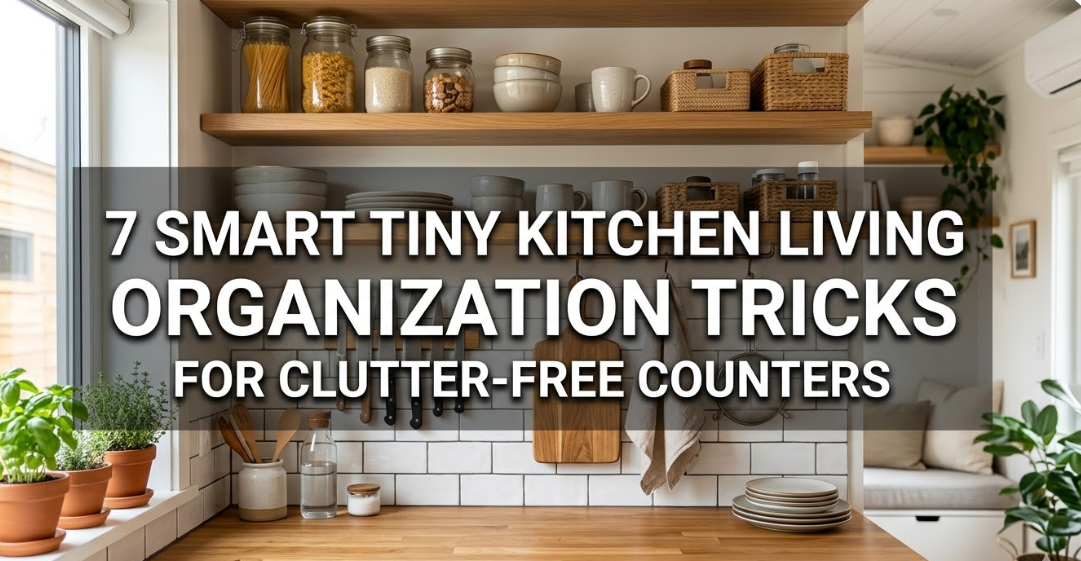
7 Clever Tiny Kitchen Living Organization Tricks for Countertop Clutter Control
If you live in a small apartment, studio, or cozy home, this struggle is likely already familiar to you. It doesn’t take much for a tiny kitchen to start feeling chaotic. One cutting board, a few appliances, some mail that somehow made it to the counter — and before you know it there’s no space left to cook.
But the good news is that a small kitchen does not have to be cramped or messy. With the right tiny kitchen living organization tips in play, you can transform even the most cramped of spaces into something that truly works for you.
This article takes you through seven proven, practical tricks that real people use to keep their counters clear and their kitchens functional. No expensive renovations. No giant storage units. Just smart, no-nonsense ideas you can start using today.
Why Clutter-Free Counters Change Everything
But before we get into the tricks, it’s worth asking: why should counter clutter even matter?
In a small kitchen, counter space is prime real estate. When it’s full of stuff, you don’t just lose workspace — you lose mental clarity. Studies in environmental psychology find that cluttered spaces cause stress and inhibit focus. In a kitchen, that means cooking is harder and less fun than it ought to be.
Avoiding clutter on counters also quickens cleaning, allows you to find things more easily, and makes the whole kitchen look bigger and more put-together.
Now on to the real tricks.
Tip 1: Use Your Walls — Not Just Your Counters
The average person’s default kitchen storage is cabinets and drawers. But in a small kitchen, walls are among your most underutilized assets.
Put Your Walls to Work
Hang a basic pegboard on one of your kitchen walls to transform the game. You can use it to hang pots, pans, utensils, measuring cups, and even small shelves. Everything is out in the open, accessible, and off the counter.
Another great option is magnetic knife strips. To avoid a bulky knife block that takes up counter space, a magnetic strip safely holds your knives flat against the wall. It occupies absolutely no counter space and even looks good.
Floating Shelves Are Your Best Friend
A few floating shelves over the counter provide an entirely new level of storage. They are great for spices, oils, small jars, cookbooks, or even a small plant. Store everyday items within reach without cluttering the counter space below.
Pro tip: Store only items you use daily on open shelves. Store everything else in cabinets. This helps keep shelves functional and prevents visual clutter.
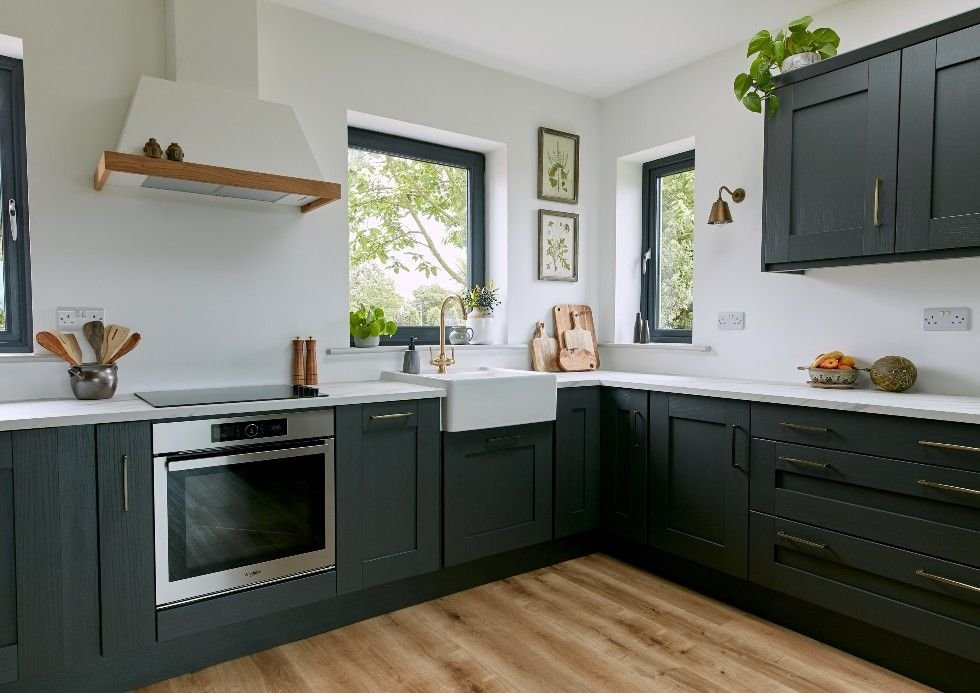
Tip 2: Implement the “Counter Deserves It” Policy
This is as much a change of mindset as an organization trick — and one of the most powerful ones.
Ask One Simple Question
Before anything gets placed on your counter, ask: Does this item earn its place here?
You earn counter space if you use something every single day. A coffee maker? Probably yes. An appliance you use twice a month? Definitely no. A decorative fruit bowl that becomes a catch-all for mail and stray keys? Hard no.
This one rule can free up half your counter space overnight.
The Everyday Items List
Here’s a helpful benchmark. The only things that really need to sit on the counter every day (for most kitchens) are:
| Item | Keep on Counter? |
|---|---|
| Coffee maker | ✅ Yes |
| Toaster (if used daily) | ✅ Yes |
| Dish drying rack | ✅ Yes (or collapsible) |
| Knife block | ❌ No — use magnetic strip |
| Stand mixer | ❌ No — store in cabinet |
| Fruit bowl | ❌ No — fridge or drawer |
| Blender | ❌ No — unless used daily |
| Paper towel holder | ✅ Yes (or mounted under cabinet) |
Apply this filter ruthlessly. Your counters will thank you.
Tip 3: Get Vertical In Your Cabinets, Too
It’s not just about wall verticality. Inside your cabinets, vertical space is wasted constantly.
Stack Smarter, Not Harder
Piling plates or bowls on top of one another wastes the space between items and above the stack. Instead, use:
- Shelf risers — These add a second shelf within one, doubling your cabinet space.
- Plate racks — Instead of stacking plates flat, these hold them upright and take up far less shelf space.
- Stackable bins — Excellent for keeping snacks, cans, or pantry staples organized in an orderly manner.
The Door Is Storage Too
One area that is completely neglected in most kitchens is the inside of cabinet doors. A couple of adhesive hooks or a mounted rack there can hold spice packets, foil, plastic wrap, pot lids, or cleaning supplies.
This also frees up drawers and shelves, which indirectly prevents clutter on your counters because everything now has an appropriate home.
Tip 4: Go For Multi-Use Tools and Appliances
In a small kitchen, everything you own needs to pull double or triple duty.
Multi-Function Appliances Cut Clutter in Half
A single-use appliance occupies space for one purpose. A multi-function appliance earns its keep by replacing several gadgets.
Consider these smart swaps:
| Instead of… | Try This Instead |
|---|---|
| Toaster + Toaster Oven | Air fry countertop toaster oven |
| Blender + Food Processor | High-powered blender with food processor attachment |
| Rice Cooker + Steamer | Instant Pot or multi-cooker |
| Separate pots and pans | Nesting cookware sets |
| Electric kettle + coffee maker | All-in-one coffee and tea station |
Each swap eliminates at least one item from your storage needs.
Dual-Purpose Kitchen Tools
The same concept works for smaller tools:
- A colander that fits over a mixing bowl saves room in drawers and cabinets.
- A cutting board with built-in storage or a collapsible design doesn’t take up as much room.
- Measuring cups that nest together rather than a set of five separate cups.
- A mandoline slicer that takes the place of a grater, slicer, and julienne tool.
Each thing you remove is real estate returned to your kitchen — and less stuff on the counter means less stuff vying for that prime real estate.
Tip 5: Implement an Actual System for Mail, Keys, and Miscellaneous Stuff
Here’s something no one talks about enough: the kitchen counter in most homes is more than a food prep zone. It’s where life dumps its things. Mail, keys, phone chargers, receipts, random pens — it all lands there.
No amount of kitchen organization will keep your counters clear if you don’t first solve this problem.
Give “Life Clutter” Its Own Home
The solution is straightforward: find a specific place for non-kitchen items, and communicate to everyone in your home that it exists.
A small wall-mounted organizer, placed close to the front door, can intercept keys, mail, and other everyday carry items before they even enter the kitchen. A small entryway shelf or hook system works great for this.
If the layout of your home means people are constantly coming in through the kitchen, put a little basket or organizer tray in one specific corner — and only that corner. Confine the disorder instead of letting it spread.
The “One Tray” Rule
If you do keep a catch-all tray on the counter, use exactly one and keep it small. When the tray fills up, that’s your cue to deal with the items — not to get a bigger tray.
This works because it puts a physical limit on the clutter. You can only fit so much into a small tray. Everything else has to find a proper home.
Tip 6: Use the Inside of Every Inch — Drawers in Particular
In small kitchens, drawers are often a hidden disaster. Without any organization, they become a jumble where nothing is easily found — which leads people to just leave stuff on the counter instead.
Drawer Dividers Are Non-Negotiable
Get a set of adjustable drawer dividers. They are inexpensive and they turn messy drawers into organized zones. Dedicate a section for each type of item:
- Utensils (spoons, spatulas, tongs)
- Measuring tools
- Small gadgets (peeler, can opener, etc.)
- Chargers or small electronics if you must store them here
When everything has a place, it actually returns to that place. That habit keeps counters clear.
Deep Drawer Hacks
For deeper drawers, use vertical storage inserts so you can see everything at once without digging. Pot lids stored vertically in a deep drawer, for example, are much easier to reach than lids arranged flat.
You can also use small bins or containers inside drawers to group similar items. Rubberized drawer liners keep things from sliding around and make the entire system feel more purposeful.
Tip 7: Do a Weekly 10-Minute Counter Reset
No organization tricks in the world will help if you don’t maintain the system. The secret weapon of people with consistently clean, clutter-free kitchens? A short, regular reset habit.
Why 10 Minutes Is All You Need
You don’t need a thorough cleaning every week. You just need a quick reset. Here’s what a 10-minute counter reset looks like:
- Clear everything off the counter completely (2 minutes)
- Wipe down the surface (1 minute)
- Sort through what was on the counter — put things away, toss what’s trash (4 minutes)
- Put back only what truly deserves counter space (2 minutes)
- Note anything that keeps reappearing without a proper home — that’s your next organization problem to solve (1 minute)
Make It a Ritual, Not a Chore
The only way to stick with this is to attach it to something you already do. Let your coffee brew Sunday morning while you do your counter reset. Or just after dinner on a Friday. Attach it to an existing habit so it happens automatically.
Over time, this weekly reset trains you — and anyone else in the household — to keep the counter clear throughout the week, because no one wants to deal with a giant mess on reset day.
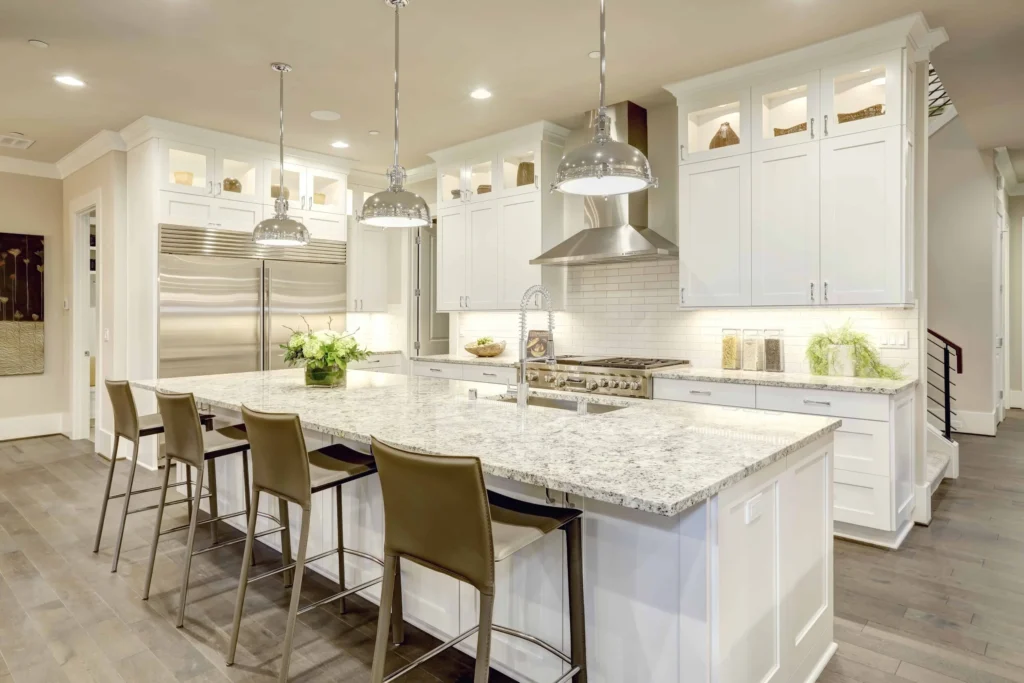
Putting It All Together: A Tiny Kitchen Organization Plan
Here’s a brief overview of how all seven tricks work together as a system:
| Trick | What It Does | Time to Set Up |
|---|---|---|
| Use your walls | Adds vertical storage off the counter | 1–2 hours |
| Counter Deserves It rule | Filters what stays on the counter | Immediate |
| Vertical cabinet storage | Maximizes cabinet space | 30–60 minutes |
| Multi-purpose tools | Reduces total items you own | Ongoing |
| Life clutter system | Stops non-kitchen stuff from landing on counters | 30 minutes |
| Drawer organization | Makes putting things away easy | 1 hour |
| Weekly reset | Maintains the whole system | 10 min/week |
Begin with whatever trick eliminates your largest irritant. You don’t have to do all seven at once. Even applying two or three of these principles will produce a significant impact.
Common Mistakes That Undo Good Organization
It’s also good to know what not to do. Here are the most common ways people go wrong when trying to organize a tiny kitchen:
Buying storage products before decluttering. Additional bins and baskets won’t help if you have too much stuff. Always declutter first, then organize what’s left.
Organizing for how you wish you cooked, not how you actually cook. If you never bake, don’t use prime cabinet real estate for baking supplies. Organize around your real habits.
Making the system too complicated. If a system requires too many steps to put something away, you won’t use it. Make it simple enough to put each item in its proper place within just one or two seconds.
Ignoring the refrigerator door and top. The top of the fridge is prime vertical real estate. There is more to the fridge door than people realize. Using these spaces effectively creates more room in cabinets, which helps keep counters clear. According to Good Housekeeping’s kitchen organization guide, even the smallest unused spaces can yield surprising storage solutions when approached creatively.
FAQs About Tiny Kitchen Living Organization
Q: What is the most powerful thing I can do right now for tiny kitchen living organization?
Enact the “Counter Deserves It” rule right away. Take a tour of your kitchen and remove anything from the counter that you don’t use daily. Store those items in a cabinet or donate them. This one 15-minute step makes the biggest visible difference.
Q: How do I organize a tiny kitchen with no storage at all?
Start with the walls. A pegboard, magnetic strips, and floating shelves can provide significant storage without the need for any cabinets. Also consider a rolling cart that you can move out of the way when not in use — it provides counter and storage space without being permanent.
Q: What are the best products for tiny kitchen organization?
The most universally useful products include: magnetic knife strips, pegboards with hooks, shelf risers for cabinets, adjustable drawer dividers, nesting cookware sets, over-the-door organizers, and collapsible dish drying racks. Many of these are low-cost and available at any home goods store.
Q: How do I keep my kitchen organized when I share it with other people?
Make the system so simple that others follow it without thinking. Label shelves and drawers. Create one specific spot for every category of items. Talk openly about the one-tray rule for life clutter. And use the weekly reset as a shared habit — make it part of a weekend routine that everyone participates in.
Q: Can tiny kitchen living actually make cooking more enjoyable?
Absolutely. When your counters are clear, cooking is less of a chore and more of an adventure. You have room to prep, room to think, and everything you need is within reach rather than buried under piles. Once their kitchen is well-organized, many people discover they cook at home much more often.
Q: How frequently should I completely re-evaluate my kitchen organization system?
Six months is a good timeframe for most people. Seasons change, cooking habits evolve, and products wear out. A twice-yearly check-in allows you to adjust the system so it fits your life now — not the life you had when you first set it up.
The Bottom Line
Organizing a tiny kitchen is not about perfection. It’s about developing simple, intelligent systems that simplify daily life.
The seven tricks in this article — use your walls, filter what earns counter space, make the most of cabinet verticals, choose dual-purpose tools, manage life clutter, organize drawers properly, and keep a weekly reset habit — work together to create a kitchen that feels open, functional, and genuinely enjoyable to be in.
You don’t need a larger kitchen. You just need a smarter approach to the one you have.
Pick one trick to work on this week. See how it feels. Then layer in another. Small changes add up quickly, and before long, clutter-free counters will simply be your new normal.