Over-the-sink shelving shows up in almost every small-kitchen Pinterest board, usually next to a perfectly styled mason jar of utensils and a single potted herb that’s never going to survive that close to dish soap splash. It looks like the answer to a counter that’s lost the war against clutter. Sometimes it is. More often, it’s a shelf that gets used for three weeks and then becomes a place where sponges go to die.
I’m not anti-shelf. I’m anti-buying-things-because-they-photograph-well. So let’s actually work through whether this product earns a spot above your sink, or whether it’s solving a problem you don’t have while ignoring the one you do. (If you just want the quick yes-or-no version, we’ve also broken that down separately in Is Over-the-Sink Shelving Actually Worth Buying?.)
- What Over-the-Sink Shelving Actually Solves (and What It Doesn’t)
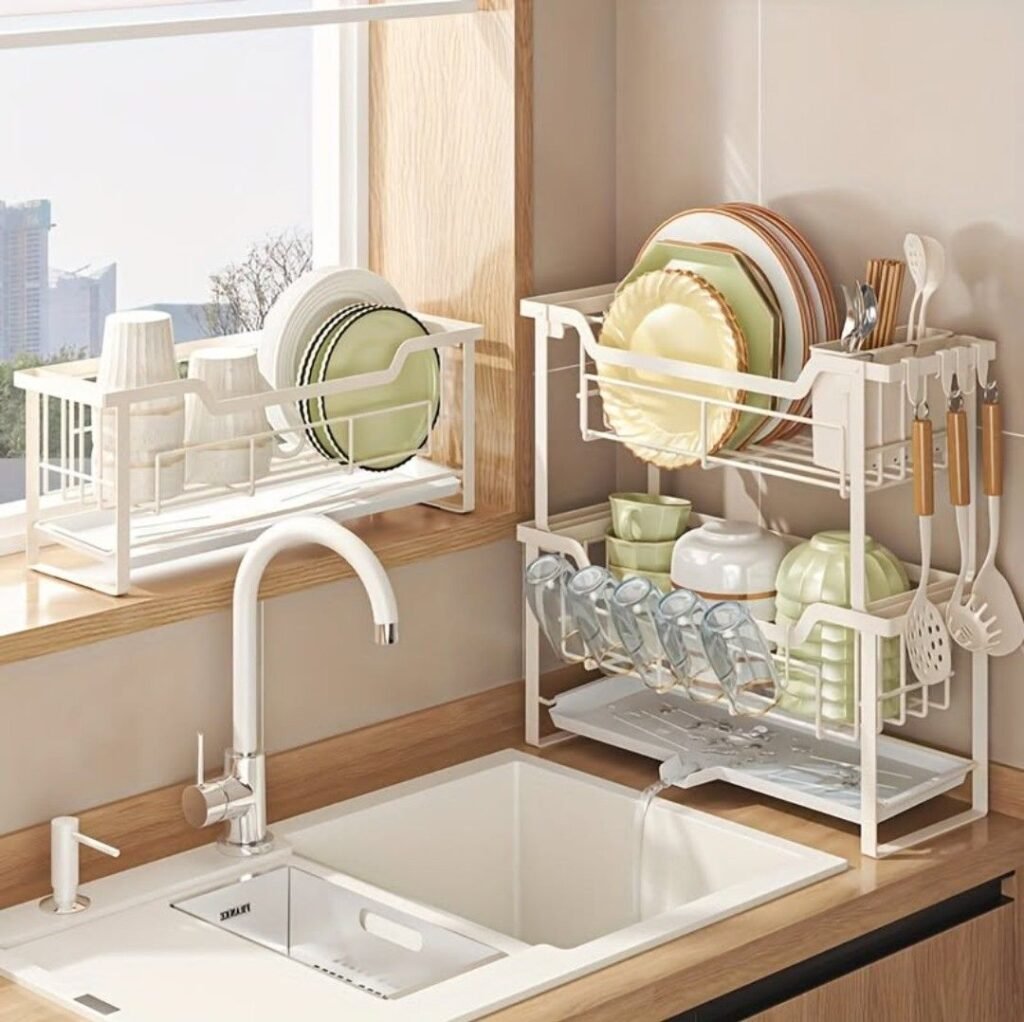
The honest pitch for over-the-sink shelving is vertical real estate. In a studio kitchen or a galley layout, the wall above the sink is one of the only surfaces nobody’s fighting you for. No appliance wants to live there, no cutting board needs it, so it sits empty while your counter drowns in dish soap, a drying rack, and whatever mail you haven’t dealt with yet.
What it solves: a place for things you reach for at the sink specifically. Dish soap, a scrub brush, maybe a small bottle of hand lotion if your hands take a beating from hot water. That’s a short list.
What it doesn’t solve: general kitchen storage. I’ve watched people try to turn a 24-inch shelf into pantry overflow, and it just doesn’t carry that weight, literally or organizationally. If your real problem is “I have nowhere to put my cereal boxes,” a shelf six inches from a running faucet was never going to fix that.
- Materials and Mounting: What Holds Up in Real Kitchens
This is where most of the disappointment with these products actually comes from, and it’s rarely the shelf’s fault. It’s the mounting.
Tension-rod shelves, the kind that wedge between the wall and the underside of an upper cabinet, are the most common style sold for rentals because they need zero drilling. They’re also the least stable. Run hot water with any force, set down a heavier ceramic soap dispenser, and you’ll feel the whole thing wobble. Wall-mounted shelves with actual anchors hold far more weight and don’t shake every time someone opens the dishwasher door below.
Wood looks warm in photos and is the first thing to swell, warp, or grow a faint smell after six months of steam exposure. If you love the look, seal it properly or skip it for this specific spot.
- Where People Get the Sizing Wrong
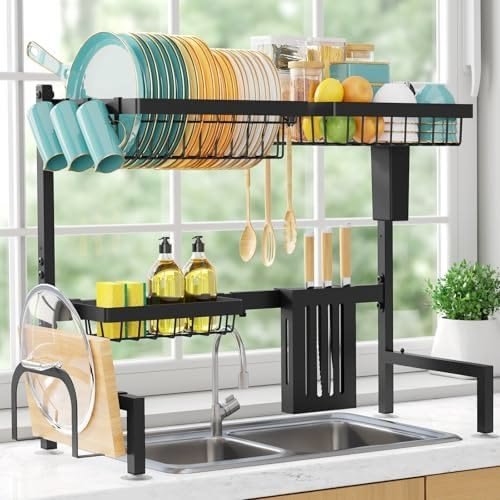
The single most common mistake isn’t the product. It’s the measurement, or the lack of one. People order a shelf based on what looked good online without checking the actual clearance between their faucet height and the bottom of their upper cabinets.
Here’s the part that trips people up: a tall soap dispenser plus a shelf that sits too low means you can’t actually use your faucet’s sprayer head without knocking something over. I’ve seen kitchens where the shelf had to come back down within a week for exactly this reason.
Before buying anything, measure three things. The height from your faucet’s highest point to the bottom of your cabinets. The depth available without the shelf interfering with your faucet’s swing radius. And the width of the window above your sink, if you have one, since plenty of shelves are designed assuming a solid wall.
And one more thing nobody mentions: condensation. A shelf sitting directly over running hot water collects moisture on its underside. If it’s not a material that sheds water, you’ll eventually see drip marks on whatever’s stored below it on the counter.
- When It’s Worth Buying, and When It’s Not
It’s worth it if your sink area genuinely has dead vertical space, you only need to store sink-adjacent items, and you’re willing to spend slightly more on a properly wall-mounted version instead of the cheapest tension-rod option. In a studio apartment kitchen, that few inches of organized space can be the difference between a counter that functions and one that doesn’t.
It’s not worth it if you’re trying to solve a bigger storage shortfall, if your window placement leaves no real shelf space anyway, or if you’re not willing to drill into tile or drywall and the tension-rod alternative would drive you crazy with how much it shifts.
If you’ve already tackled your under-sink cabinet and your cabinet doors are doing double duty, an over-sink shelf is genuinely the next logical step rather than an impulse buy, especially once you’ve noticed why cabinet space runs out faster than you think.
A lot of readers writing in about tiny kitchen wins ask about this same wall before they ask about anywhere else in the kitchen, probably because it’s the one spot that feels “free.” If that’s you, it’s worth also looking at how to organize spices without a spice rack, what works instead in a kitchen with no drawers, and shelf risers vs. drawer organizers for the rest of the storage puzzle.
For anyone working with a galley kitchen specifically, the swing radius issue above matters more than usual since there’s less room to work around a miscalculation.
Tiny Kitchen Living gets this question often enough that it deserves its own answer rather than a line item in a general storage roundup, which is really why this one’s getting its own space here.
Frequently Asked Questions
Will an over-the-sink shelf interfere with my faucet?
It can, especially with pull-down or pull-out faucet heads that need vertical clearance to swing forward. Measure your faucet’s full range of motion before mounting anything, not just its resting height.
Is it safe to store dish soap and sponges in a wood shelf above the sink?
Sealed and well-finished wood can handle it for a while, but unsealed or lightly finished wood will absorb moisture and warp or discolor faster than most people expect, sometimes within a few months of daily steam exposure.
Do tension-rod shelves damage cabinets?
Generally no, but they can leave pressure marks on cabinet undersides over time, and the rubber grips occasionally transfer a faint residue. Wall-mounted versions avoid this entirely if your wall can take anchors.
Can I put a small plant on an over-the-sink shelf?
Only if it tolerates steam and indirect light well, and even then, splash from the faucet will shorten its life. Pothos and some ferns handle it better than most herbs, which tend to resent the humidity swings.
What’s the realistic weight limit I should plan for?
Cheaper tension-rod models are usually rated for 10 to 15 pounds total, though real-world stability often drops below that once water hits the shelf. Properly anchored wall-mounted shelves can handle considerably more.
If you’re weighing this against other small-kitchen upgrades, it’s worth a look at the rest of what’s on Tiny Kitchen Living before you commit to a wall you can’t easily un-drill.