Years ago, on one of my first solo consultations, I told a client to buy a stackable shelf organizer for her cabinet because it had worked beautifully in a kitchen I’d designed the month before. She bought it. It sat in a box in her closet for four months because her cabinet depth was two inches shorter than the one I’d been picturing. I learned something that day that I still tell every client who has a studio kitchen now: the product is never the first decision. The measurement is.
That mistake still bothers me a little, honestly, because it was such an easy thing to check and I just didn’t. But it taught me to slow down before recommending anything, and it’s the lens I bring to every small-space kitchen I look at now, including the ones I hear about through emails from readers of Tiny Kitchen Living.
1. Start With What You Actually Reach For Every Day
Most organization advice starts with containers. Mine starts with a notepad. Before you buy a single bin, spend two days writing down every item you physically touch while cooking. Not what you own. What you use. There is always a gap between those two lists, and in a studio kitchen that gap is where most of your wasted space lives.
I ask clients to sort that list into three tiers: daily use, weekly use, and occasional use. Daily-use items earn the most accessible real estate, full stop, no exceptions for sentimental value or how nice something looks. This is also where cabinet depth becomes a real constraint rather than an afterthought. If you’ve ever wondered why your cabinets feel full within a month of buying new organizers, the issue usually isn’t the organizers. It’s that nobody measured first. I wrote a longer breakdown of why cabinet space runs out faster than you think if you want the fuller explanation, but the short version is that vertical space gets ignored almost every single time.
A short paragraph here, because this part matters more than people expect: label nothing yet. Sort first. Labeling before sorting locks you into a system before you’ve tested whether it actually fits how you cook.
2. The Drawer Versus Shelf Question Nobody Answers Honestly
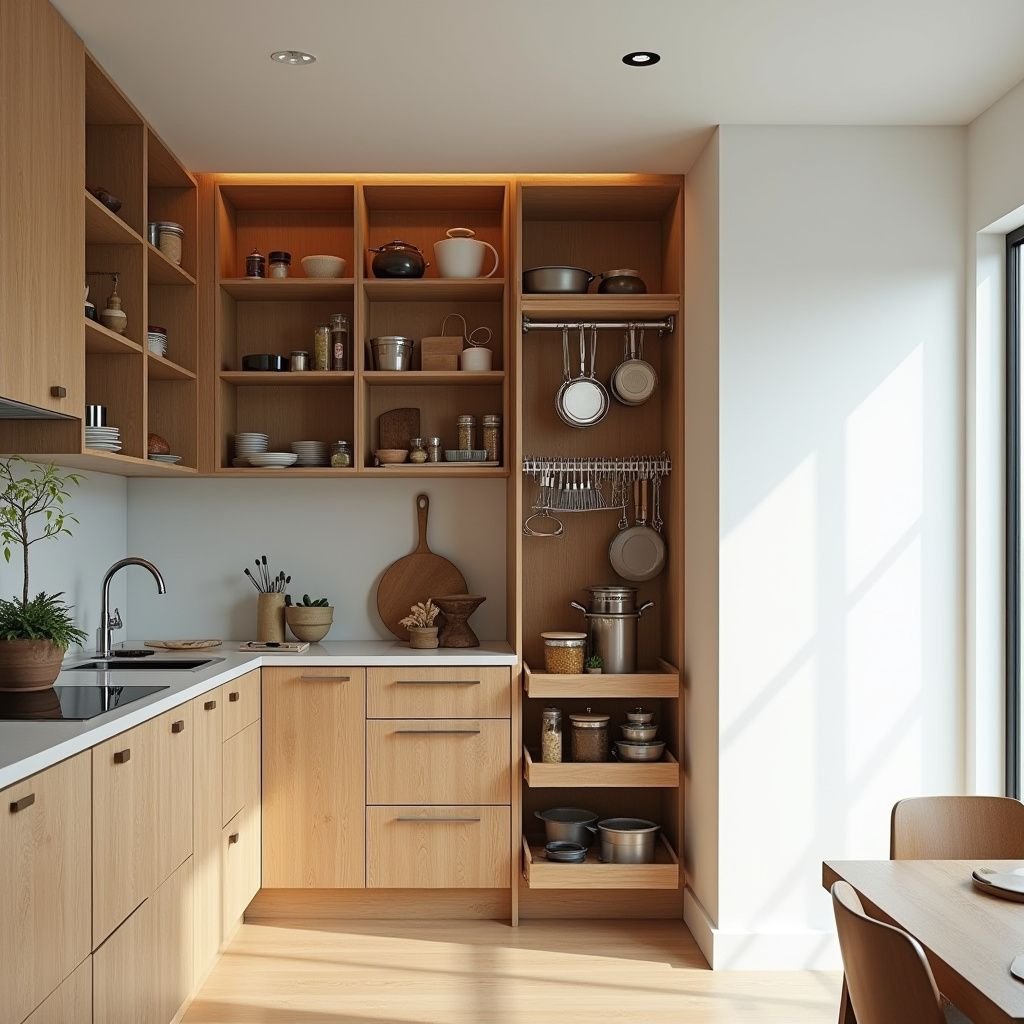
Clients ask me constantly whether they should prioritize drawer organizers or shelf risers, and most articles dodge the question by saying “it depends.” It does depend, but I can give you an actual answer instead of a shrug.
| Factor | Shelf Risers | Drawer Organizers |
|---|---|---|
| Best for | Plates, bowls, canned goods | Utensils, small tools, packets |
| Setup time | Under 5 minutes | 15 to 30 minutes (measuring matters) |
| Cost range | Low | Low to moderate |
| Biggest risk | Tipping if overloaded | Wrong size grid for the drawer |
| Works without tools | Yes | Mostly yes |
If your kitchen has more cabinet space than drawer space, risers win almost every time, because they let you use height you’re currently ignoring. If you’ve got deep drawers and shallow cabinets, the math flips. I go into this with more real-world scenarios in shelf risers versus drawer organizers, including a layout that trips people up constantly: the single-drawer kitchen.
And if you genuinely have no drawers at all, which happens more in studio rentals than landlords like to admit, there’s a separate approach that doesn’t rely on either option.
3. Spices, Oils, and the Stuff That Multiplies Without You Noticing
Here’s where people usually go wrong, and I see it in almost every studio kitchen I walk into: spice collections grow silently. You don’t buy twelve spices on purpose. You buy one for a recipe, then another, then a duplicate of one you already had because you forgot it was in the back of the cabinet. Within a year you’ve got forty jars and nowhere flat to put them.
The fix isn’t a spice rack, mainly because most studio kitchens don’t have wall space or counter space to spare for one. A tiered drawer insert works if you have a drawer. A door-mounted rack works if your cabinet doors are deep enough to clear the shelves behind them, which you should check before buying anything, because this is the single most common return I hear about from readers. I’ve written a full guide on organizing spices without a spice rack that covers four layouts depending on what storage you actually have, not what Pinterest assumes you have.
Oils and vinegars deserve their own small zone too, ideally near the stove but not directly above it, since heat shortens their shelf life faster than most people realize.
4. Building One System Instead of Five Half Systems
This is the section I wish more people read before they start buying organizers. A studio kitchen doesn’t fail because it lacks storage. It fails because it has five half-finished storage attempts layered on top of each other. A bin here. A rack there. A drawer divider that almost fits. None of it talks to the others.
What actually works is choosing one pantry zone, even if that zone is a single cabinet, and building everything around it deliberately. I put together a step-by-step on building a one-cabinet pantry system that walks through the order of operations, because order matters more than the products themselves. Canned goods at eye level. Bulky bags below. Anything you grab without thinking at the front edge.
I’ll admit this approach feels almost too simple when I explain it to clients, and a few have pushed back, asking why they’d pay a designer for advice this basic. But the difference between knowing it and doing it consistently is most of the job. Tiny Kitchen Living exists partly because that gap between knowing and doing is so common, and partly because I got tired of repeating the same five sentences in consultations.
5. What I’d Actually Tell Someone Moving Into Their First Studio
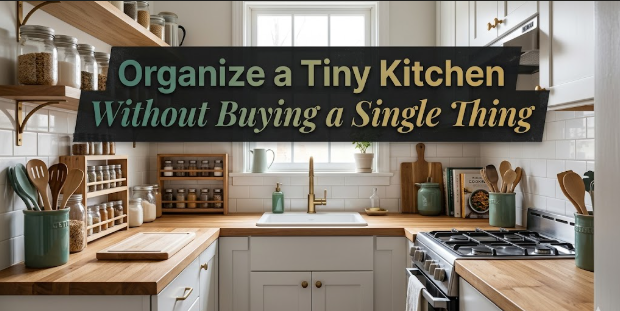
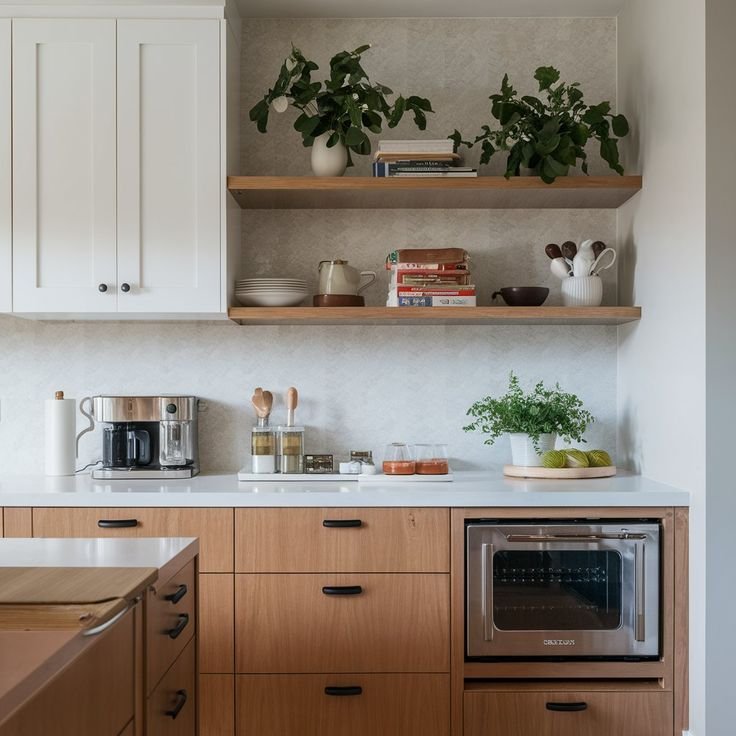
Buy less than you think you need, at first. Live in the space for two weeks before organizing anything permanently, because your real habits will surprise you. And resist the urge to fill every visible inch of counter or shelf just because it’s there. Empty space in a small kitchen isn’t wasted. It’s the only thing that keeps the room from feeling like a closet you cook in.
If I had to boil this whole article down to one habit worth keeping, it’s this: measure before you buy, sort before you organize, and don’t let the size of your kitchen convince you that more storage products is the answer. Usually it isn’t.
Frequently Asked Questions
Is it worth buying expensive organizers for a rental kitchen I might leave in a year? Generally, no, unless the organizer is something you’d take with you, like a freestanding cart or a non-adhesive drawer insert. Anything mounted or built into the cabinetry should stay cheap and simple if you’re not staying long.
How do I organize a kitchen with only two cabinets total? Treat one cabinet as your pantry zone using the tiered approach above, and dedicate the second entirely to cookware and dishes. Trying to split both categories across both cabinets usually leads to more confusion, not less.
What’s the single biggest mistake you see in studio kitchens? Buying storage products before measuring the actual space. It happens constantly, and it’s almost always reversible, but it wastes money and time that a five-minute measurement would have saved.
Do over-the-sink shelves actually help, or are they mostly for show? They can genuinely help if your sink area has unused vertical space and you’re using them for lightweight, frequently used items like a dish rack or cutting board storage. Quick checklist before buying one: measure faucet height, check for window clearance, and confirm the shelf won’t block natural light you rely on.
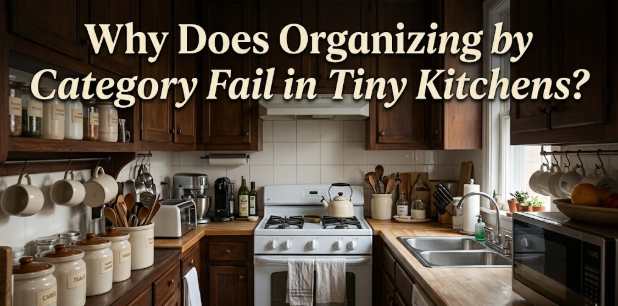
Should I organize by category or by how often I use something? By frequency first, category second. A studio kitchen rewards quick access over tidy categorization, and the two don’t always line up the way you’d expect.
If you’re working through a full small-kitchen setup rather than just one or two fixes, the broader roundup of small kitchen storage ideas worth testing in 2026 is a reasonable next stop.