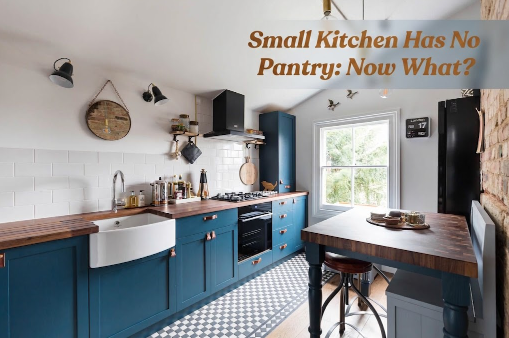
Most kitchens built before the 1990s don’t have a pantry, and a good number of the ones built since don’t either. I get called into more kitchens missing this one feature than almost any other gap, and the panic is always the same: where is the flour supposed to go now? I write a lot about kitchens that don’t give you much square footage to work with, that’s basically the whole premise behind Tiny Kitchen Living, and the missing pantry question comes up in nearly every small-kitchen consultation I run.
Here’s what I tell people. A pantry is a function, not a room. Once you stop thinking of it as a missing closet and start thinking of it as a job that needs to get done somewhere, the kitchen opens up in ways most homeowners don’t expect.
I’ve spent over two decades designing kitchens for people who never thought they’d fit a coffee maker, a stand mixer, and three weeks of groceries into eighty square feet. It’s doable. It just takes a different starting point than “add a pantry.”
1. Why So Many Small Kitchens Skip the Pantry First
Builders treat pantries as a square footage decision, not a design one. If the floor plan is tight, the pantry is usually the first thing cut, right after the mudroom and before the breakfast nook. That’s true in postwar bungalows and it’s just as true in the new-construction studios and accessory dwelling units going up right now.
The result is a kitchen with cabinets sized for dishes and pans, not for the volume of dry goods, snacks, and small appliances a real household accumulates. And that’s the actual problem. It’s not that you’re missing a room, you’re missing somewhere between 15 and 25 cubic feet of dedicated dry storage, spread across whatever cabinetry you do have.
That number matters because it tells you what you’re actually solving for. You don’t need a pantry-shaped hole filled. You need that volume recovered from somewhere else in the kitchen, or just outside it.
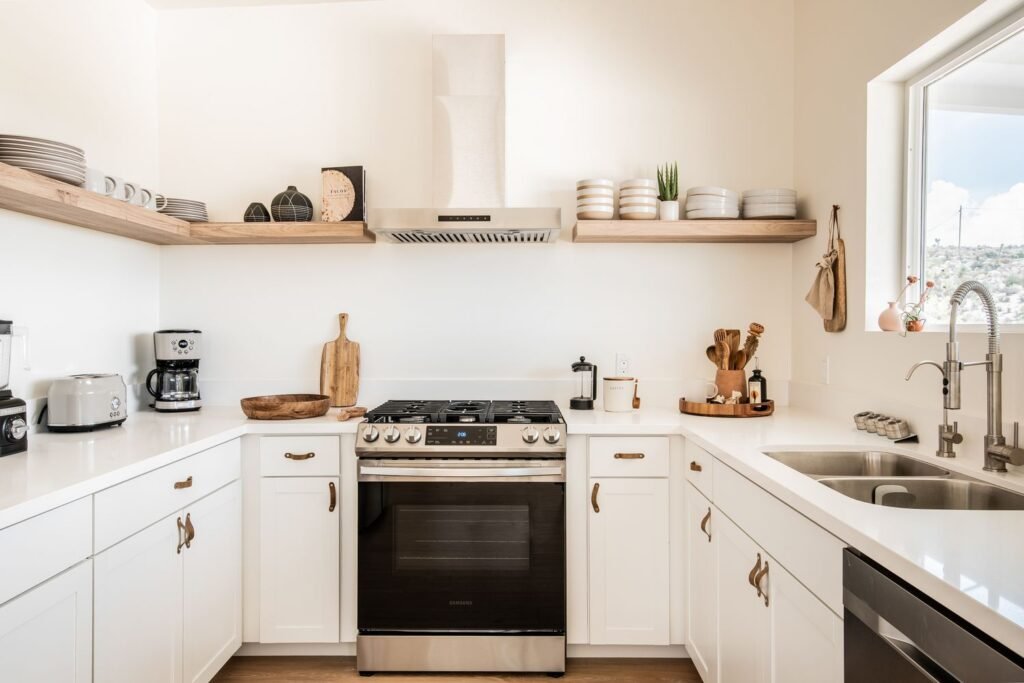
2. The Vertical Space You’re Already Paying For
Look up. Most small kitchens waste the 12 to 18 inches above the upper cabinets and the dead air above the refrigerator, and both are already inside your existing footprint, so you’re not asking for anything new.
A shallow cabinet built above the fridge, even a stock 12-inch-deep box, holds an enormous amount of low-rotation stuff: the punch bowl, the extra cutting boards, the seasonal baking pans. Move that gear up there and you’ve just freed up prime, eye-level cabinet space for actual food.
The space above standard 30-inch upper cabinets is trickier because it’s usually too tall to reach safely without a stool, which is exactly why people give up on it. Don’t put daily items there. Use it for bulk paper goods, the extra case of sparkling water, things you grab once a month, not once a day.
One thing I see go wrong constantly: people fill this overhead space with decorative baskets and call it done, then wonder why their counters are still buried. Vertical storage only earns its keep if it’s actually doing storage duty, not decoration duty.
3. Cabinet Upgrades That Function Like a Built-In Pantry
This is where the real recovery happens, and it’s also where I’d spend money first if a client only had room in the budget for one upgrade.
A pull-out pantry unit, sometimes called a utility cabinet or a pantry roll-out, is a tall, narrow cabinet, usually 6 to 12 inches wide, fitted with sliding wire or wood shelves on full-extension rails. Tucked into a gap beside the refrigerator or at the end of a cabinet run, one of these can hold close to what a small closet pantry would, just arranged vertically instead of walked into.
If you’re not replacing cabinetry, a few retrofits do almost as much work:
| Solution | Best for | Typical cost | Install difficulty |
|---|---|---|---|
| Pull-out pantry cabinet (built-in) | New cabinetry or full remodel | $400-$1,200 | Professional install |
| Door-mounted wire racks | Existing cabinet doors, small jars and packets | $20-$60 per door | DIY, under an hour |
| Lazy Susan or kidney shelf | Corner cabinets | $40-$150 | DIY, 1-2 hours |
| Stackable shelf risers | Any cabinet shelf | $10-$25 each | DIY, minutes |
| Tension-mounted pantry shelving | Renters, no drilling allowed | $30-$90 | DIY, no tools |
A quick word on door-mounted racks, because this is where I see the most disappointment. They’re wonderful for spice jars, foil boxes, and snack packets, and they’re a poor choice for anything heavy or tall, like a five-pound bag of rice or a stack of canned goods. Check the weight rating before you load one up. Most are rated for 15 to 25 pounds total, and a couple of full grocery hauls will get you there faster than people expect.
4. Freestanding Pieces, for Owners and Renters Alike
Not every fix has to touch the existing cabinetry, which matters a lot if you’re renting or just not ready for a renovation.
A freestanding hutch or armoire, even a secondhand one, can be repurposed entirely for dry goods and small appliances once you add a few wire baskets or shelf inserts inside it. I’ve used old wardrobes this way more than once, and clients are always a little surprised at how natural it looks once it’s styled in with the rest of the room.
A rolling bar cart earns its keep here too. It’s mobile, which means it can live wherever the kitchen actually needs the extra surface that week, and it doesn’t ask permission from a landlord. Slim, 6 to 10 inch wide rolling carts fit into gaps most furniture can’t, including the sliver beside a stove or fridge that builders leave for code clearance and nobody else seems to know what to do with.
And if you’ve got even a few square feet just outside the kitchen, a coat closet, a hallway nook, an awkward corner near the dining table, that space can become an unofficial pantry with nothing more than a shelving unit and either a curtain or a cabinet door to keep it from looking like storage. This is exactly the kind of low-cost fix we come back to often at Tiny Kitchen Living, because so many readers are solving the same square footage problem in different rooms of the same small home.
5. Where This Usually Goes Wrong
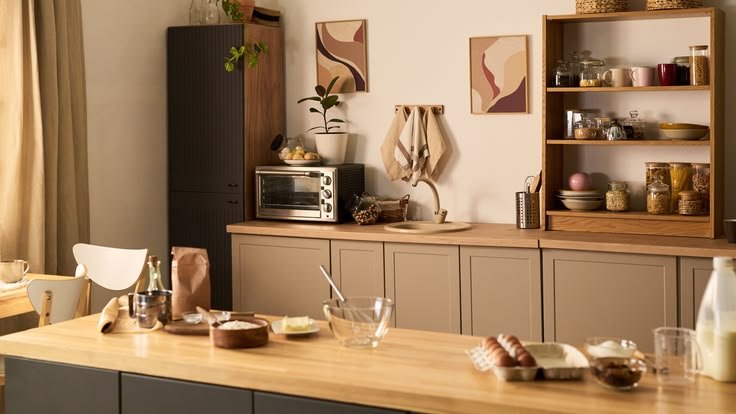
The single biggest mistake I see is people buying organizing products before they’ve actually mapped where things go. Matching glass canisters look fantastic in photos, but if you buy them before measuring your available shelf depth, you end up with beautiful jars that don’t fit anywhere, and the actual clutter just moves to the counter instead.
The second mistake is solving for volume instead of frequency. People stack their daily coffee and cereal in the hardest-to-reach spots because that’s where the open shelf happened to be, while the once-a-year holiday baking supplies sit at eye level. Sort by how often you reach for something, then assign the prime real estate accordingly. Always.
A smaller but common one: over-relying on stackable bins in a cabinet with adjustable shelves you never bothered to adjust. People assume the shelf spacing a builder chose is fixed. It almost never is, and a single afternoon spent repositioning shelves to match what you actually own will outperform any product you could buy.
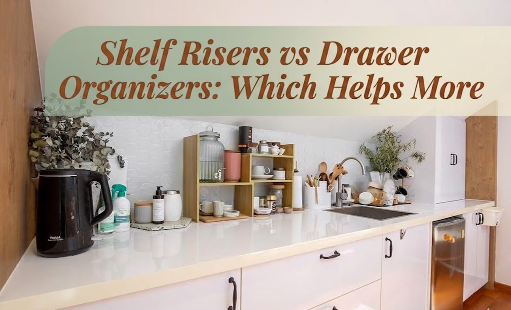
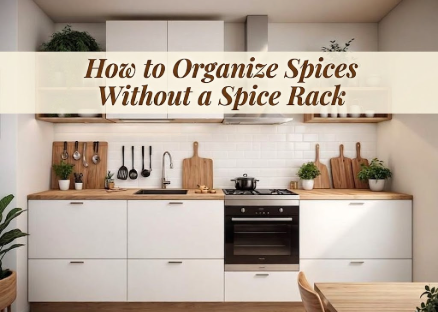
If there’s one habit that separates a kitchen that works from one that doesn’t, it’s measuring before buying. Every time, no exceptions. For anyone working through related storage gaps elsewhere in the kitchen, our breakdowns of whether over-the-sink shelving is actually worth buying, how to organize spices without a spice rack, what works instead of drawers in a kitchen that has none, and shelf risers versus drawer organizers are worth reading alongside this one, since the same square-footage problem keeps showing up in different corners of the same small kitchen.
6. A Realistic Order of Operations
If you’re starting from zero, here’s the sequence I’d actually follow, not the idealized version.
First, empty every cabinet and drawer in the kitchen and group what you own by category, not by where it currently lives. You’ll find duplicate spices, expired flour, and serving pieces you forgot you had. See our Tiny Kitchen Living decluttering checklist for small kitchens if you want a structured way to do this part.
Second, measure your available vertical inches above the fridge and above the upper cabinets before buying anything. Bring a tape measure, not a guess.
Third, fix one zone completely, the cabinet beside the fridge, the corner unit, whichever is worst, before moving to the next one. Half-finished zones are how kitchens end up more cluttered than when you started. There’s a longer breakdown of this zone-by-zone approach in Tiny Kitchen Living guide to organizing a galley kitchen.
Fourth, add freestanding pieces only after the built-in space is optimized. A bar cart full of canned goods is a band-aid if the cabinet beside it still has three inches of dead air at the top.
This isn’t a weekend project for most kitchens, and that’s fine. I’d rather a client take three weekends and get it right than rush one Saturday and end up exactly where they started.
That’s really the whole shift. You’re not missing a pantry. You’re missing an inventory of your own vertical inches, and most people have more of them than they think.
Frequently Asked Questions
Can I add a real pantry to a kitchen that was never built with one?
Sometimes, if there’s an adjacent closet, hallway, or even a deep coat closet you can repurpose. A contractor or designer can usually tell you within an hour whether a wall is load-bearing and whether the swap is realistic for your layout.
What’s the single best alternative to a built-in pantry?
For most small kitchens, a tall pull-out cabinet beside the refrigerator does the most work for the least disruption. It’s narrow enough to fit gaps a full pantry never could, and it holds a surprising amount once the shelves run floor to ceiling.
Are door-mounted pantry racks actually useful, or just a gimmick?
They’re genuinely useful for lightweight items like spices, packets, and small jars. They’re a poor fit for anything heavy. Check the weight rating on the hardware before loading it up, since most cap out well below what a full grocery run will add.
How do renters handle pantry storage without drilling into anything?
Tension-mounted shelving, rolling carts, and freestanding furniture solve most of it. None of it requires a single hole in the wall, and all of it moves with you when the lease ends.
Is it worth paying for a custom pull-out pantry cabinet instead of a stock one?
| Factor | Stock cabinet | Custom cabinet |
|---|---|---|
| Cost | Lower | Higher |
| Fit for odd gaps | Limited sizes | Built to the inch |
| Lead time | In stock or quick order | Several weeks |
| Best for | Standard-width gaps | Awkward or narrow spaces |
If your gap is a standard width, a stock unit will do the job for less. If it’s an odd nine or eleven inches, which is common in older homes, custom is usually the only thing that actually fits.