For most of my career, I assumed counter clutter was a tidiness issue. People would apologize for it when I walked into their kitchen for a consult, like they expected me to judge the crumbs and the half-used bag of coffee filters sitting next to the toaster. I’d nod along and say something reassuring. Then I started actually timing how people moved through their own kitchens while cooking, and the story changed completely.
A cluttered counter isn’t a mess. It’s a missing workstation. In a kitchen that’s twelve feet wide or smaller, which describes a huge share of the readers I hear from at Tiny Kitchen Living, the counter is doing double or triple duty. It’s prep space, plating space, sometimes the only flat surface in the entire apartment that isn’t a bed or a desk. When something else claims that surface permanently, whether it’s a stand mixer used twice a year or a stack of unsorted mail, the kitchen loses function it never gets back during the day.
1. The Misconception About Counter Clutter
This is where the misconception really shows up. People treat a cluttered counter as a finished state, something to feel slightly bad about and then quietly live around. They build their cooking habits to fit the twelve inches of open space next to the stove, and they don’t even notice they’re doing it anymore.
I made this same mistake in my own kitchen for longer than I’d like to admit, working around a coffee station that ate almost two feet of counter and only got used once a day for about ninety seconds. The clutter wasn’t laziness. It was a system, just a bad one, and it had quietly decided how I cooked.
The real misconception isn’t that clutter looks bad. It’s that clearing it is mostly cosmetic. It isn’t. Clearing a counter changes the physics of how you move through a small kitchen, and that has very little to do with how it photographs.
2. What Actually Changes When the Counter Is Clear
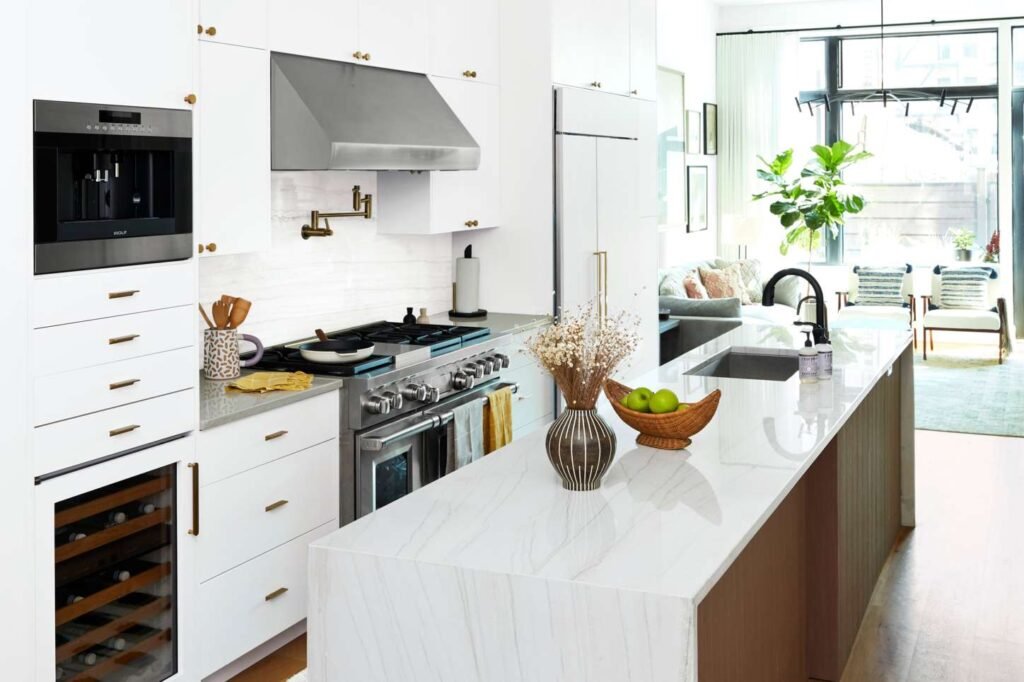
Once the surface is genuinely open, a few things shift right away. Prep gets faster, because you’re not playing a small game of Tetris with the cutting board every time you start dinner. You reach for the stove less reluctantly, since starting to cook doesn’t first require relocating four items somewhere else. And the kitchen reads as bigger, even though not a single wall moved, because open horizontal surface is one of the strongest visual cues our brains use to judge room size.
Here’s a rough version of what I see shift in client kitchens during the first week after counters are properly cleared, not just wiped down once and left to refill.
| Cluttered Counter | Cleared Counter | |
|---|---|---|
| Prep space available | 1 to 2 feet, often broken up | One continuous run |
| Time to start cooking | 3 to 5 minutes of relocating items | Under a minute |
| Where small appliances live | Wherever there’s room, often permanently | Cabinet or shelf, pulled out when used |
| How big the kitchen feels | Smaller than its actual footprint | Closer to true size |
| Chance of skipping cooking on a tired night | Higher, friction adds up | Lower, less to push through |
That last row gets dismissed a lot, but it’s the one that actually changes habits long term. Cooking dinner on a counter that’s already half occupied adds friction nobody accounts for ahead of time. After a long day, friction wins more often than people like to admit.
3. Where All That Stuff Came From in the First Place
Counters don’t fill up randomly. In nearly every small kitchen I’ve worked in, the clutter falls into the same handful of categories.
Small appliances that earned a permanent spot because there was nowhere else obvious to put them. Mail, keys, and random household items that migrated to the kitchen because it’s the first flat surface inside the front door. Spice jars and cooking tools that overflowed out of a cabinet that ran out of room months ago. And decorative items, the fruit bowl, the utensil crock, the canisters, that started as styling choices and quietly became permanent fixtures nobody questions anymore.
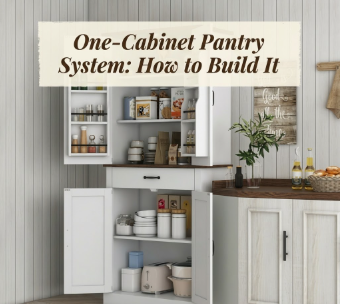
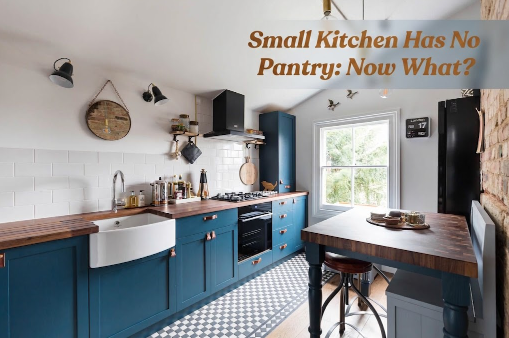
That cabinet overflow point is worth pausing on. It’s almost never about owning too much. It’s about cabinet space disappearing faster than people expect, something I’ve written about at length elsewhere here on Tiny Kitchen Living. A kitchen with no pantry forces a lot of dry goods and gear into cabinets that were never sized for it, and that’s also exactly why cabinet space runs out faster than most people expect.
Spice jars are their own special case. Once they spill out of a single cabinet shelf, they tend to land on the counter near the stove, and from there they basically never leave. I’ve got a full breakdown on organizing spices without a dedicated rack if that’s the specific clutter source in your kitchen, because it usually is.
4. Building a System That Actually Holds
Clearing a counter once is easy. Anyone can do it on a Saturday afternoon with a trash bag and some motivation. Keeping it clear is the part that actually requires a system, and the system has to account for where things go, not just where they came from.
Start by sorting whatever’s currently on the counter into three groups: things used daily, things used weekly, and things used rarely. Daily items earn counter space, or close to it, a shelf or wall mount within easy reach counts too. Weekly items belong in a cabinet or drawer, accessible but not prime real estate. Rare items, the ice cream maker, the fondue pot, the panini press used twice in three years, go wherever storage is least convenient, even if that means a high shelf or a closet outside the kitchen entirely.
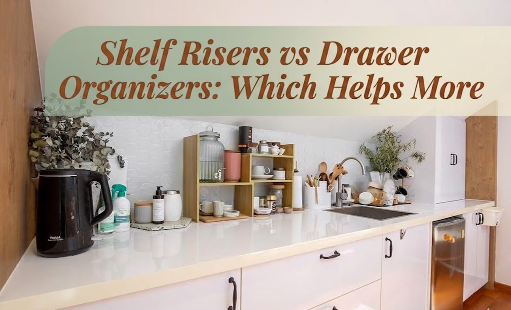
This is also where the right organizer actually matters, but only after the sorting happens, not before. Buying bins and risers first just gives clutter a slightly nicer container. If you’re deciding between options for a cabinet that’s already tight, the comparison between shelf risers and drawer organizers walks through which one actually earns its space depending on what you’re storing.
And if your kitchen skipped drawers entirely, which is more common in older buildings and studio layouts than people expect, the system above still works. It just leans harder on vertical and cabinet storage instead of drawer space.
5. Where People Usually Go Wrong
The most common mistake I see is treating counter clearing as a one-time event instead of a standing rule. Someone clears everything off, feels great for four days, then the mail pile starts again because nobody decided where mail actually goes. The counter was never the problem. The missing decision was.
The second mistake is guilt-based keeping. People leave an appliance out because they feel like they should use it more, not because they actually do. If the stand mixer has come out twice this year, it doesn’t need prime counter real estate just to remind you it exists.
And the third one catches almost everyone at least once: stashing clutter out of sight in a cabinet that’s already full, which doesn’t solve anything. It just moves the friction one drawer over and calls it organized. A system only works if the new home actually has room to spare.
A cleared counter doesn’t need to stay magazine-perfect every single day. Dishes happen, dinner happens, life happens on that surface too. What matters is whether it resets back to open space without a fight, because that’s the difference between a counter that works for you and one you’re quietly working around.
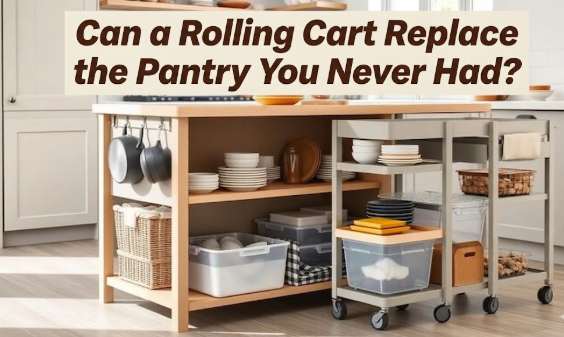
If your kitchen also skipped drawers, that’s one of the most common follow-up questions I get from Tiny Kitchen Living readers, and I get into what actually replaces them over here.
FAQs
Why does my counter get cluttered again within a day of clearing it?
Usually because nothing was actually assigned a new home, so items default back to the counter out of habit. Clearing without deciding where things go long term is the most common reason it doesn’t stick.
Do I need to buy organizers before I can clear my counters?
No, and buying them first often backfires. Sort what’s staying out, what’s moving to a cabinet, and what’s going into deeper storage before spending money on bins or risers.
What’s the one item I should remove first if I only have ten minutes?
Whatever’s been sitting there the longest without being used. It’s usually a small appliance or a decorative piece that stopped earning its spot months ago.
Should I keep my coffee maker out, or store it?
If you use it daily, it’s earned counter space. If it’s more of a once-or-twice-a-week habit, a cabinet shelf within reach works better and frees up real prep room.
Will clearing my counters actually make my kitchen feel bigger, or is that just an aesthetic thing?
It’s not just aesthetic. Open horizontal surface is one of the strongest visual cues for perceived room size, so clearing counters genuinely changes how large a small kitchen feels, not only how it looks in photos.