Most people think the hard part of a kitchen purge is the decision-making. It isn’t. The hard part comes the week after, when the cabinet looks different, your hand reaches for something in the wrong place, and you spend three seconds wondering whether you accidentally threw out the right colander.
You didn’t. But that feeling is real, and it shows up consistently. I’ve worked in kitchen and bath design for 24 years, and I’ve watched this particular transition play out in kitchens ranging from a full gut renovation to a studio apartment reorganized over a single Sunday afternoon. The immediate visual payoff of a purge is obvious. What actually changes in the weeks and months after is a different, more complicated story, and it’s one of the subjects I keep coming back to here at Tiny Kitchen Living because the gap between expectation and reality is so consistent.
1. The First Week Is Stranger Than You Expect
The disorientation tends to start around day two or three.
You’ve cleared things out. The expired canned goods are gone, the duplicate peelers, the appliance bought with good intentions in 2019 that moved four times without being plugged in. The cabinet looks different. Better. But when you reach for something on autopilot, your hand doesn’t quite land in the right place, because the mental map you built is based on how the kitchen was, not how it is now.
It’s temporary and strange, and it matters here only because people sometimes read this disorientation as evidence that the purge went too far. “I must have thrown out something I needed.” Almost always, they didn’t. The cabinet just needs a week to become familiar in its new arrangement.
I say this because if you’re three days out from a purge and the kitchen feels slightly off, that isn’t backsliding. The brain had a detailed map of the old layout, clutter included, and it’s now in the process of updating. Give it a week before you start second-guessing any of the calls you made.
2. Cabinet Space: The Early Win and the Longer Game
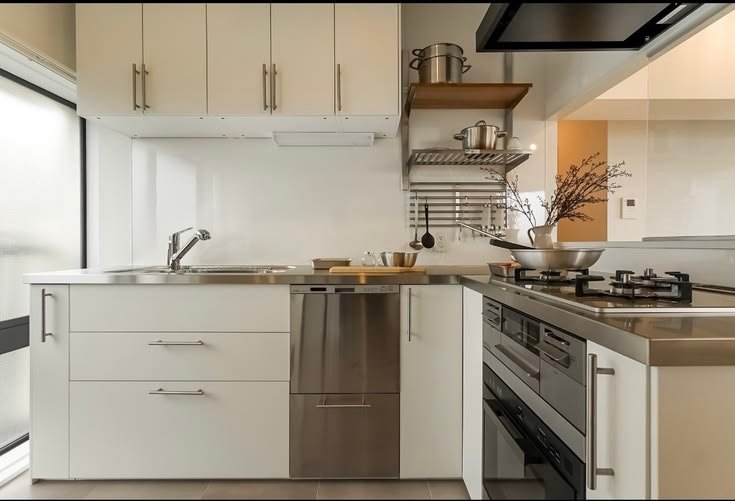
The space you gain immediately after a purge is real, and it feels genuinely good. Shelves that required moving three things to reach one thing are now navigable. The drawer closes on the first push. And there’s room between things, which is exactly what allows a small kitchen to function rather than just hold things.
But the space is not self-maintaining. This is the part most people don’t account for going in, and it’s the reason cabinet space runs out faster than you expect even after a thorough edit. The conditions that created the clutter in the first place are still active. Groceries come in. Impulse purchases happen. Someone gifts you a kitchen gadget. A container from a neighbor’s dinner party makes its way in and never quite makes its way out.
The open space after a purge is not a permanent state. It’s a window. What happens in that window determines whether the kitchen holds or gradually returns to where it was before. Without deciding what the new standard is for what earns a place here, the space fills back up on a predictable timeline.
Here’s a rough map of what happens in most small kitchens after a purge, when no incoming rule is in place:
| Time Since Purge | Cabinet State | What’s Usually Happening |
|---|---|---|
| Immediately after | Open, organized | High motivation; everything has a deliberate home |
| 2 to 4 weeks | Still mostly clear | Intentional purchasing; conscious decisions about what comes in |
| 1 to 3 months | Small clusters forming | Gifts, sales, and habits beginning to creep back in |
| 6 months | Noticeably fuller | Inflow wasn’t managed; most of the purge gains are eroded |
| 1 year | Near original state | Without a rule, the purge was effectively a temporary fix |
This isn’t inevitable. It’s just what happens when the purge isn’t paired with a rule about what earns space going forward. The kitchens that hold onto their gains are the ones where someone decided something concrete: one in, one out. Nothing new until something old leaves. That kind of rule sounds rigid and becomes automatic faster than most people expect. The abstract intention to “be more careful” tends not to survive the first appealing sale.
3. What Actually Shifts in How You Cook
The behavioral change in how you cook comes later than the physical change. Much later.
The kitchen looks better on Saturday. It starts to feel better by the following week. But the shift in how you actually approach cooking on a tired weeknight doesn’t usually show up for three or four weeks. It builds underneath the surface.
What changes is friction. Not motivation, not inspiration. Just friction. Starting dinner in a cleared kitchen is marginally easier than starting it when you first have to relocate the cutting board, hunt through overlapping containers to find the lid that fits, and clear a landing spot for a pot. That margin feels small. Over thirty or forty dinners it adds up to something real.
Here at Tiny Kitchen Living, I hear often from readers who expected to feel a burst of cooking enthusiasm after clearing things out. That burst rarely arrives, and it isn’t the mechanism anyway. The mechanism is that the kitchen stops pushing back every time you walk in wanting to cook something, and over time that means you try more often, which leads to cooking more confidently, which leads to cooking more regularly. It’s indirect and slow. Worth understanding that way, because if you’re expecting the transformation to feel immediate and it doesn’t, you might decide the purge didn’t work when it’s actually just in the early stages of working.
There’s a whole category of small kitchen cooking problems nobody warned you about that disappear entirely after a good purge for this exact reason. They were never really cooking problems. They were friction problems that happened to show up while cooking. A buried pan. A colander that required unpacking half the lower cabinet to reach. A purge solves those, and for a lot of people, removing that friction turns out to be the more meaningful change.
4. What Doesn’t Change Unless You Decide It Does
A purge doesn’t change the footprint of the kitchen.
This sounds obvious and still catches people off guard. If the kitchen has three linear feet of usable cabinet storage, removing everything you don’t use doesn’t change that number. You now have three linear feet holding fewer, better-chosen items, which is a genuine improvement, but the math of the space is constant. If the kitchen couldn’t hold a full pantry’s worth of dry goods before, it still can’t. A purge makes the situation more honest and the available space more usable. It doesn’t move walls.
The issue is that people sometimes feel so encouraged by the early open space that they begin reintroducing items. A new set of matching containers to replace the mismatched ones they purged. A bulk grocery run because now there’s room. The space fills. The same constraints return, just with slightly cleaner labels.
A purge also doesn’t change buying habits unless you deliberately decide it will. That’s not a criticism. Purchasing patterns run more or less independently of decluttering projects unless there’s a specific intervention at the point of purchase, not at the point of storage. The decision has to happen at the store, or on the checkout page, not when you’re standing in front of the cabinet three weeks later trying to fit something in.
The other thing that doesn’t change without attention is what I think of as the input stream. Kitchens collect things from multiple directions at once: groceries, impulse buys, gifts, temporary items that become permanent. A purge improved the outflow significantly. But if the inflow stays the same, the timeline in that table above is where most kitchens end up. Most decluttering content spends almost all of its attention on what leaves during the purge and almost none on what arrives afterward. That’s the part that actually determines whether anything held.

5. What Actually Stays Different
The lasting changes from a real kitchen purge are modest and practical, and they tend to be more durable than people expect once they’re established.
You know what you own. This doesn’t sound significant until you’ve spent years working off an approximate mental inventory. Before a thorough purge, most people know roughly where things are and roughly how many they have. Not precisely. After a real edit, the inventory is accurate, and that accuracy saves more small daily moments than it seems like it should. You stop buying duplicates of things you already own but couldn’t find. You stop paying real estate to items you’d forgotten existed.
The counter tends to stay more reset-able. Not immaculate, not staged for a photo. Just easier to clear back to a working surface after dinner without a separate thirty-minute project. The connection between how a cleared counter changes a small kitchen and what a thorough purge creates isn’t obvious until you’ve worked through both, because they reinforce each other in ways that don’t show up until you’re actually cooking in the result.
And the low-level decision fatigue decreases. Fewer items in the drawer means finding the right spatula is just finding the right spatula. Fewer options on the shelf means reaching for a container doesn’t require moving four others first. These are small economies of attention. They accumulate into something that quietly shifts how the kitchen feels to cook in on a regular basis.
For what to do with the space you’ve reclaimed, particularly if you’re now thinking about systems that will actually hold rather than just feel good for a month, I’ve been keeping a practical running list of approaches worth testing in small kitchens specifically. It’s over in the small kitchen storage ideas for 2026 guide.
The purge is an afternoon. What it creates takes longer to settle and requires more deliberate maintenance than most people budget for when they’re filling the donation bags. But the version that actually holds, the one that changes how a kitchen feels to cook in week after week, is almost always the one that came paired with a decision about the standard going forward. Not just a clearing of what used to be there. A decision about what gets to stay.
Frequently Asked Questions
Why do I feel unsettled after purging my kitchen?
Your brain had a detailed map of where everything lived, clutter included, and it takes a few days to update that map around the new arrangement. This usually resolves within a week and isn’t a sign that you went too far or made wrong calls during the edit.
How do I stop the kitchen from filling back up after a purge?
Set a rule for incoming items before anything new enters, not after the space looks full again. Something concrete: a direct replacement only, or one in and one out applied consistently. Vague intentions to be more thoughtful tend to fade quickly. Specific rules tend to stick, especially once they become habit rather than effort.
What should I tackle first if I only have an hour?
Food storage containers are the highest-yield starting point in almost every small kitchen. They accumulate faster than nearly anything else, take up disproportionate space, and the sorting criteria are simple: anything without a matching lid, anything cracked or warped, anything untouched in the last year. That single category routinely frees up a full cabinet shelf and sometimes more.
Does purging a kitchen actually make you cook more?
Usually yes, but not through inspiration and not immediately. The mechanism is friction reduction, and it works over weeks rather than days. Once the small obstacles to starting dinner are removed, starting dinner happens more often. The habit builds from that pattern, not from any sudden motivational shift on the day of the purge.
Is it normal to feel like I got rid of too much?
Yes, and it’s almost always a false alarm. The feeling tends to peak around day three, when the open space still feels unfamiliar rather than comfortable. In most cases, what left needed to leave. The discomfort passes as the new layout becomes the default, usually within the first week or ten days.