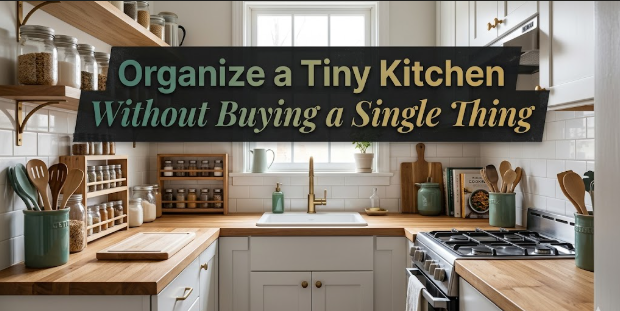
The misconception I keep running into goes something like this: the kitchen was organized once, and daily cooking is what destroyed it.
People work out a system on a Saturday afternoon. Everything gets a spot. The counter clears. The cabinet doors close without resistance. Then two weeks of real cooking later, the counter is covered again, the cabinet nearest the stove has turned into a staging area, and the same person who organized it is standing in front of it thinking they need more space.
The kitchen didn’t fail them. The setup failed. And those are different problems.
1. The Myth: Organization Breaks Down Because the Kitchen Is Too Small
I’ve heard this one a lot, and I understand why it feels true. The kitchen looks messier after a week of cooking, the counter shrinks by Thursday, the drawer that used to close perfectly has developed opinions. And the only visible variable is the cooking. So the cooking gets blamed.
But size and frequency aren’t the actual pressure points here. The problem is that most small-kitchen setups are designed for occasional use, not daily use. Organized once, maintained lightly, accessed a few nights a week. That system works fine for someone who cooks twice a week. It falls apart for someone who cooks every night, because the daily rhythm exposes every weak point in the setup at a speed that a once-a-week kitchen never would.
The specific thing that breaks first is almost always the same: items don’t have a direct path back to where they belong.
A pan that lives in a lower cabinet behind two other pans gets put on the stove burner at the end of dinner because returning it properly takes three moves. A jar of olive oil that lives in a back corner gets parked next to the stove because it’s easier than putting it back. A cutting board that has no proper home ends up on the counter permanently, because there’s no good alternative. None of these decisions feel like a failure in the moment. Each one is a small concession to the reality of cooking tired on a Tuesday.
But they compound. And by Friday, the small kitchen that was organized on Sunday looks like a different kitchen. The person in it usually decides they need more storage, or a bigger counter. What they actually need is a setup where putting things back takes one motion, not three.
Adding an organizer doesn’t fix this. It gives the drift a nicer container. The fix starts with subtraction, not addition.
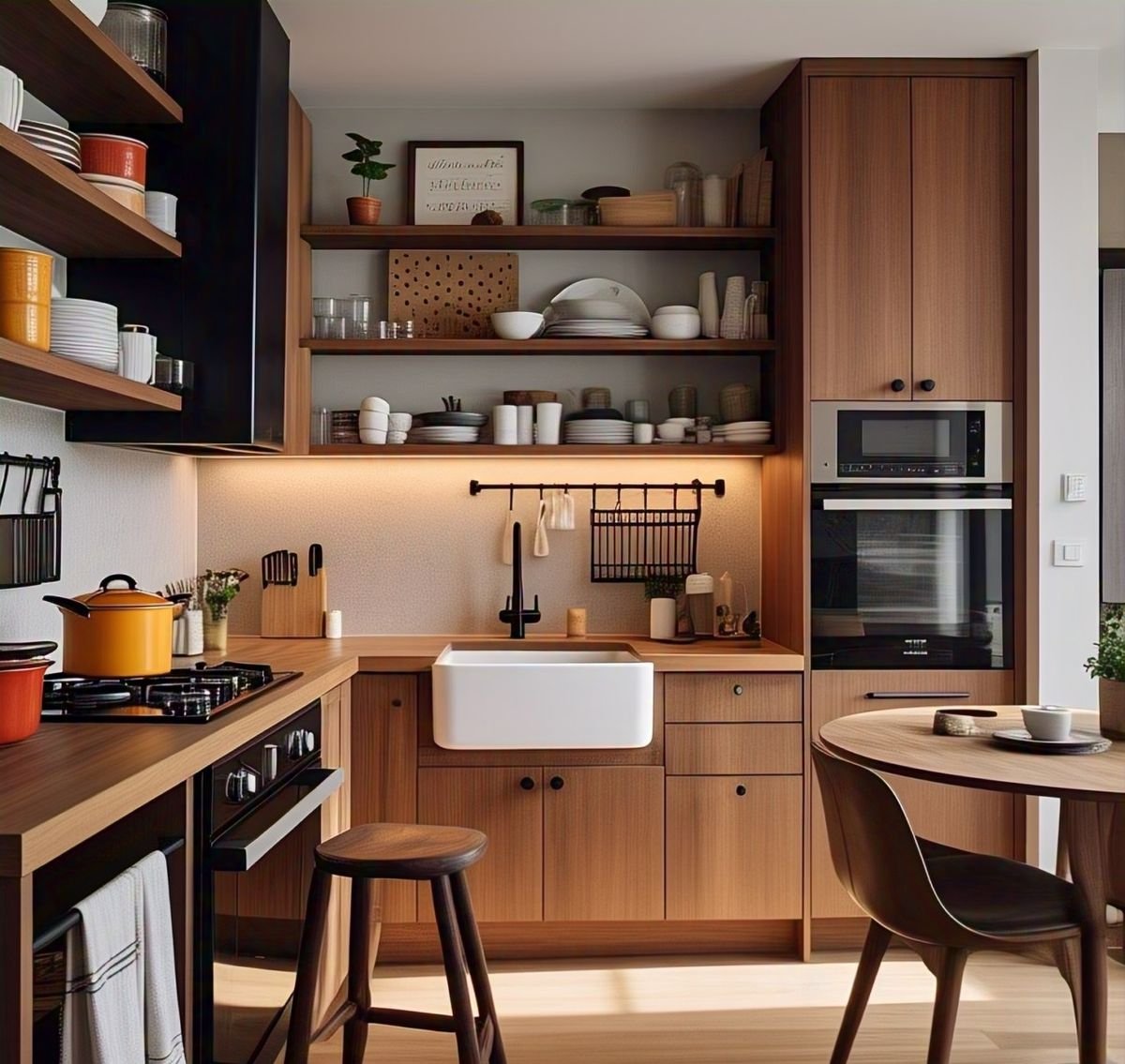
2. What Daily Cooking Actually Does to a Small Kitchen
There’s a specific pattern to how organization fails under daily pressure, and it’s useful to know the sequence because it tells you where to intervene first.
The counter goes first. Not because it fills up all at once, but because temporary placements accumulate. One appliance gets left out after breakfast. A utensil holder that “lives” near the stove edges into prep territory. A cutting board that technically belongs somewhere else becomes a permanent counter resident. Each object makes a small claim on the surface, none of them feel like real decisions, and by midweek the usable prep area has shrunk by a third. If you want to see exactly what’s driving this in your specific kitchen, the piece on counter space killers maps it out in a way that’s harder to see when you’re standing in your own space.
The pantry cabinet follows. Restocking without a system means buying duplicate items you didn’t know you had, creating gaps where things should be, and gradually losing track of what’s in the back of the shelf. In a full-size kitchen with a walk-in pantry, that chaos stays contained. In a single small cabinet, it collapses your whole grocery flow in about ten days.
Here’s a realistic picture of the typical progression:
| What Goes First | Why It Happens | How It Looks by Day 7 |
|---|---|---|
| Counter surface | Temporary placements that never move | Prep space reduced by 30-40%; cooking requires clearing before starting |
| Near-stove cabinet | Tools get parked instead of returned after cooking | Reaching into two or three spots for things needed in one step |
| Pantry cabinet | Restocking without checking existing stock | Duplicates, gaps, and items that have migrated to the wrong zone |
| Dish rack zone | Dishes dry and stay; rack becomes permanent counter furniture | Clean dishes occupying prep territory |
| Everyday tools | No fixed address, migrate to convenient-but-wrong spots | Spatula lives on the counter; spoon lives on the stove; drawer holds the overflow |
None of those individually is a disaster, together they make the kitchen feel like it’s fighting back.
3. The Setup That Holds and the One That Doesn’t
A setup that survives daily cooking has one defining quality: things return to their spot as a natural result of cooking, not as a separate task at the end of it.
That sounds like a small distinction. It’s not.
When putting something back requires the same motion as getting it out, it happens automatically. When it requires extra effort, it gets skipped, especially on the third or fourth consecutive cooking night when tiredness is a factor. The whole organization question in a tiny kitchen under daily use comes down to whether the return path is built into the workflow or bolted on after the fact.
What this looks like for pans: the three you actually use every week sit at the front of the cabinet nearest the stove, nothing blocking them. Pull one out, cook, wash it, put it directly back. One motion each way. The ones you use less often go behind them. No stacking that requires unpacking to reach the pan at the bottom.
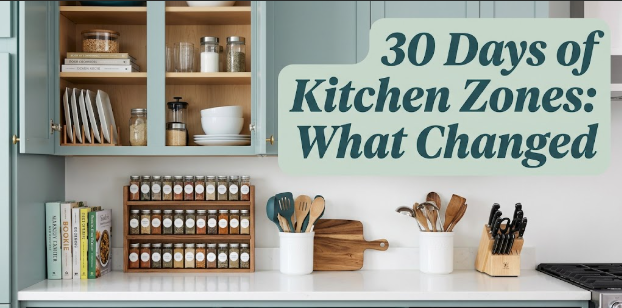
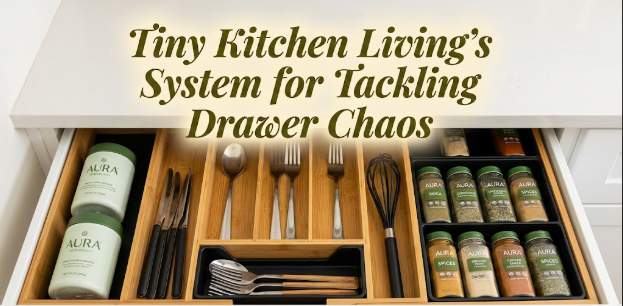
What this looks like for spices: not organized alphabetically, and not organized by cuisine type, which is a system that sounds logical and works for maybe two weeks before it stops. Organized by frequency. The four or five you open every week sit at the front on a riser where you can see the labels. The rest go behind. Whether a riser actually helps more than a drawer insert in your specific cabinet is worth thinking through carefully, because the answer varies more than people expect. The shelf risers vs. drawer organizers comparison gets into the specifics of that decision.
The pantry is its own project. A small pantry cabinet that runs on hope and good intentions falls apart by the second week of daily cooking, quietly and consistently. The version that holds up is a dedicated system where each category has its own zone and the zones are visible enough that you notice immediately when something is missing or misplaced. Building a one-cabinet pantry system is the step I watch most people skip, and the kitchens that skip it are almost always the ones that feel most chaotic by midweek, even when the rest of the setup is solid.
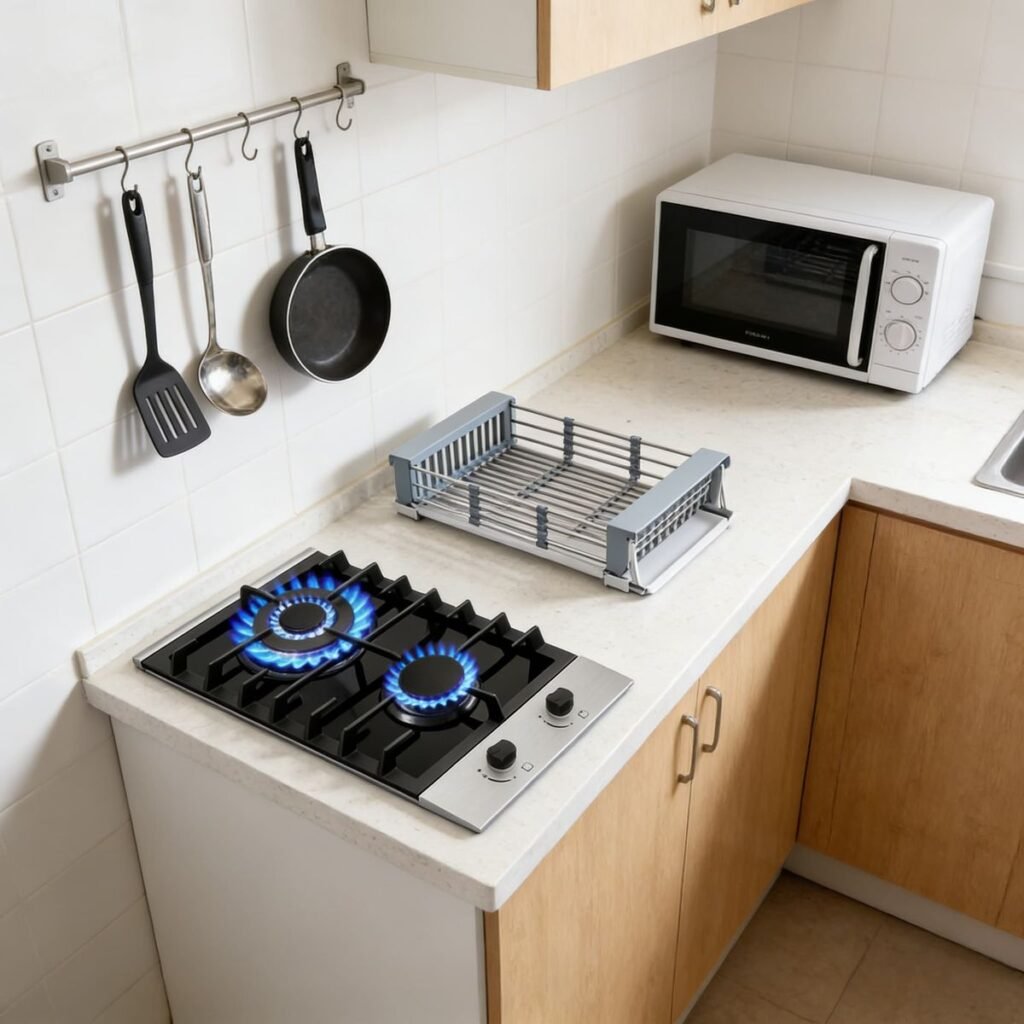
4. Maintenance That Happens During Cooking, Not After
The mistake that underlies everything else: treating kitchen maintenance as a separate activity that happens at the end of cooking, when the dinner is done and everything looks like the aftermath of something.
By that point, putting things away properly feels like extra work. So things get parked. And parked objects become the next week’s drift.
The sequence that actually works is building small returns into the cooking itself. While something simmers, the prep bowls go in the sink. When the cutting board is done, it goes back to its spot before you pick up the next step. Oils and spices get capped and returned the moment you finish with them, not after plating. None of this takes meaningful time. It takes about four seconds per action and roughly one week of consistency before it becomes invisible.
This is the same logic behind clean-as-you-go in professional kitchens. The reason a professional cook can work in 30 square feet of station without it becoming chaos isn’t organizational talent, it’s that clearing happens during cooking as part of the work, not between sessions. The small-kitchen home version is less formal, but the principle holds.
And here’s the part that catches people off guard: the constraint does some of the work. A kitchen with only 18 inches of clear prep surface enforces tidiness in a way that a large kitchen doesn’t, because the cost of letting one thing stay out is immediately visible. In a 300 square foot kitchen you can ignore a cutting board that didn’t get put away. In a 75 square foot kitchen, you can’t. The small space makes its own rules, and once you stop fighting those rules, the daily cooking becomes easier to sustain than people expect.
The cookware question comes up every time I have this conversation. Fewer pieces you actually reach for beats more pieces requiring creative storage, every time, in every small kitchen I’ve seen. If that argument needs more than a sentence to land, the case for it is made in full in why one good pot beats a full cookware set in small spaces on Tiny Kitchen Living.
Organization in a tiny kitchen under daily use isn’t something you set up and return to once a month. But it also isn’t something you fight constantly. That’s the point Tiny Kitchen Living keeps coming back to: the square footage isn’t the problem. The setup is.
When the setup is built around how the kitchen actually gets used, specifically around the fact that cooking happens every night and tools need a one-motion return path, the maintenance load drops to almost nothing. Things get put back because putting them back is the easiest available option. The counter stays clear because it was designed to stay clear, not because someone is making a heroic effort every evening.
The version that doesn’t work is the Sunday reset followed by seven days of drift. It requires too much willpower at too many points where willpower is in short supply. The version that works takes the decision out of the equation.
That’s the whole argument. Build the path back in, and the kitchen stays organized. Don’t build it in, and the kitchen will drift whether it’s 70 square feet or 300.
Frequently Asked Questions
Can you actually keep a tiny kitchen organized when you cook from scratch every night?
Yes, but the setup has to be designed for daily use, not just organized for occasional use. The key difference is whether items have a one-motion return path to their spot or a multi-step one. Multi-step returns get skipped when someone is tired at the end of the third cooking night in a row. One-motion returns happen automatically. A kitchen that sustains daily cooking well is one where every frequently used object has been placed with that return path in mind.
My kitchen is organized on Monday and a mess by Friday. What’s actually happening?
This is almost always a temporary-placement problem. Something gets set down on the counter or stove with the intention of moving it later, and it never moves. Then the next temporary object joins it. By Friday, five or six temporary placements have claimed most of the working surface. The fix isn’t more discipline, it’s finding permanent spots for the objects that float. If something doesn’t have a real home in your kitchen, it will always end up on the counter.
Is it worth buying organizing products before setting up a daily cooking system?
Not before doing a walk-through first. The most consistent mistake I’ve seen is buying organizers before identifying where the friction actually is. Cook one full dinner and pay attention to what takes more than one motion to access or return. Those specific friction points are what you buy for. Random bins and canisters rarely solve the actual problem, and they add their own clutter when they don’t quite fit.
Does cooking for two make it harder to keep a small kitchen organized?
It increases the dish load and uses tools faster, but the same principles apply. If anything, the case for a one-motion return system gets stronger with two people navigating the same small space, because there are twice as many moments when something could get parked in the wrong spot. The adjustments are usually about scale, a slightly more generous dish drying setup, one or two additional hooks, rather than a completely different approach.
How do I keep the pantry cabinet from becoming chaos after a few weeks of daily cooking?
Build zones and buy to them. Most pantry cabinet drift happens because restocking is done from memory rather than from looking at what’s actually there. When the cabinet has visible zones for grains, canned goods, oils, and so on, gaps become immediately obvious when you open the door. You buy to fill the gap rather than buying duplicates of what you already have pushed to the back. That one shift in buying behavior keeps the pantry stable in a way that no amount of reorganizing sustains on its own.
For more on the specific storage setups and product decisions that hold up under daily cooking pressure, the small kitchen storage ideas worth testing in 2026 roundup at Tiny Kitchen Living covers what actually gets used and what looks good in theory but doesn’t survive Tuesday night.