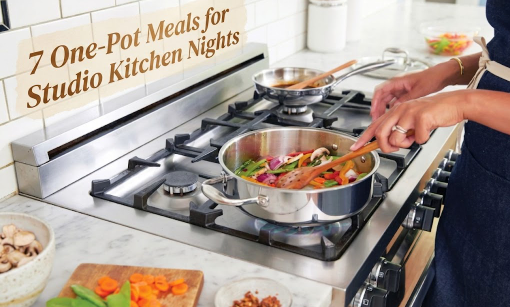
The studio kitchen doesn’t need twelve pans. It needs one good one and meals that work inside it, start to finish, without a second pot crowding a burner you don’t have to spare.
I’ve been designing kitchens for 24 years. The kitchens I find most compelling now are the ones where the constraint is the whole point. A studio apartment kitchen is essentially a design problem with a hard limit: you work with what fits. And the cooking that thrives in that environment isn’t simpler cooking. It’s smarter cooking, and the distinction matters more than people usually give it credit for.
What follows are seven one-pot meals I’d genuinely put in front of anyone navigating a weeknight in a small kitchen. Not because they’re easy in a vague, aspirational sense, but because they’re built around how studio kitchens actually function: one or two burners, no room to stage three pans simultaneously, a sink that becomes a staging area faster than anyone ever plans for, and prep space that requires some real economy of motion.
1. Before the Meals: Your Pan Is the First Decision
The “one pot” in one-pot cooking is doing significant work, and it’s worth being clear about what that actually means before we get into the recipes themselves.
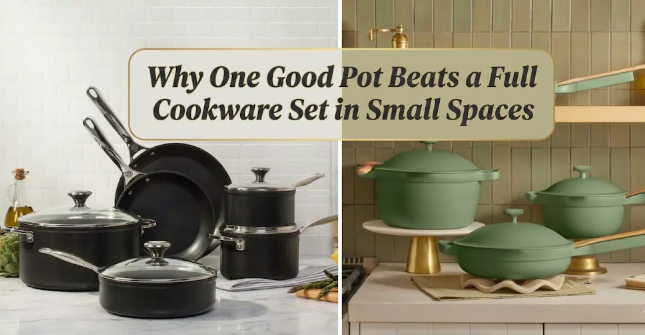
For everything on this list, you want a wide, heavy-bottomed skillet with a lid, ideally in the 10 to 12-inch range. A skillet at this size handles searing, simmering, and gentle steaming without switching vessels. A Dutch oven gives you more volume for anything broth-based, like a soup that doubles as tomorrow’s lunch. But if you’re picking one pan and only one, a 10-inch enameled cast iron skillet is the most honest recommendation I can make. It holds heat evenly, transitions from high to low without fussing, and doesn’t require the babysitting that a thin nonstick does over high heat.
And this matters practically because counter clearing in a small kitchen comes down to how many items you’re staging at once. One pan means one cleanup, one stovetop footprint, and one thing to find storage for at the end of the night. That’s not a small thing.
2. Three Weeknight Meals That Move in 30 Minutes or Less
Shakshuka
This is the one I recommend most to people who tell me they don’t cook during the week because they’re too tired to manage anything complicated. And I hear that a lot, from clients, from people who follow along here at Tiny Kitchen Living, from neighbors whose kitchens I’ve seen. The honest answer is that shakshuka was almost designed for tired cooking.
Start with a can of crushed tomatoes in a wide skillet. Add cumin, smoked paprika, a small amount of chili flake if you want the heat, and a pinch of salt. Let it simmer for eight to ten minutes, until it thickens slightly and smells like it means business. Make small wells in the surface and crack two or three eggs directly in. Cover the pan, let the eggs set over medium-low heat for four to five minutes, and pull it off the burner. Feta crumbled on top if you have it. Bread, or a tortilla from whatever you’ve got open, for scooping.
The mistake people make with shakshuka is cooking it fast over high heat. The tomatoes need time to reduce and concentrate, and the eggs need low, covered steam to set without rubberizing on the underside. Slow and covered actually means faster here, because you don’t end up redoing it.
Ground Turkey and Rice Skillet
Brown half a pound of ground turkey in the pan. Season it with garlic powder, onion powder, salt, and whatever dried herb you have open. Once browned, add a cup of long-grain white rice, two cups of chicken broth or water with a bouillon cube, and a handful of frozen peas or corn if those are in the freezer. Stir once, cover the pan, and let it cook on low for eighteen to twenty minutes without lifting the lid.
The rice absorbs the broth. The turkey stays in the pan. Everything finishes at the same time. This produces enough for two nights if you’re cooking for one, and the leftovers reheat well in the same pan with a splash of water over medium-low.
Lemon Orzo with Chickpeas
Sauté two garlic cloves in oil in the pan. Add a cup of dry orzo and stir it in the oil for about one minute, the same way you’d toast pine nuts. Pour in two cups of broth, bring it to a simmer, cover, and cook for nine to ten minutes. When the orzo is tender and most of the liquid is absorbed, stir in a drained can of chickpeas, a generous squeeze of lemon, salt, and a handful of baby spinach that wilts in from the residual heat alone.
The toasting step is what people skip and then wonder why the orzo tastes a little flat. That extra minute in hot oil gives it a faintly nutty base note that carries through the whole dish. It’s not optional, even though it feels like it is.
3. Two Meals Worth the Extra Twenty Minutes
Coconut Milk Lentil Curry
Red lentils are a studio kitchen staple I’d push on anyone. They cook fast, need no soaking, and break down into a thick texture that holds up well as leftovers. Better on day two, if I’m being direct.
Sauté a diced onion and two garlic cloves in oil until soft, about five minutes. Add a tablespoon of curry powder, or a heaping teaspoon each of cumin and turmeric, and stir it into the oil for thirty seconds. Pour in three-quarters of a cup of dry red lentils, a full can of coconut milk, and half a can’s worth of water. Season generously with salt. Simmer covered for twenty-two to twenty-five minutes, stirring once or twice.
The result is a warming, thick curry that keeps four days in the fridge and costs almost nothing to make. If your pantry situation is still being sorted out, this is exactly the kind of meal where a one-cabinet pantry system starts to pay off. A can of coconut milk, a bag of red lentils, two or three spices: that’s the whole ingredient list. Everything shelf-stable.
White Bean and Sausage Soup
Heat a tablespoon of olive oil and brown a few slices of chicken or Italian sausage in the pan first. Remove the sausage, sauté diced onion and celery in the same fat. Add two cans of drained white beans, two cups of broth, a bay leaf, and whatever greens are available. Kale, spinach, and chard all work here, they just have different cooking times. Return the sausage to the pot and simmer covered for twenty-five minutes.
This tastes like something that cooked for hours. The beans release starch into the broth and create a texture that’s between a soup and a stew, which is exactly what you want when you need a meal that fills you up rather than just warming you up. It serves two or three as a main, or one person across three nights, and the second night is consistently better than the first.
4. The Weekend Two
One-Pan Ratatouille with Eggs
Ratatouille gets avoided because the classical version takes close to an hour and involves separate cooking steps for each vegetable. The skillet version is a different thing entirely.
Rough-chop zucchini, eggplant, and tomato (or a can of crushed tomato if fresh aren’t available) and cook them together in a generous pour of olive oil with thyme and garlic over medium heat for about thirty minutes, stirring occasionally. Don’t rush this. The vegetables need time to break down, collapse into each other, and develop a concentrated, jammy texture that you simply don’t get from rushing the heat.
In the last five minutes, crack two or three eggs directly on top of the vegetable mixture. Cover the pan and let the eggs set. Serve straight from the skillet. Good bread makes this a complete meal. And ratatouille the next morning over toast with a soft cheese is genuinely one of the better breakfasts you can make from last night’s dinner.
One-Pot Pasta with Spinach and Parmesan
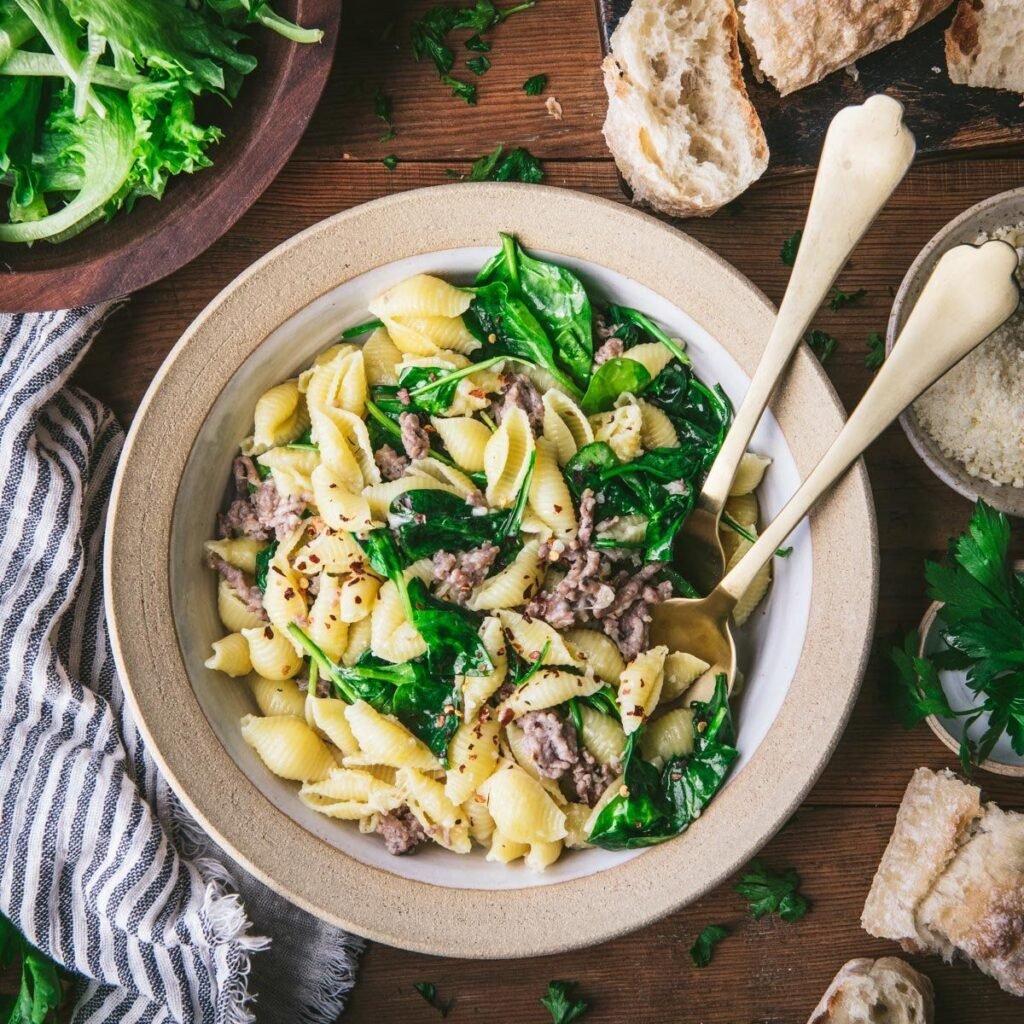
This is the recipe that still surprises people even though the technique is straightforward. Everything goes in the pot raw: pasta (linguine or spaghetti broken in half), enough water to just cover, a garlic clove, a pinch of chili flake, salt, and a drizzle of olive oil. Bring to a boil and cook uncovered at a rapid simmer, stirring frequently, for nine to eleven minutes, until the water is almost fully absorbed.
The starch from the pasta thickens the remaining liquid into something that coats the noodles. It’s not watery, and it doesn’t need cream or butter to hold together. At the finish, stir in two large handfuls of baby spinach and a generous amount of grated Parmesan. The spinach wilts in about forty-five seconds.
People resist this one because it doesn’t feel like a real technique. But finishing pasta in its own starchy cooking water is a principle that appears in Italian cooking for good reason. The one-pot version just takes that logic to its most practical conclusion.
5. What Actually Goes Wrong
The most consistent mistake is treating one-pot cooking like it requires zero attention. The whole point of one pot is less equipment, not less presence. Orzo that isn’t stirred once will stick and burn on the bottom. Rice that goes on too-high heat will crack before it’s cooked through. Eggs dropped into a cold shakshuka base won’t set correctly, the whites will be uneven and strange.
The other pattern is underseasoning throughout and then oversalting at the end trying to fix a flat dish. Salt goes in with the liquid. With the onions at the start. With the tomatoes when they go in. Seasoning in layers is how a one-pot dish builds real flavor without a reduction sauce going separately in another pan.
And the equipment question matters more than people usually acknowledge. A pan that’s too small means everything steams instead of browns. A lid that doesn’t seal means the liquid evaporates before the rice has cooked through. These aren’t expensive problems to solve, but they are real ones. If storage for a proper skillet-plus-lid setup is the actual constraint right now, there are practical arrangements covered in the guide on what works instead of drawers in a kitchen with no drawers that apply directly to pan and lid storage.
One more thing worth naming: people buy a bag of red lentils or a can of coconut milk for one recipe and then aren’t sure what to do with the rest. That’s an ingredient management problem more than a cooking one. If the pantry side of cooking in a small space is where things still feel unsettled, a rolling cart as a pantry replacement is a setup that works better than most people expect, and I’ve seen it done well in kitchens far smaller than the ones most people are working in.
7 One-Pot Meals at a Glance
| Meal | Main Vessel | Approximate Time | Best For |
|---|---|---|---|
| Shakshuka | Wide skillet with lid | 20 min | Solo weeknight, breakfast-for-dinner |
| Ground Turkey and Rice Skillet | Deep skillet with lid | 35 min | Meal prep, two-night cooking |
| Lemon Orzo with Chickpeas | Deep skillet | 20 min | Quick weeknight, vegetarian |
| Coconut Milk Lentil Curry | Medium pot or skillet | 40 min | Weekend batch, keeps 4 days |
| White Bean and Sausage Soup | Medium pot with lid | 40 min | Hearty dinner, three-night batch |
| One-Pan Ratatouille with Eggs | Wide skillet with lid | 45 min | Weekend, next-day breakfast too |
| One-Pot Pasta with Spinach | Deep skillet or pot | 15 min | Fastest weeknight option |
These seven meals stay well within what a studio kitchen can actually manage. One pan, one burner, a cutting board that doesn’t have to be large. The cooking part is solved. What comes next, once the habit is established, is usually the pantry and storage side of things, because you need a reliable stash of ingredients to make these meals work consistently on a weeknight when you don’t feel like planning. That’s the next piece to build.
FAQs
Can I make these recipes without a lid for my pan?
A lid matters most for anything that needs trapped steam: the rice skillet, the lentil curry, and the shakshuka eggs. A baking sheet set over the top of a skillet works as a substitute. It holds heat and moisture well enough for all of these, it’s not elegant but it’s functional.
How much counter prep space do I actually need for a one-pot meal?
A 9 by 12-inch cutting board handles the prep for every recipe here. One onion, a few garlic cloves, sometimes a vegetable or two. These aren’t recipes that generate a staging problem. All the prep fits in one place, in one session, before anything goes in the pan.
I’m cooking for one. Which of these scales down best?
Shakshuka and the one-pot pasta scale to a single portion most naturally, since they don’t depend on ingredient ratios the way rice dishes do. The lentil curry and white bean soup are better cooked as written and eaten over two or three nights, because both dishes improve significantly as they sit in the fridge.
Is cast iron realistic in a studio kitchen where storage is already a problem?
A 10-inch cast iron skillet is about four and a half pounds and hangs easily on a wall hook or sits on a low shelf. It doesn’t need a cabinet or drawer at all. A lot of people in studio kitchens keep theirs on a hook next to the stove, which keeps it accessible and completely off the counter.
Do all of these work on a single electric induction burner?
Yes. All seven are built around one burner, one pot. The curry and the soup may need five to ten extra minutes of simmer time if the burner runs on the cooler side, but none of them are sensitive to heat source in any way that meaningfully affects the final result.
The studio kitchen is a clarifying space when you let it work that way. Fewer pans means fewer decisions. And a meal that’s ready in one pot, on one burner, without making the sink look like a disaster zone: that’s a good Tuesday night by any reasonable measure.
Paula Kennedy is a Certified Master Kitchen & Bath Designer with over 24 years of experience in kitchen and bath design. She writes regularly at Tiny Kitchen Living about cooking, storage, and organization for small kitchen spaces.