Here’s a misconception I ran into constantly across small kitchen consultations, and it never stopped surprising me: people believe meal prep is something you do when your fridge has room for it. Like it’s a reward for having a clean slate. Like you need to wait for the fridge to empty itself before you’re allowed to cook ahead.
You don’t.
The logic usually sounds like this: fridge is full, there’s no space for six containers of prepped food, so I’ll just figure dinner out each night. And what happens each night is nothing gets figured out, because there’s no plan and definitely no prepped food waiting at 6pm. By Wednesday, takeout.
I worked with a client a few years back in a studio apartment. One of those under-counter fridges, barely enough room for a week’s worth of groceries. She had convinced herself meal prep wasn’t possible in her kitchen. We spent maybe ninety minutes reorganizing, and she left with three days of lunches and two dinners done. The fridge hadn’t changed. The approach had.
- The Wrong Belief That’s Making Your Fridge Feel Smaller Than It Is
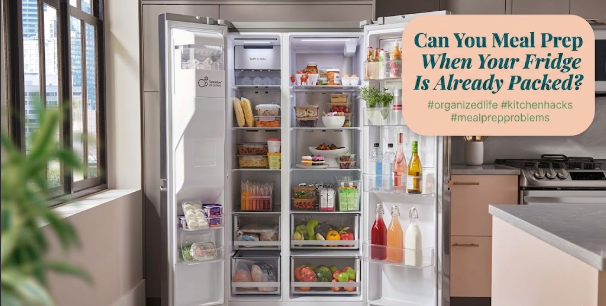
Most fridges, even compact apartment ones, have more usable space than they appear to have when you open the door and see chaos staring back at you.
Condiments lined up across every shelf edge. Leftovers in mismatched containers that won’t stack on each other. An open bag of salad mix taking up a whole drawer. Three different jars of the same hot sauce because nobody checked what was already there before buying another one. A half-eaten container of yogurt that, for some reason, is lying on its side.
That isn’t a full fridge. That’s a disorganized fridge. And those are two completely different problems with two completely different solutions.
Meal prep doesn’t ask for empty space. It asks for intentional space. That distinction is one that comes up again and again over at Tiny Kitchen Living because it’s the root of almost every small kitchen storage problem, not just fridge management.
- The Fridge Audit Nobody Bothers With (But Should)
Before you prep a single thing, you need to know what’s actually taking up space in your fridge versus what just feels like it’s taking up space.
Pull everything out, shelf by shelf. Not all at once. One shelf at a time. Check dates, throw out what’s expired, consolidate duplicates, and move anything shelf-stable back to a cabinet or pantry space. If you’re operating without a dedicated pantry at all, this piece on solving exactly that is worth reading first.
What almost everyone finds during this audit: they had more room than they thought.
In my experience doing small kitchen consultations, people consistently overestimate how “full” their fridge is by somewhere around 20 to 30 percent. Not because they’re imagining things, but because disorganized space registers as used space. Your brain sees the mess and reads it as maximum capacity. It isn’t.
The single most common space drain I see is half-empty containers occupying full shelf footprints. A yogurt container that’s three-quarters gone, sitting open on the middle shelf, is using the same surface area as a full quart of broth standing upright. That’s a geometry problem, and it’s fixable.
Once you’ve cleared, consolidated, and put things back with some intention, most people find room for four to six flat meal prep containers without touching anything they actually use. That’s three days of lunches or two full days of dinners.
Not bad for a fridge that “had no room” an hour ago.
- Zone Your Fridge Before You Prep Anything
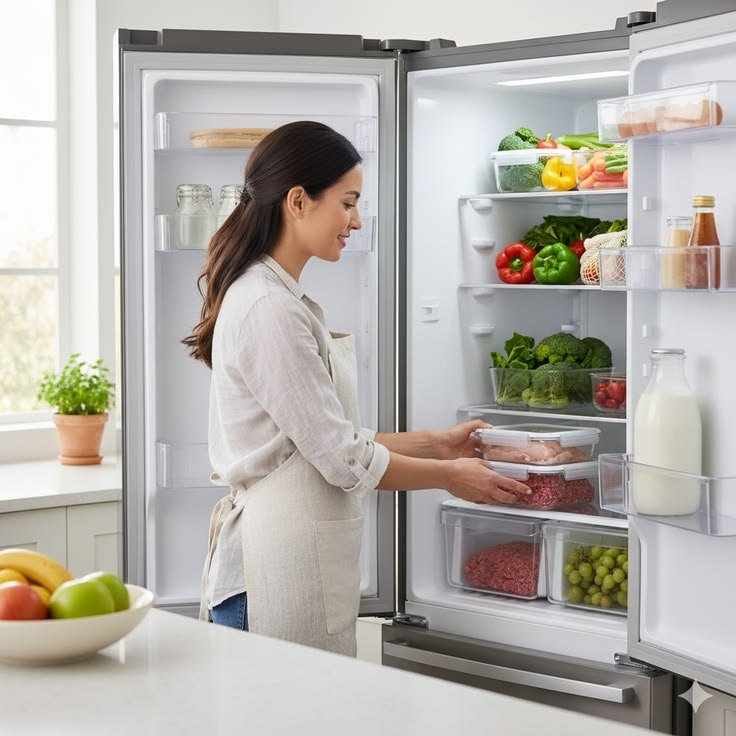
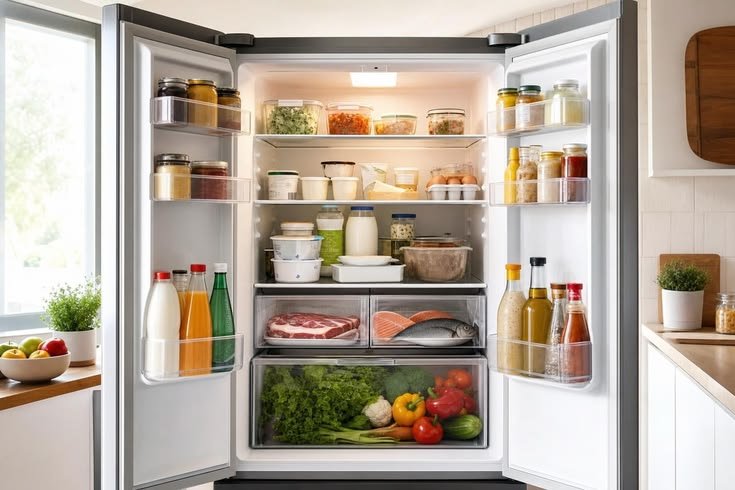
The next step is structural. Your fridge needs zones, and those zones should reflect how you actually cook, not just wherever things happened to land.
Here’s what works consistently in small fridge setups:
Top shelf: Ready-to-eat items only. Prepped meals, packaged leftovers, things that need zero effort before you eat them. This is the shelf you reach for when you walk in exhausted at 6:30pm.
Middle shelf: Ingredients you’re actively using this week. Opened tofu, sliced cheese, cooked grains, a container of leftover sauce. Things mid-use, not things that are waiting.
Lower shelf: Raw proteins. Always below everything else, always in a container that can catch a drip. This is non-negotiable from a food safety standpoint.
Door shelves: Condiments, drinks, and things that can tolerate temperature variation. The door is the warmest part of the fridge. Eggs don’t go here. Neither does anything you’re trying to keep at a consistent temperature.
Most people put things wherever they fit in the moment. And then they can’t find their prepped containers because they’re buried behind a bag of limes and some leftover rice from four days ago.
Zoning takes maybe ten minutes to set up. After that it runs on autopilot, you don’t have to think about it again until your cooking habits shift. This is the kind of structural change that makes a bigger difference than any individual storage product, and it’s something I come back to often when writing about counter-clearing habits because a chaotic fridge and a chaotic counter usually come from the same source.
- What to Actually Prep When Space Is Still Tight
Even with the audit done and the zones set, you still need to be deliberate about what earns fridge space. Not every prepped food is equally worth the real estate.
Here’s a practical comparison:
Food to PrepFridge Space NeededEffort PayoffNotesCooked grains (rice, quinoa, farro)Low — flat container, stackableHighEliminates daily cooking; stacks flushRoasted vegetablesLow to mediumHighWorks in multiple meals all weekHard-boiled eggsVery low — fits in gapsHighNo container needed if stored in shellOvernight oats (jar)Very low — vertical spaceHighTakes up almost no shelf surfacePre-portioned smoothie bagsNone — freezer itemHighFrees fridge entirelyMarinated raw proteinLow — stored flat in a bagMediumTakes minimal space if laid flatCut raw vegetablesMedium to highMediumOnly worth it if you’ll genuinely use themFull assembled mealsHighHighReserve for your two or three busiest days
The high-payoff, low-footprint items deserve your fridge’s prime shelf space. Everything else either gets prepped as-needed or moved to the freezer. Pre-portioned soups, extra cooked protein, anything you won’t eat by day three — freeze it and reclaim the shelf.
A rolling cart with a small cooler section can also work as overflow in some setups, and this piece on whether a rolling cart is actually worth buying walks through the honest answer on that.
One more thing on containers, and I realize this might feel like a side note but it actually matters more than people expect: the shape of your containers will determine how efficiently your fridge fills. Flat, rectangular, stackable. Not round, not tall, not whatever came free with takeout. Round containers leave triangular dead zones between them that add up to a meaningful amount of wasted space over a full shelf. Measure your shelves before you buy anything.
- Where People Go Wrong (And Keep Going Wrong)
A few patterns worth naming directly, because I see them consistently:
Prepping for a full week at once. Three days is the practical ceiling for most small fridges. It keeps food fresh, limits how much you’re managing at once, and keeps your storage footprint from getting out of hand. You don’t need seven days of food in there. You need Tuesday, Wednesday, and Thursday covered, and then you course-correct on Friday.
Working around what’s already in the fridge instead of building from it. If there are leftover roasted peppers and half a block of feta already in there, your meal prep should use those things, not ignore them. Small kitchen cooks develop this habit naturally over time because they can’t afford to let things go to waste, but it’s worth practicing intentionally from the start.
Buying containers before they’ve figured out their system. This is one of the most common small kitchen prep mistakes and also one of the most quietly expensive ones. A set of matching glass containers that turn out to be too tall for your shelves, or too wide for your fridge door to close properly, does not help anyone. Figure out what you’ll prep, measure your specific shelves, then buy. In that order.
Forgetting the freezer is part of the system. The freezer isn’t a backup for things that went bad. It’s an active extension of your meal prep storage. Cooked proteins that won’t be eaten by day three, smoothie packs, extra portions of soup or chili — these belong in the freezer, not competing for fridge shelf space.
The through-line in all of these mistakes is the same: waiting for conditions to be perfect before starting. A full fridge doesn’t need to be half-empty before you can prep. It needs to be organized.
Start with the audit. Set your zones. Prep the high-value, low-footprint foods first. The rest sorts itself out faster than you’d expect, and Tiny Kitchen Living exists exactly for this kind of problem: real constraints, practical solutions, no pretending your kitchen is something it isn’t.
FAQs
Do I need to empty my fridge completely before meal prepping?
No. The goal is a targeted audit, not a blank slate. Clear what’s expired, consolidate duplicates, and move anything shelf-stable to a cabinet. That’s usually enough to free up more space than you expected. A full reset every week is unnecessary and honestly unsustainable.
What container shape takes up the least space in a small fridge?
Flat, rectangular containers win every time. They stack flush with no wasted gap space, they fit more efficiently on a standard shelf, and they make it easier to see what’s inside at a glance. Round containers and tall containers both lose to rectangular ones in small fridge geometry.
How many days of food should I realistically prep for?
Three days is the sweet spot. Food stays fresh, your storage footprint stays manageable, and you can do a mid-week refresh if needed. Supplement with a freezer batch to cover days four and five when you have slightly more time on the prep day.
What if I genuinely only have one shelf available?
One shelf can do a lot with the right approach. Overnight oats in jars, cooked grains in a flat container, hard-boiled eggs, and marinated protein in a zip bag laid flat can all share a single shelf and cover three days of breakfasts and lunches. Prioritize volume-to-meal payoff over variety.
What’s the most common meal prep mistake people make in small kitchens?
Buying containers before figuring out the system. It sounds small, but the wrong shape container for your specific fridge layout can set you back noticeably in both money and frustration. Measure first. Know what you’re prepping. Buy after.
More on making small kitchen storage actually work for you at Tiny Kitchen Living.