The most useful thing I tell someone who just moved into a tiny kitchen is this: don’t buy a single organizer yet.
Not a shelf riser. Not an acrylic bin set. Not that tiered spice thing you bookmarked from a kitchen roundup. Before any of that, spend 20 minutes measuring your actual cabinets and pulling things out of them. Because in 24 years of kitchen and bath design, the most consistent pattern I’ve seen isn’t that small kitchens lack storage. It’s that people shop for solutions before they understand their problem. And then they shop again three weeks later when the first round didn’t work.
This guide is built for that first week, before any money changes hands and before anything gets organized. If you get the foundation right, everything after it goes faster and costs less.
1. Know What You’re Working With Before Anything Else
Wall cabinets and base cabinets are not the same storage problem. They fail in different directions, and treating them identically is where most small kitchen setups go sideways.
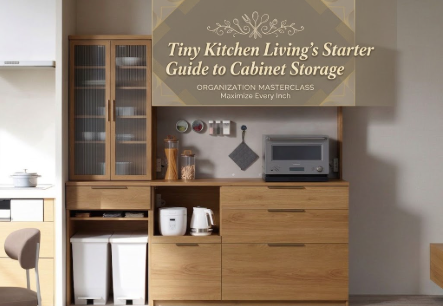
Upper cabinets waste vertical space. Standard wall cabinets are typically 12 inches deep and come with one adjustable shelf, creating two clearance zones of around 12 inches each. Almost nothing you store is 12 inches tall. Mugs are 4 inches. Spice jars are 4 to 5 inches. Small canned goods run 5 inches. Every item on every wall shelf is sitting below an air gap that technically belongs to it and isn’t being used. That gap isn’t a minor inefficiency. Across four to six wall cabinets, it adds up to the equivalent of one to two entire shelf runs.
Base cabinets waste depth. The standard is 24 inches deep. You can comfortably reach the first 12 to 14 inches without shifting your posture or crouching. Everything behind that line becomes what I call the deposit zone, a place where items gradually migrate until nobody can remember putting them there. The cabinet isn’t full. The back half of it is just functionally inaccessible.
So before you open any browser tabs, sit down with a tape measure and write these numbers for each cabinet you have: interior width, interior depth, and the vertical clearance between each shelf and the one above it. These three numbers are the only thing separating you from products that work and products that don’t.
2. The Starter Audit That Changes Everything
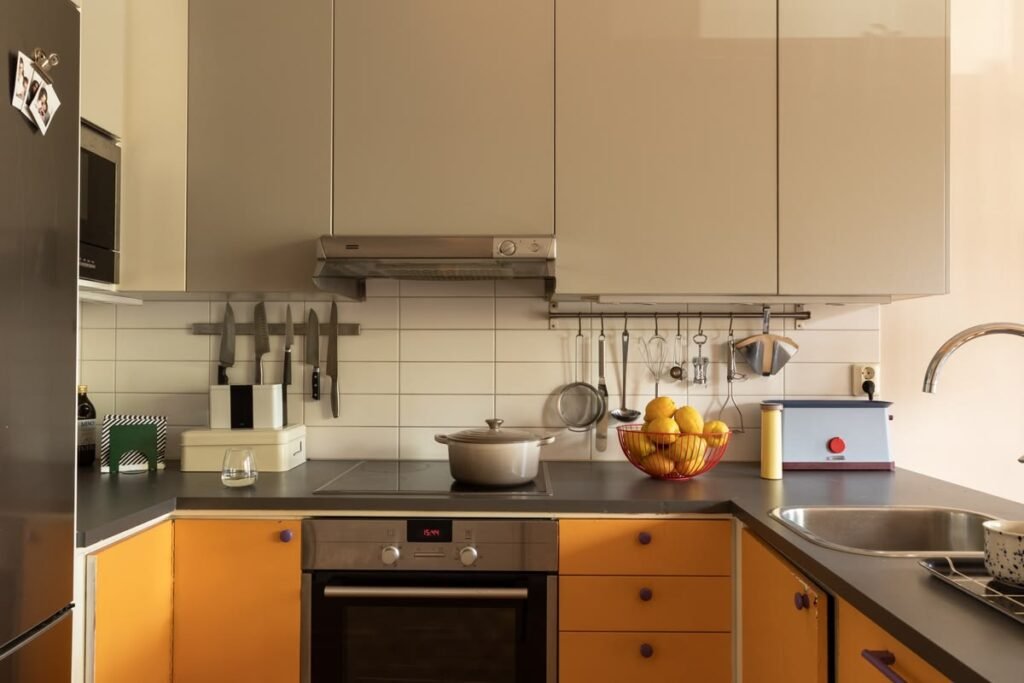
Here’s the situation I’ve watched repeat itself more times than I can count. Someone moves into a studio apartment or a small rental, sees their kitchen, opens a browser, and within 20 minutes has added a $140 cabinet organization kit to their cart. The kit arrives. They try to install it and discover that the bins are 9 inches wide and their cabinets are 11.5 inches or 14 inches. Or the tray organizer is half an inch too tall and the drawer won’t close. Or the shelf riser’s legs are fixed and the shelf underneath it isn’t level, so the riser rocks every time they reach for something. The whole project gets put back into the cabinet more or less as it was, just now with extra plastic taking up counter space.
The audit costs nothing and takes about 20 minutes per cabinet. Pull everything out. Put it on the counter or the floor, wherever you have room. Then look at the empty cabinet interior. Really look.
You’ll notice the depth. You’ll see how much vertical air is sitting above where things were. You’ll find duplicates — a second can opener, three jars of the same spice because the original got pushed back and forgotten on two separate grocery trips. And you’ll understand, for that specific cabinet, whether the real issue is vertical waste, poor depth access, or just too much stuff that shouldn’t live in the kitchen at all.
Do this one cabinet at a time over a few days. Don’t do the whole kitchen at once. That path leads to everything spread across every flat surface and a decision paralysis that ends badly.
If you’ve been wondering why your cabinet space keeps disappearing faster than it should, this audit is usually the moment it becomes obvious.
3. Organizing for How Small Kitchens Actually Work
Most cabinet storage advice was written for kitchens with dedicated zones. A coffee station. A baking shelf. A prep area with its own cabinet run. You see this in design guides and product roundups constantly, and in a kitchen under 100 square feet, it makes no practical sense.
Small kitchens don’t get zones. They get one cabinet that serves three or four purposes simultaneously.
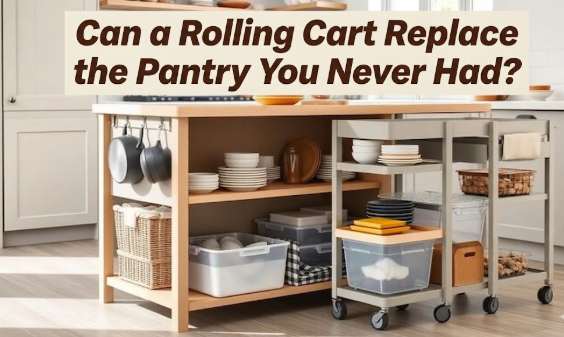
What actually works is organizing by frequency rather than by category. The things you reach for every single day, the coffee mug, the one pan you cook in most nights, the spatula, belong at eye level and within easy arm’s reach. Things used a few times a week go to lower shelves or to the back section of accessible cabinets. Items you use once a month or less get reassigned somewhere higher, a shelf you need to step up to, a labeled bin on top of the refrigerator, a rolling cart in the hallway if you have space for one.
This isn’t about minimalism. It’s about access design. When the things you reach for most often are the things you can reach first, a cabinet that’s genuinely full can still feel functional. The physical experience of working in a small kitchen changes more from getting this one thing right than from any single product.
And a note here for anyone whose kitchen has no pantry space at all: if the cabinets have to absorb the pantry function entirely, the organizing logic shifts somewhat. There’s a specific walkthrough for managing a small kitchen with no pantry that handles that version of the problem.
4. Products That Earn Their Place (And the Pattern Behind the Ones That Don’t)
Not every category of cabinet organizer makes sense in a small kitchen. Some were designed for spaces with enough room to have redundancy — extra shelves, extra drawers, extra counter. Here’s what consistently proves worth the cost, and what tends to disappoint.
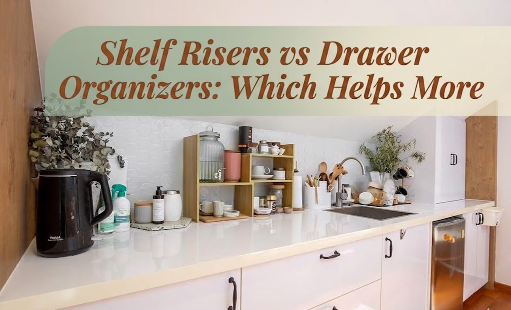
Adjustable shelf risers are, by a meaningful margin, the best dollar-per-inch-gained product for small kitchen wall cabinets. At $12 to $18 each, a riser creates a second usable tier within an existing shelf bay. If you have any wall cabinet where items sit 6 or more inches below the next shelf — which describes most wall cabinets in most small kitchens — a riser transforms dead vertical air into actual storage. The adjustable-leg versions matter if your shelves are at all uneven, which in older apartments they often are.
Vertical tray dividers solve the sheet pan and cutting board problem. Flat items stacked horizontally create an access issue that gets worse every month. A cutting board lives at the bottom of the stack by default, which means you dismantle the whole tower every time you need it. A vertical file-style divider inside a base cabinet, running $15 to $25, turns that same space into a filing system for flat items. You pull what you need without touching anything beside it.
Freestanding under-sink shelves are underused in almost every small kitchen I’ve ever walked into. That cabinet almost always has a drain pipe running through the middle of it, which causes people to treat it as unusable. An adjustable two-tier shelf designed to span the pipe opens up 4 to 6 square feet of accessible storage with no installation. No drilling, works in rentals, makes a noticeable difference from the first day.
The products that tend to disappoint: multi-compartment lazy susans installed in standard wall cabinets under 15 inches deep (they spin awkwardly and eat more space than they create), over-the-door rigid pocket racks that force the cabinet door partially open and rub the adjacent shelf, and storage bins ordered without measuring first.
The pattern behind what doesn’t work is almost always the same. The product was designed for a kitchen where fitting it in wasn’t the constraint.
Starter Cabinet Checklist for Small Kitchens
Before buying anything:
[ ] Measured interior width, depth, and shelf clearance for each cabinet
[ ] Pulled items out of at least one cabinet and inventoried what’s actually inside
[ ] Identified which cabinets waste vertical air (most wall cabinets)
[ ] Identified which cabinets have depth accessibility issues (most base cabinets)
[ ] Sorted everyday items from weekly items from monthly-or-less items
[ ] Assigned high-reach zones (top shelves, above-fridge) for seasonal or rarely used things
When you’re ready to buy:
[ ] Adjustable shelf risers for wall cabinets with short items below tall clearance
[ ] Vertical file dividers for base cabinet holding sheet pans, cutting boards, lids
[ ] Freestanding under-sink riser (no-drill, adjustable legs)
[ ] Drawer organizers only after measuring interior drawer depth first
Things to verify before ordering:
[ ] Interior cabinet dimensions written down (not estimated)
[ ] Riser legs adjustable if shelves are older or uneven
[ ] Drawer organizer height confirmed against actual drawer depth, not just width
Where People Get the Starter Phase Wrong
The most common mistake isn’t buying the wrong product. It’s buying products before doing the audit.
Someone sees an organization system that photographed well. They can picture how it’ll look. They buy it, bring it home, and discover it doesn’t fit the cabinet they had in mind, or it solves a problem they don’t actually have, or it works perfectly for two weeks and then silently stops being used because the habit didn’t stick. The organizer ends up in the cabinet anyway, around or on top of everything it was supposed to fix.
Buy one thing at a time. One set of shelf risers. Install them, use them for two weeks, then decide what the next problem actually is.
The second thing people avoid in the starter phase is the corner. Almost every small kitchen has one corner cabinet that feels impossible to work with, and almost everyone leaves it alone indefinitely. But that corner is often 8 to 12 square feet of space being used for almost nothing. A full-access lazy susan, or a hinged pull-out system designed specifically for corner base cabinets, converts that dead zone into real storage. At Tiny Kitchen Living, corner cabinet avoidance comes up in nearly every reader conversation about small kitchens that feel unmanageable.
And if your kitchen has no drawers at all, the logic shifts further, since more of the small-item function has to live inside the cabinets themselves. A specific look at what works in a kitchen with no drawers covers that version of the setup.
One last thing worth saying: starter decisions tend to stay. Most people don’t reorganize a small kitchen from the ground up a second time. They live with what they built in the first week. It’s worth spending 20 minutes on the audit and a few extra minutes with a tape measure before any of the buying begins. The result sticks.
FAQs
Q: How many products do I actually need for a starter cabinet setup?
Fewer than most articles suggest. Three to four well-chosen products covering your specific problem spots, shelf risers for vertical waste, a tray divider for flat items, and an under-sink riser if the space is currently unused, will outperform a cart full of assorted bins. Start smaller than feels complete and add only when you’ve identified the next actual gap.
Q: Is organizing by category or by frequency better in a small kitchen?
Frequency, in almost every case. Category organization requires enough dedicated space per category to make it work. A small kitchen with six total wall cabinets and two base cabinets can’t give an entire cabinet to “baking supplies” without sacrificing something essential. Put what you use daily within arm’s reach at eye level, regardless of category, and let use frequency drive the rest of the decisions.
Q: My spice situation is its own disaster. Is that a cabinet problem or a separate one?
Both, usually. Spices multiply in small kitchens and most wall cabinet shelves are far too tall for the jars, which pushes them to the back where they’re forgotten and then re-purchased. A shelf riser addresses the vertical gap, but if the collection itself has outgrown the available space, starting with a rethought approach to spice organization without a dedicated rack may be the cleaner entry point.
Q: I rent and can’t drill anything. Does this limit my options?
Much less than people assume. Adjustable shelf risers, freestanding under-sink shelves, vertical tray dividers, and most drawer inserts require no installation. Tension-mount door racks exist in no-drill versions. The meaningful limitation for renters is with pull-out hardware for base cabinets, which typically requires drilling, but the no-install product category covers most of the high-impact storage improvements without it.
Q: My kitchen only has upper cabinets and no base storage at all. Where do I begin?
With measurement and a frequency sort. Upper-cabinet-only kitchens need to do significantly more work per shelf, so the vertical air waste problem becomes the first thing to address. Shelf risers and tiered shelf inserts go from optional to essential. It’s also worth thinking about whether over-the-sink shelving is a practical fit for your space, since one added surface above the sink can reduce how much pressure the wall cabinets are carrying on their own.
Everything at Tiny Kitchen Living starts from the same premise: small kitchens work better when you understand the space before you try to change it. The full storage and organization library, covering everything from pantry solutions to no-drawer kitchens, is at tinykitchenliving.org.