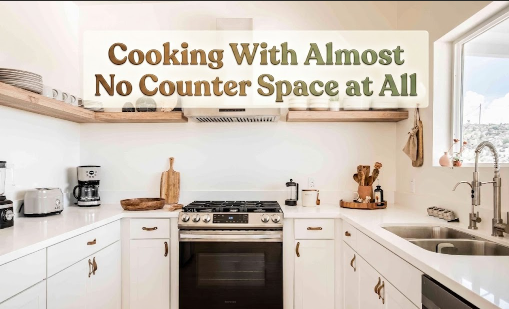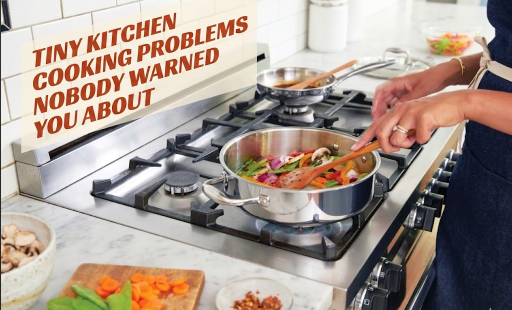
Most people blame the size of their kitchen for everything that goes wrong in it. I’ve heard this for years, and it’s rarely the real story. A narrow run of counter between the sink and the stove isn’t actually the problem. Neither is the single drawer that has to hold every utensil you own. What trips people up in a small kitchen almost always comes down to workflow, not square footage, and that distinction matters more than it sounds like it should.
Once you start designing around how a kitchen is actually used instead of how much floor it covers, the “problems” everyone assumes are about size start looking like something else entirely. Here’s what actually causes the friction, and what tends to fix it.
- The Counter Disappears Before You Even Start Cooking
This is the one I hear about constantly. Someone tells me their counter space is “basically nothing,” and when I walk through their kitchen, the counter is fine. It’s just covered. Coffee maker, dish rack, cutting board that lives out permanently, a stack of mail that migrated in from somewhere else entirely.
Counter space in a small kitchen isn’t really about how many inches you have. It’s about how many of those inches are claimed by things that aren’t actively being used. A coffee maker that runs once a day doesn’t need to occupy prime real estate next to the stove all day long.
If this sounds familiar, counter space killers are worth a closer look, because the habits behind it are more fixable than the layout itself.
- Storage That Looks Full but Isn’t Actually Working
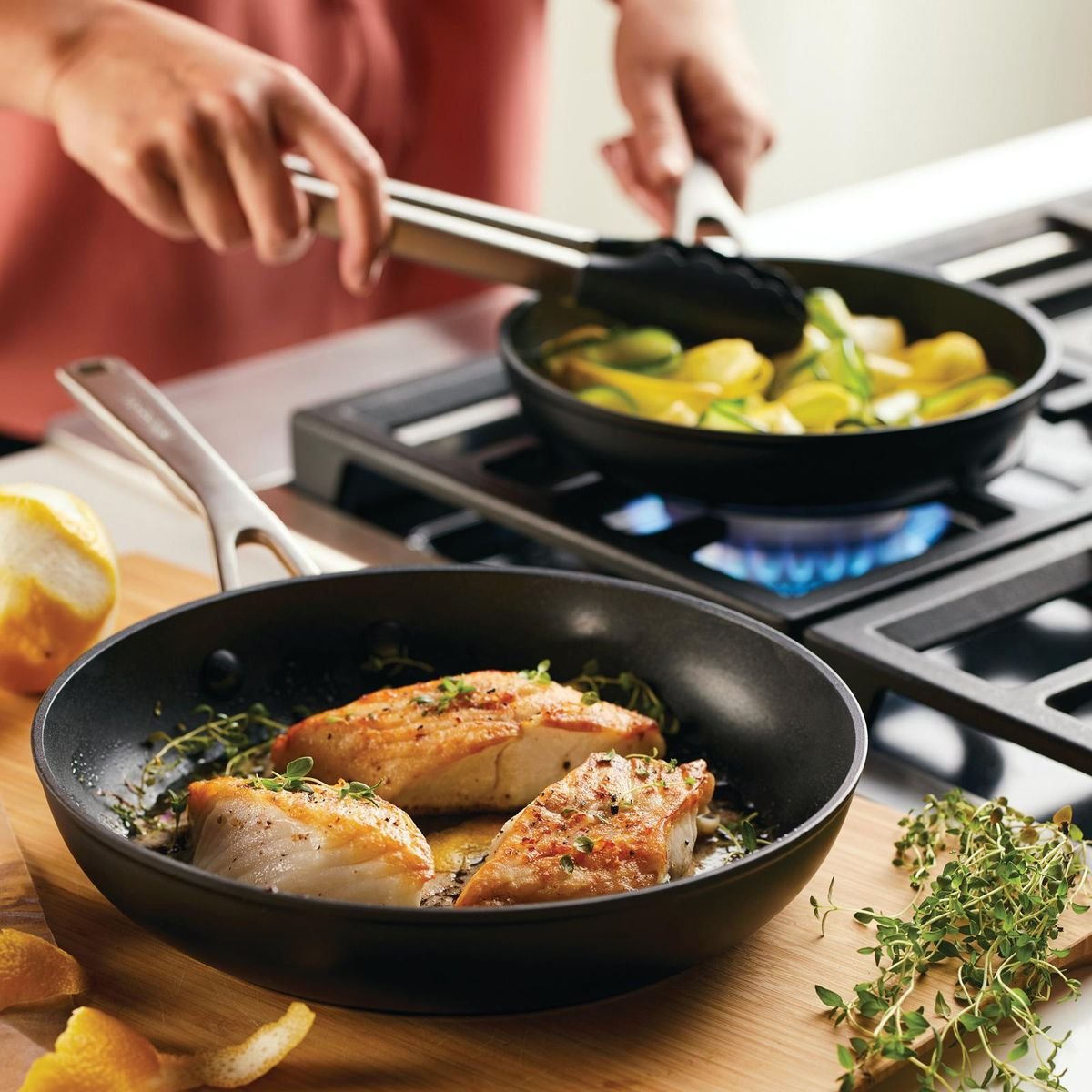
Cabinets fill up fast in a small kitchen, and people read that as “I don’t have enough storage.” Usually what’s happened is the storage is full of dead space. Tall cabinets get one shelf used efficiently and everything above it wasted. Deep cabinets swallow whatever gets pushed to the back, and it stays there until someone moves out.
This is the part of small-kitchen design that took me a while to really internalize early in my career: vertical space and depth are not the same resource as floor space, and most people only ever solve for floor space. A cabinet that looks “full” at eye level might have a foot of unused height sitting right above it.
Spice storage is the clearest example of this. Most kitchens this size don’t have room for a dedicated spice rack, and that’s fine, because you don’t actually need one to keep spices organized and visible.
Here’s a quick way to think through where storage is actually being lost:
Where It Looks FullWhat’s Usually HappeningFastest FixTall upper cabinetsOnly the bottom shelf gets used regularlyAdd a second shelf or stackable riserDeep base cabinetsItems get pushed back and forgottenPull-out drawer insert or lazy susanUnder-sink cabinetPipes eat the usable middle spaceTension-rod shelf or slim bins around the plumbingSingle junk drawerEverything that doesn’t have a home ends up hereOne drawer divider, sorted by actual task, not category
- No Pantry, So Everything Becomes a Counter or Cabinet Problem
A lot of tiny kitchens, especially in older buildings and studio apartments, were never built with a pantry at all. That single missing room creates a chain reaction. Dry goods end up on the counter because there’s nowhere else logical to put them. Then the counter problem from section one gets worse, and the cabinet problem from section two follows right behind it.
I tell clients in this situation the same thing every time: stop trying to recreate a pantry room inside a kitchen that was never built to hold one. Instead, build a pantry system inside whatever single cabinet you can dedicate to it. It sounds like a small shift, but treating one cabinet as a closed system, with its own internal organization, solves more than scattering dry goods across three different spots ever does.
If you’re working with this exact situation, a one-cabinet pantry system is the most realistic fix I’ve seen actually stick long-term, partly because it doesn’t ask you to find space you don’t have.
- Cooking Itself Gets Harder, Not Just Storing the Stuff
This is the part that gets the least attention, and it’s the one that affects how the kitchen actually feels day to day. When prep space, storage, and the stove aren’t arranged with any real path between them, cooking turns into a series of small detours. Reach for a pan, step back, open a drawer that’s now blocked by the open oven door, step back again. None of that shows up on a measuring tape, but it’s exhausting in a way people can’t always name.
And this is where I’ll admit something that surprises people: the fix is rarely “get more stuff to organize the space better.” Sometimes the fix is removing things. A kitchen with three half-used gadgets crammed into a drawer is harder to cook in than a kitchen with one good knife and a clear counter. More organizing products don’t solve a workflow problem, they just relocate the clutter to a more expensive container.
Where people usually go wrong is treating every tiny-kitchen issue as a storage issue when it’s actually a placement issue. The items closest to the stove should be the ones used while standing at the stove. That’s it. It sounds almost too simple to be the answer, but most kitchens this size violate it constantly without anyone noticing.
This is also where rolling, mobile storage earns its place. It’s not a full pantry replacement, but it changes how flexible your layout can be on a given day, which matters more in a small footprint than in a larger one. Whether a rolling cart can genuinely stand in for the pantry you never had is a question worth answering honestly rather than optimistically, and the honest answer depends a lot on your specific layout.
That’s the throughline behind most of what gets written here on Tiny Kitchen Living: it’s never really about the square footage. It’s about whether the space is arranged around how you actually move through it.
A Few Practical Starting Points
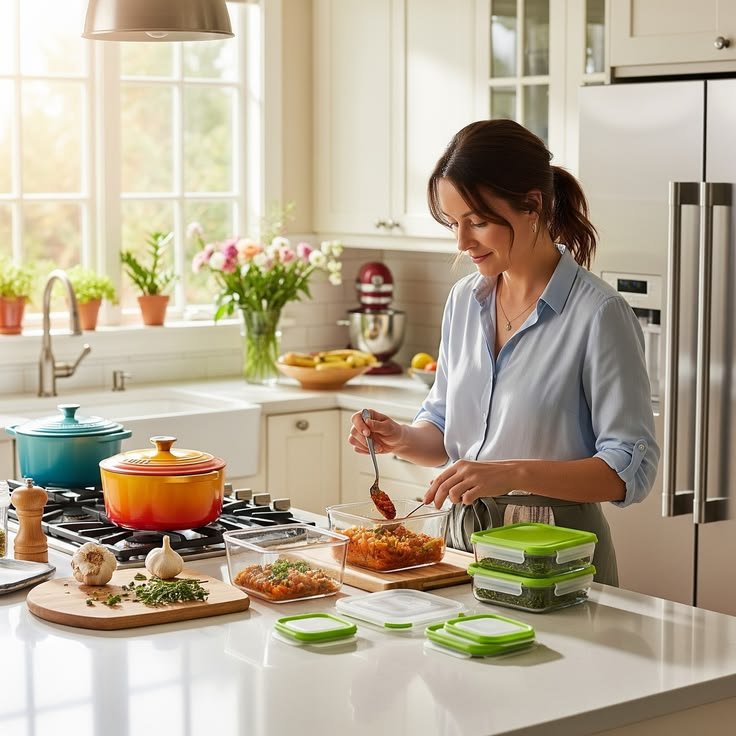
If you want to address this without redoing your whole kitchen at once, start here:
Pick one counter zone and clear it completely for a week. Notice what you actually reach for and put back daily.
Open every upper cabinet and check the space above the top shelf. That’s almost always reclaimable.
If you have no pantry, choose one cabinet and commit to it being your pantry, nothing else goes in it.
Move the three items you use most while cooking to the spot closest to the stove, even if that means relocating something else first.
None of these take a weekend. Most take twenty minutes and a willingness to actually look at what’s in front of you instead of assuming you just need a bigger kitchen.
Frequently Asked Questions
Is a small kitchen actually harder to cook in, or does it just feel that way?
Both, depending on the layout. A well-organized 60 square foot kitchen can outperform a poorly arranged 150 square foot one. Size sets a limit, but workflow determines whether you hit that limit or stay well under it.
What’s the single biggest mistake you see in tiny kitchens?
Storing things by category instead of by how often they’re used. People group “baking supplies” together even if half of it is used twice a year, while the items they touch daily get buried behind it.
Do I need to buy organizing products to fix this, or can I do it with what I already own?
Most of the fixes above cost nothing. A handful of cases genuinely benefit from a riser, a drawer insert, or a rolling cart, but those should come after you’ve sorted what’s actually causing the clutter, not before.
How much storage does a one-person kitchen actually need?
Less than most people think. One well-organized cabinet for dry goods, one for cookware, and a drawer for tools covers most single-occupant cooking needs. The issue is rarely volume, it’s almost always access.
Is it worth adding shelving above the sink or stove in a tiny kitchen?
Often yes, but it depends on what you’re storing there and how often you need it. Whether over-the-sink shelving is actually worth buying comes down to whether you’re using that zone for daily items or just adding visual clutter at eye level.
If you want more of this kind of practical, no theory-first thinking about small kitchens, that’s what the rest of Tiny Kitchen Living is built around.