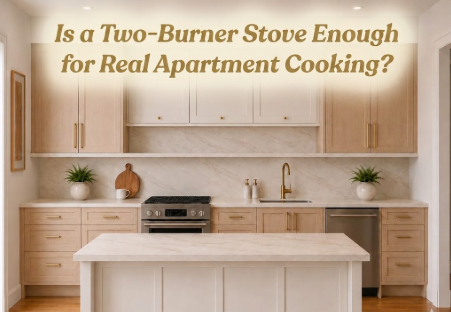
Two burners gets treated like a punishment before anyone’s even turned a knob. Someone moves into a studio, opens the kitchen listing photos again just to confirm what they already know, and starts mentally writing off entire categories of food. Pasta night feels risky. Hosting feels impossible. None of that matches what actually happens once you’ve cooked on one of these stoves for a few weeks. The limitation is real, but it’s narrower than people assume, and most of the stress comes from trying to run a four-burner routine on a two-burner footprint instead of building a routine that fits what’s actually there.
This is worth working through properly, because the answer isn’t a flat yes or no. It depends on what “enough” means to the person asking.
1. The Honest Math on Two Burners
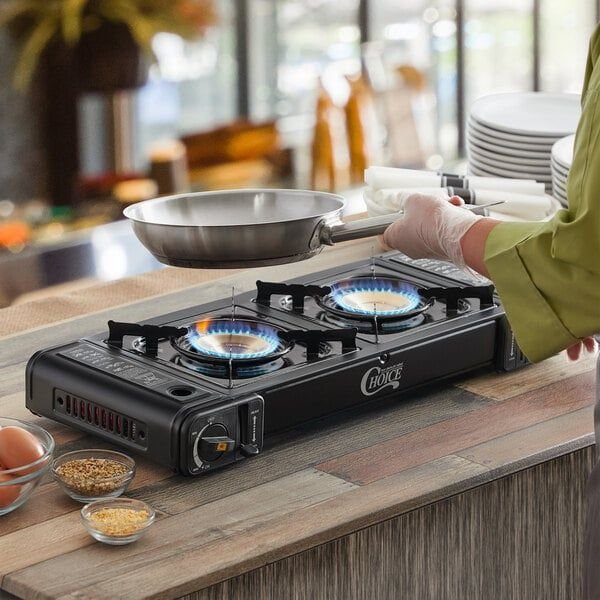
A two-burner cooktop, gas or electric, almost always puts out the same heat per burner as a full-sized range. Nothing about the BTU rating or the wattage drops just because there are fewer knobs on the panel. What changes is parallel capacity. You can’t run four pots at once. You can run two, and with a little sequencing, you can functionally run three or four dishes across a single cooking session, just not all at the same instant.
For one or two people eating a normal weeknight dinner, that’s rarely a real constraint. Most home cooks, even in full kitchens, use two burners at a time anyway. The third and fourth burner on a standard range mostly sits there holding a stockpot of water that hasn’t boiled yet.
Where it gets tight is anything that depends on timing multiple components to finish together: a protein, a starch, a vegetable, and a sauce, all landing on the plate hot at once. That’s the scenario two burners actually struggles with, and it’s worth naming honestly instead of pretending it doesn’t exist.
2. Where People Actually Get Stuck
The mistake isn’t usually the stove. It’s the counter around it.
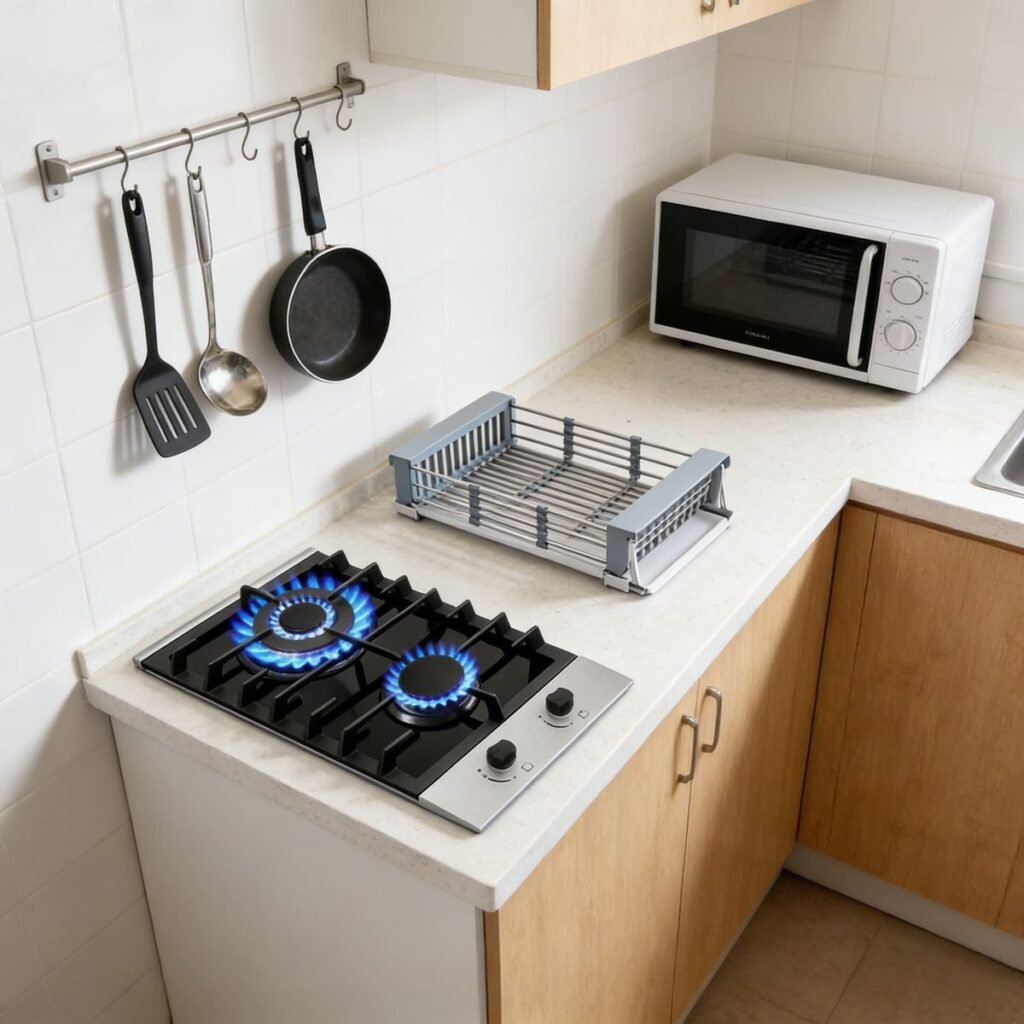
Most apartment kitchens pair a small cooktop with an even smaller stretch of counter, and that’s the part nobody budgets for. You need somewhere to rest the spoon, somewhere to stage the next ingredient, somewhere for the cutting board to sit without sliding into the sink. Two burners with no landing space feels far more cramped than two burners with eighteen clear inches next to them. If counter space disappears the moment you start cooking, that’s usually a habit problem rather than a layout problem, and it’s exactly what gets covered in 5 habits that quietly eat up your counter space.
Here’s where people usually go wrong: they assume the fix is a bigger stove, when the actual fix is clearing four square feet of counter so the two burners they already have can function properly. A two-burner stove with breathing room outperforms a four-burner stove crammed against a wall of clutter, every time.
3. What Actually Fits in a Two-Burner Rotation
Most realistic weeknight meals fit without much adjustment. A skillet dish and a pot of grains. A sauce simmering low while a protein sears on the other burner. Soup, full stop, since soup barely competes with anything else happening on the stove.
What gets harder is the layered, restaurant-style plate. Three components cooked separately and timed to finish at once is genuinely difficult on two burners, not because of heat, but because of sequencing math. The workaround most people land on eventually is staggering instead of stacking: cook the component that holds its temperature well first (rice, roasted vegetables, anything that’s fine resting under foil for ten minutes), then use both burners back-to-back for the things that need to be served immediately.
| Two-Burner Setup | Standard Four-Burner Range | |
|---|---|---|
| Dishes running at once | 2, realistically | 3 to 4 |
| Heat per burner | Same as a full range | Same as a full range |
| Weeknight dinner, 1-2 people | Handles it without much thought | Often runs with two burners unused anyway |
| Big-batch cooking (soup or sauce for the freezer) | Slower, one pot at a time | Faster with multiple pots going |
| Hosting a group, several dishes plated together | Needs sequencing and a plan | More forgiving |
That table is the honest version of the comparison. It’s not that one stove is better. It’s that they reward different cooking styles.
4. Building Around the Limitation Instead of Fighting It
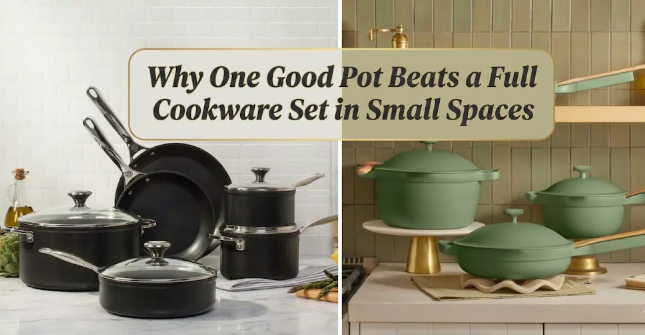
The single biggest fix has nothing to do with the stove itself: it’s pot and pan size. A lot of two-burner kitchens come with cookware sized for a four-burner layout, and a wide 12-inch skillet next to a wide stockpot leaves no usable space between them. Swapping one oversized pan for something taller and narrower, even just for everyday use, frees up real cooktop room and makes both burners usable at the same time far more often.
The second fix is accepting that a two-burner stove doesn’t have to do everything alone. A countertop induction burner adds a genuine third zone without rewiring anything, and it tucks away when it’s not needed, which matters in a kitchen that doesn’t have spare cabinet depth to spare. A slow cooker or a toaster oven absorbs the long, slow, unattended dishes (braises, roasted vegetables, anything that just needs time and not attention) so the stovetop stays free for things that need active cooking. If storing that extra equipment is the sticking point, a rolling cart can genuinely solve the gap a missing pantry leaves behind, giving the induction burner and slow cooker a home that isn’t permanently on the counter.
None of this is about buying your way out of a small kitchen. It’s closer to what gets discussed at Tiny Kitchen Living generally: working with the actual footprint instead of designing for a kitchen you don’t have. A leaner stovetop rotation also tends to call for a leaner ingredient setup, and a one-cabinet pantry system keeps the staples you’re actually reaching for within arm’s reach of the stove instead of scattered across three cabinets.
5. When Two Burners Genuinely Isn’t Enough
There’s a real ceiling here, and it’s worth naming instead of glossing over. If you’re regularly cooking for four or more people, hosting dinners with multiple hot side dishes, or doing serious batch cooking for the week every Sunday, two burners will start to feel like a bottleneck no amount of sequencing fully solves. That’s not a failure of technique. It’s just more volume than the equipment is built for.
In that case, the honest answer is to add a second heat source rather than force the stove to stretch past what it’s designed for. A countertop induction burner plus the existing two-burner stove functions, in practice, almost like a three-burner kitchen, and it costs a fraction of a stove replacement or a renovation most apartment leases won’t allow anyway.
For everyone else, two burners is enough. Not technically adequate. Actually enough, the kind that stops registering as a limitation once the counter is clear and the pots fit the space they’re in.
Frequently Asked Questions
Can I actually cook a full dinner for two people using only two burners? Yes, for most weeknight meals, without much adjustment. The strain shows up with dishes that need three or four pots running separately and finishing at the same moment, which is a less common way to cook for one or two people anyway.
Should I buy a portable induction burner as backup? It’s one of the more useful additions for a two-burner kitchen, particularly around holidays or when cooking for guests. It runs off a standard outlet, so there’s no extra gas line or ventilation to worry about.
Is a two-burner stove weaker than a four-burner one, or just smaller? Burner-for-burner, heat output is usually the same or very close. What changes is how many things you can run at once, not how hot any single burner gets.
What’s the most common mistake people make with a two-burner kitchen? Keeping pots and pans sized for a four-burner setup and then wondering why nothing fits side by side. A taller, narrower pot solves more of this than people expect.
Do I need new cookware for a two-burner setup? Not always, but it helps. One oversized skillet can eat the entire cooktop on a compact range. Swapping even one piece for something narrower tends to make the biggest practical difference.
If the goal is fewer trips to the stove and less juggling, the equipment swap matters less than the habits around it. Worth a look at small kitchen storage ideas for ways to keep the rest of the kitchen from crowding out the two burners doing all the work.