I spent the better part of a decade recommending against half sheet pans in small kitchens. The logic felt airtight: 18 by 13 inches is awkward to store, it crowds the oven in some older apartment ranges, and the visual of it sitting on the counter while you prep felt like a problem I couldn’t design around. I’d steer small-kitchen clients toward smaller vessels, smaller footprints, smaller everything. Sheet pans felt like a large-kitchen luxury that small-space cooks were better off skipping.
Then a client of mine, working in a 70 square foot Brooklyn rental with roughly one usable counter, pulled the best roasted salmon I’d seen in years out of her oven. One pan. A cutting board she’d rinsed and put away before the oven even finished preheating. The whole kitchen was clear again in under fifteen minutes, including the meal itself.
I was wrong about sheet pans. And I’ve been adjusting my advice ever since.
Sheet pan dinners aren’t just compatible with tiny kitchens. For anyone cooking in under 100 square feet, they’re one of the most structurally sound cooking methods the small kitchen is actually designed to support, if you understand where they work and where they don’t.
1. Why Sheet Pan Cooking Is Particularly Well-Suited to Small Spaces
In a large kitchen, sheet pan cooking is one option among many. You can have pasta water boiling on one burner, a braise going on another, and a sheet pan in the oven simultaneously because there’s enough surface area to manage all of it without things bumping into each other. The method is convenient. It isn’t essential.
In a small kitchen, that math changes.
A single-pan cooking method that requires one cutting board, one knife, and minimal stovetop activity is a fundamentally different experience when your workspace is 14 inches of counter beside a double-burner and a sink. Sheet pan dinners keep the stovetop clear. They consolidate cleanup to one primary piece of equipment. And because the oven does the actual work, the 80 square feet around you opens up for the duration of the cooking time instead of being held hostage by active burners and splatter.
The connection to counter clearing is direct. When you’re working with almost no prep surface, a cooking method that requires nothing more than the pan itself, a knife, and a small cutting board is not just convenient. It’s a different category of workable.
2. The Pan Size Question: What Actually Fits
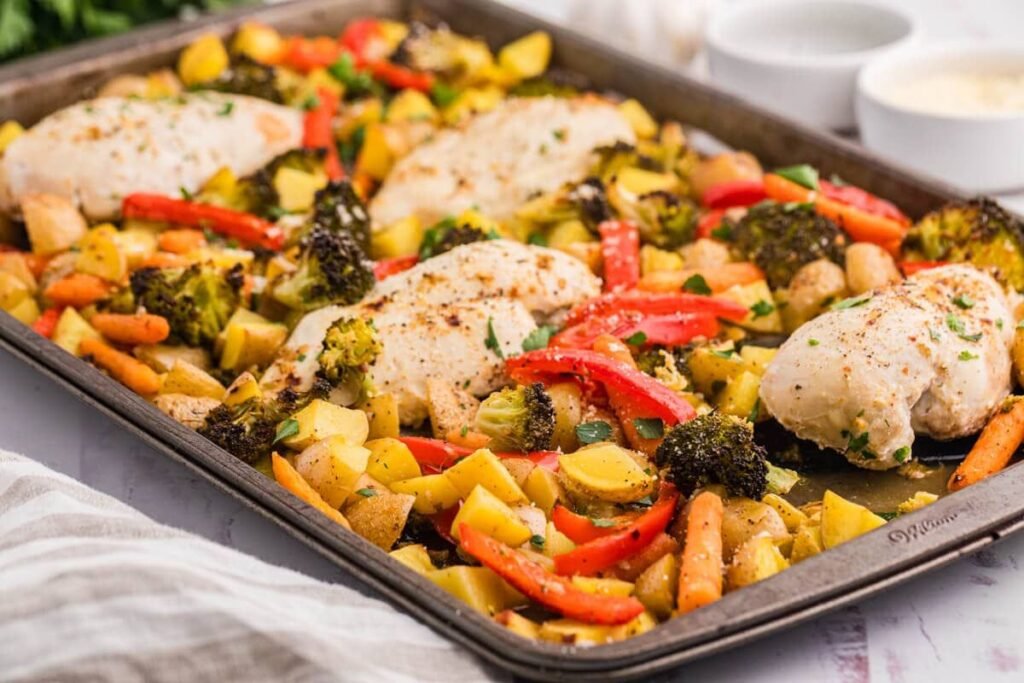
Most sheet pan dinner recipes are written for a half sheet pan, the 18×13 inch size that’s become the industry default. For most residential ovens, this fits fine on a center rack. The cooking is efficient, the surface area handles generous amounts of food, and the depth of the rim keeps juices contained.
But in a small kitchen, storage is where the half sheet pan gets complicated.
It won’t fit in a standard kitchen drawer. On a shelf, it needs a clear horizontal lane to slide in and out without disturbing what’s beside it. If your current storage situation already has you running out of cabinet space faster than expected, adding an oversized flat pan to the mix isn’t neutral. It’s one more thing competing for a position that doesn’t really exist.
Quarter sheet pans, at 9×13 inches, are worth serious consideration for one or two person households in small kitchens. They fit in standard drawers. They stand cleanly in vertical dividers. And for one or two servings, which is the practical reality for most studio apartment cooks, they’re exactly the right size for the food they’re holding. You don’t need to fill a pan to use it well, and a quarter sheet with the right amount of food often gives you better browning than a half sheet with the same portion spread too thin.
At Tiny Kitchen Living, the recommendation I’ve settled on for single-person and two-person households: start with a quarter sheet pan as your primary, keep a half sheet for when you’re actually feeding more than two. One of each stores flat inside a base cabinet with a vertical file divider and never has to live on the counter at all.
3. Eight Sheet Pan Dinners That Work in a Tiny Kitchen
These aren’t aspirational. They’re meals designed around what a small kitchen can actually support, meaning limited counter space, limited prep time, and limited cleanup patience.
Quick-Reference: Sheet Pan Dinners for Small Kitchens
| Meal | Protein | Vegetables | Oven Temp | Cook Time | Key Note |
|---|---|---|---|---|---|
| Roasted Chicken Thighs | Bone-in, skin-on thighs | Baby potatoes, cherry tomatoes, garlic | 425°F | 38-42 min | Pat skin completely dry |
| Salmon with Asparagus | Salmon fillets | Asparagus, lemon slices | 400°F | 12-15 min | Add lemon last 5 minutes |
| Sausage and Sweet Peppers | Sliced Italian sausage | Bell peppers, red onion | 400°F | 25-28 min | Slice thin for even cook |
| Harissa Roasted Chickpeas | Canned chickpeas | Zucchini, red onion | 425°F | 25-28 min | Dry chickpeas completely |
| Pork Tenderloin with Apples | Pork tenderloin | Sweet potatoes, sliced apples | 425°F | 25-30 min | Rest 5 min before slicing |
| Sheet Pan Shrimp Fajitas | Large shrimp | Bell peppers, corn kernels | 400°F | 10-12 min | Watch closely, overcooks fast |
| Crispy Tofu with Broccoli | Extra-firm tofu | Broccoli florets, carrots | 425°F | 28-32 min | Press tofu minimum 20 minutes |
| White Fish with Tomatoes | Cod or tilapia | Cherry tomatoes, baby spinach | 375°F | 15-18 min | Add spinach last 4 minutes |
A few of these are worth slowing down on before you dismiss them as too simple.
The harissa chickpea version is genuinely satisfying, but only if you respect one thing: the chickpeas have to be completely dry before they go on the pan. Not patted once with a paper towel. Dry. Spread them on a towel, press another towel on top, give them two or three minutes. Wet chickpeas steam instead of roast, and steamed chickpeas have a texture that won’t win anyone over. Get the surface dry and roast them at 425, they come out crispy enough to rival any protein in that chart.
The shrimp fajitas are the one entry where you genuinely have to watch the oven. Shrimp go from perfect to rubbery in about ninety seconds, and at 400 degrees they cook faster than most people expect the first time. Set a timer for ten minutes, check at nine.
4. Where Small Kitchen Cooks Go Wrong with Sheet Pan Dinners
The mistake I see most consistently isn’t a recipe problem. It’s a pan space problem.
Overcrowding. Food that’s touching on a sheet pan doesn’t roast. It steams in its own moisture, and the difference between a properly caramelized chicken thigh and a soft gray one comes down almost entirely to whether there was adequate space between pieces when they went into the oven. The rule is simple: nothing should be overlapping when the pan goes in. Touching is fine. Stacked or tightly packed is not.
In a small kitchen, this sometimes means making half the recipe and saving the other half for the next evening, rather than trying to fit everything on one crowded pan. That’s not a compromise. That’s using the method the way it’s designed to work.
Second mistake: putting the pan in cold. Preheating the sheet pan with the oven, letting it get hot before the food touches it, creates immediate browning on the underside of vegetables and proteins the moment contact is made. A cold pan has to climb in temperature with the food already on it, which works against the fast sear that roasting is supposed to create. Five extra minutes of patience before loading the pan makes a visible difference.
Third: skipping the liner. In a large kitchen with counter space to stage soaking pans and a double sink basin, scrubbing baked-on fat is annoying. In an apartment kitchen with one basin and fourteen inches of counter beside it, that same pan becomes the sink’s entire occupation for an unpleasant stretch of time. Parchment paper or foil before every use isn’t laziness. It’s spatial logic.
And the one that applies to the seasoning, not the pan: most people use too little oil. Every surface of every piece of food needs light coverage. Vegetables that go on the pan under-oiled shrivel and stick instead of caramelize. Use enough oil to coat completely, and the texture on the finished dish will reflect it.
5. Making the Prep Work When Your Kitchen Has Almost Nothing to Work With
Tiny kitchens vary. But they share certain realities: almost no counter prep room, spice access that’s rarely as organized as it could be, and a storage situation that makes reaching for any given pan a minor excavation.
For spice access specifically, the setup matters more than most people account for in sheet pan cooking. You’re typically reaching for four or five spices per meal, and if the retrieval process is already its own obstacle course, the dinner becomes harder than it needs to be before the oven preheats. The breakdown of organizing spices without a dedicated rack has some approaches that translate directly to this kind of cooking, where fast access to a small set of seasonings changes how the whole process feels.
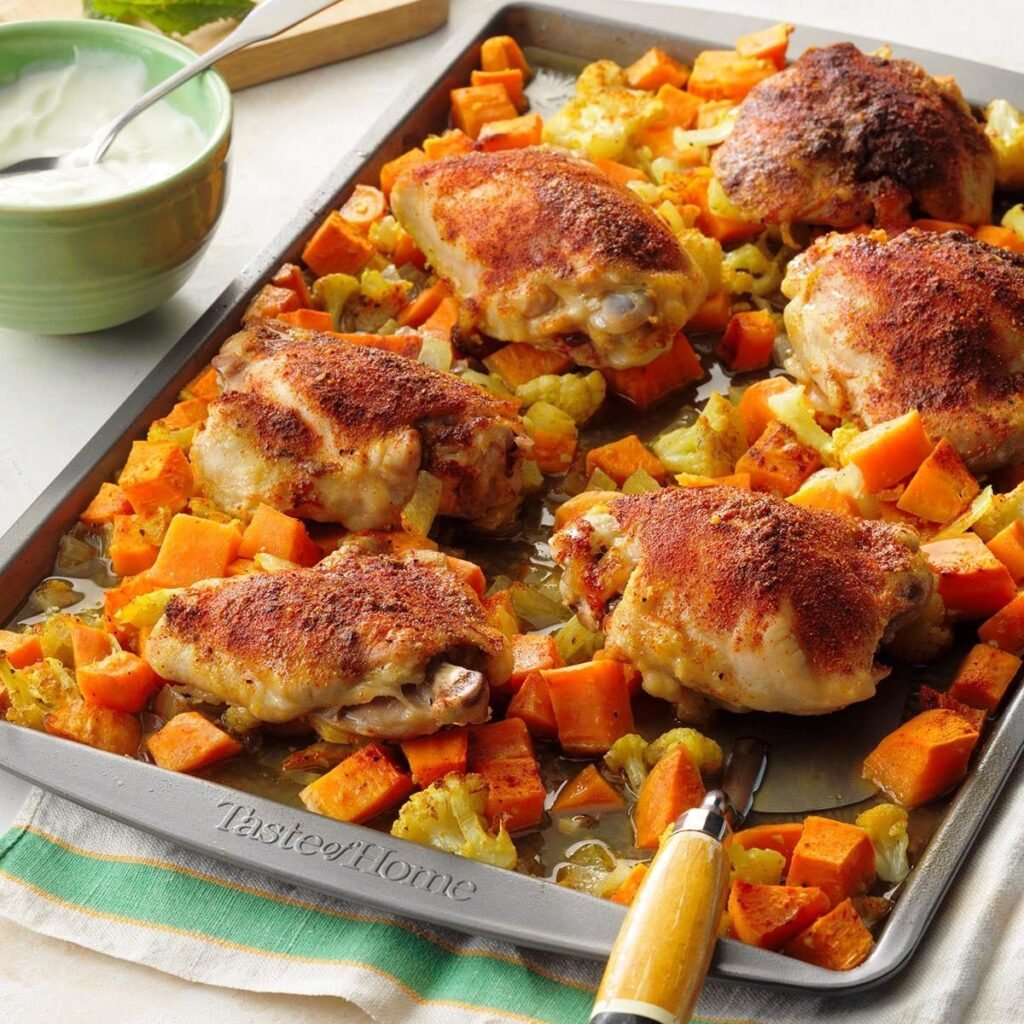
For prep workflow: the most efficient sheet pan dinner is the one where everything is prepped directly on the pan, not in a separate bowl that then gets dumped over. Cut your protein, arrange it. Add the vegetables around it. Season directly on the surface. One pan, one knife, one cutting board. The pan becomes both the prep surface and the cooking vessel, which in a kitchen with counter space killers already eating into your workspace, is the difference between a cooking method that fits and one that doesn’t.
A rolling cart beside the work area solves two things at once in this setup: it gives you a landing zone for the hot pan coming out of the oven, and it can serve as the second prep surface you don’t have anywhere else. Whether a rolling cart can actually replace a pantry is a separate question, but for sheet pan storage specifically, standing pans vertically on a cart shelf is one of the cleaner solutions I’ve seen work consistently in small rentals.
Sheet pan cooking works in small kitchens not because it’s trendy or simple. It works because it’s structurally compatible with what a small kitchen can provide: a hot oven, a single prep surface, and not much else. Match the method to the space, and the method holds up.
Frequently Asked Questions
Can I roast two different proteins on the same sheet pan at the same time? It depends entirely on cook time and temperature. Chicken thighs at 425 for 40 minutes and cherry tomatoes at the same temperature work together because the tomatoes can tolerate the full duration. Shrimp and chicken thighs cannot, the shrimp would be done and overcooked in twelve minutes while the chicken still has twenty to go. If you’re combining proteins, they need matching temperature requirements and similar cook times. When in doubt, add the faster-cooking ingredient partway through rather than starting everything together.
What’s the best sheet pan material for a small kitchen? Heavy-gauge aluminum is the standard for a reason: even heat distribution, lightweight enough to handle easily with one hand, and durable enough to last years without warping if you’re not running it through harsh dishwasher cycles repeatedly. Avoid thin dark-coated pans. They absorb more heat at the base and can burn the underside of food before the tops are cooked, which is already a risk at the 400 to 425 degree temperatures most sheet pan recipes call for. A rimmed pan with at least a half-inch lip keeps juices from running off the edge during cooking, which matters more with proteins than vegetables.
Do I actually need to preheat the pan? For vegetables: yes, if you want real browning on the contact surface. For bone-in chicken or pork: yes, for the same reason. For delicate fish like cod or tilapia where you want gentle, even cooking over speed: you can skip it. The goal of preheating is to start the Maillard reaction the moment food makes contact. A cold pan delays that by several minutes, which often means the exterior dries out before the browning starts. It’s a small step that costs almost nothing in terms of effort.
How do I prevent vegetables from getting soggy? Two causes: too much moisture on the surface, and too little space between pieces. Pat everything dry before it goes on the pan. For zucchini and mushrooms specifically, which have high water content, consider a light salt ahead of time to draw some moisture out, then pat dry again before roasting. Keep temperature at 425 rather than 375, the higher heat evaporates surface moisture faster and starts browning before the vegetable has time to steam in place. And give each piece room. Touching is acceptable. Crowded is not.
Is a wire rack insert worth buying for a small kitchen? For chicken and larger cuts of pork, yes. The rack elevates the protein above the pan surface, circulates heat underneath, and produces crispier undersides, especially for skin-on pieces. For vegetables, you don’t want it. The direct contact between vegetable and hot pan surface is part of what creates caramelization; elevating them away from that surface removes one of the main advantages of the method. If storage is tight and you can only keep one rack, use it for protein-forward meals and leave it out for vegetable-only ones.
For more on how to make a small kitchen work across every part of the routine, not just cooking, the small kitchen storage ideas worth testing in 2026 piece at Tiny Kitchen Living covers a lot of the surrounding territory: where things live, how to access them without the retrieval process becoming its own project, and what genuinely shifts when you stop organizing a small space like it’s a large one.