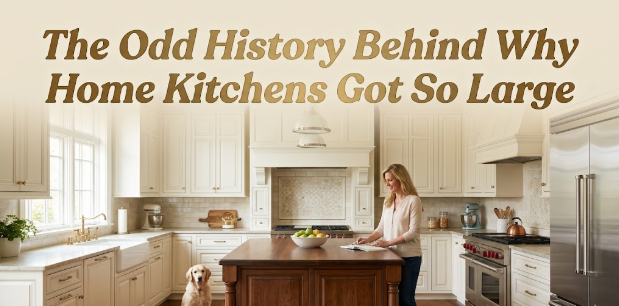
Most people assume kitchens got bigger because cooking got more important. That’s backwards. Kitchens got bigger because cooking stopped being something you hid.
For most of the twentieth century, the American kitchen was a closet with a stove in it. Small, closed off, and built for one person to work efficiently and disappear. Then somewhere around the 1980s, the whole logic flipped, and the kitchen became the biggest, most expensive, most photographed room in the house. The reasons behind that flip have less to do with appliances and a lot more to do with who was expected to be standing in the room.
1. The Postwar Kitchen Wasn’t Designed to Impress Anyone
A 1950s suburban kitchen averaged somewhere around 150 square feet, and that number wasn’t an accident. Postwar kitchens followed something called the “work triangle,” a layout principle that placed the sink, stove, and refrigerator close enough together that a single cook could pivot between them without walking more than a few steps. Efficiency was the entire design brief. Nobody was lingering in these spaces. The kitchen was a production zone, walled off from the rooms where guests actually sat.
That closed-door design wasn’t really about square footage. It reflected an assumption about who cooked and who was meant to see them doing it. Kitchens stayed small because they were designed around one task and one person, full stop.
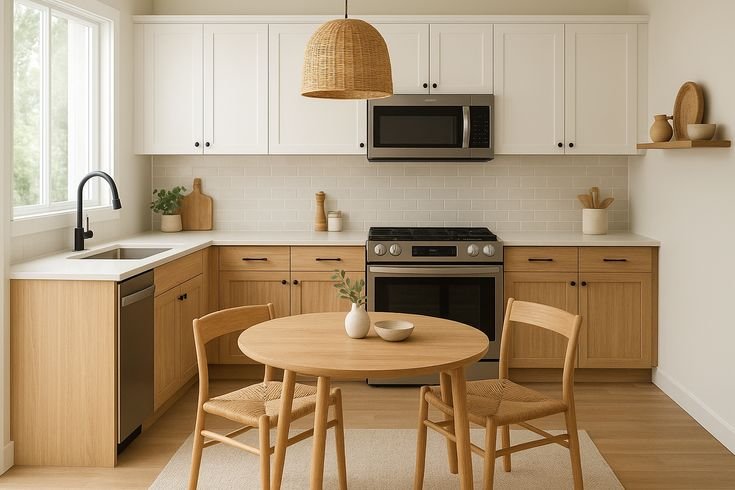
2. Open Floor Plans Rewired the Whole Idea of a Kitchen
The shift started slow. By the 1990s, builders were knocking down the wall between the kitchen and the family room, and home buyers loved it. Suddenly the cook wasn’t isolated. They were part of the gathering, not separate from it. This is the single biggest reason kitchens ballooned in size. Once the kitchen merged with the living space, it had to absorb the square footage of a social room on top of its original job as a workspace.
That’s also when the island showed up as a default feature rather than a luxury add-on. An island needs clearance on every side, usually a minimum of 42 inches for walking room, often closer to 48 if you want two people passing each other without turning sideways. Add that clearance to an already-larger footprint and the math just keeps climbing. A kitchen that used to need 150 square feet to function now needed 300 or more to function and host at the same time.
Below is a rough sense of how average kitchen size moved across the decades, based on housing data from the National Association of Home Builders and historical floor plan archives.
1950s:  130-180 sq ft   |  closed, single-cook layout
1970s:  170-220 sq ft   |  galley and L-shapes dominate
1990s:  250-350 sq ft   |  open concept begins, islands appear
2010s:  300-450 sq ft   |  kitchen merges fully with living space
2020s:  280-400 sq ft   |  slight pullback, but still open-plan
Worth noting that last line. Kitchen size has actually started to plateau, and in some markets, shrink slightly. More on that below.
3. Appliances Grew to Match the Room, Not the Other Way Around
There’s a common assumption that bigger refrigerators and wider ranges forced kitchens to expand. It’s mostly the reverse. Once builders had the square footage to work with, appliance manufacturers built bigger products to fill it, because a 36-inch range looks underwhelming sitting in a room sized for a 48-inch one. Double ovens, French-door refrigerators with deep produce drawers, six-burner ranges, these became standard features in mid-range homes specifically because the room could now accommodate them without feeling cramped.
This is where a lot of homeowners get the cause and effect backwards, and it matters because it shapes how people approach a renovation. If you assume your appliances need a bigger kitchen, you’ll plan for square footage you don’t actually need. If you understand that the room expanded first and appliance sizing followed, you can make smarter calls about what genuinely earns its space. A six-burner range is wasted on a household that cooks two dishes at a time. A counter-depth fridge does the same job as a deep one in most homes, just without eating four extra inches of walking room.
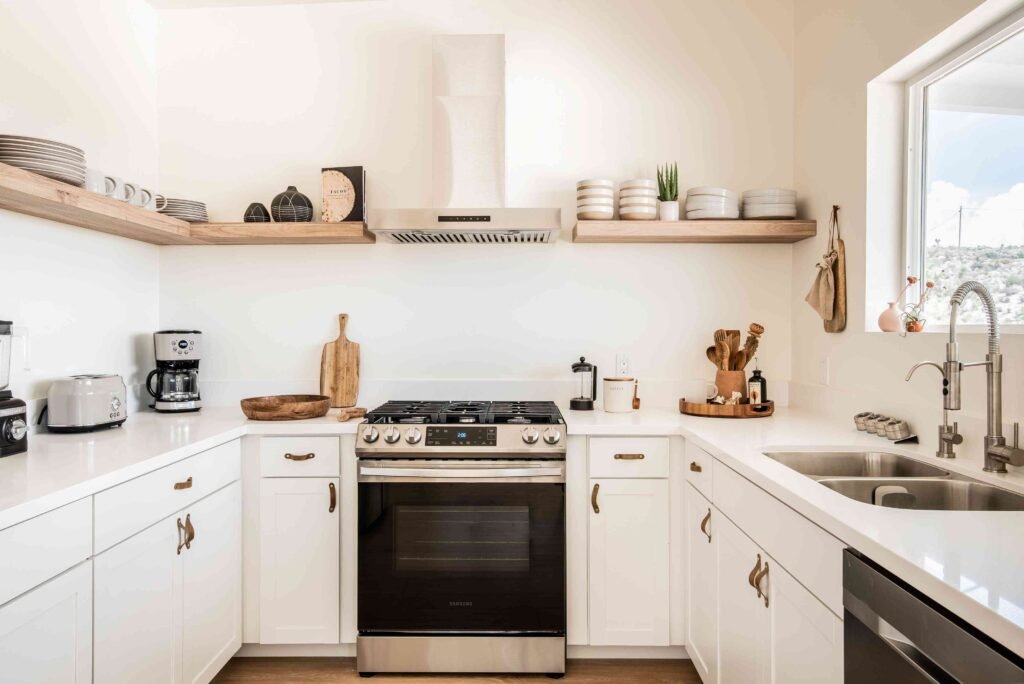
4. The Myth That Bigger Always Means Better Has Started to Crack
Open-concept kitchens are still the dominant style, but the unconditional love affair with massive kitchens has cooled. Noise carries further in open spaces. Cooking smells drift into the living room and stay there. And a kitchen sized for entertaining a crowd of fifteen is mostly empty space on a Tuesday night when it’s just you reheating soup. Some builders have started reintroducing partial walls, pass-throughs, and butler’s pantries, rooms that let the kitchen stay connected to the rest of the house without losing every bit of separation.
This is exactly the tension that sites like Tiny Kitchen Living exist to talk through. Most of the conversation around kitchens assumes more space is always the goal, but plenty of people are working with the opposite problem and doing it well. If your kitchen runs on the smaller side, the lesson from this whole history isn’t that you’re missing out. It’s that you skipped a few decades of square footage that, by most accounts, wasn’t buying people as much as they thought it would.
Where people usually go wrong is trying to retrofit big-kitchen habits into a small footprint, buying the six-burner range or the oversized island because that’s what “real” kitchens are supposed to have, rather than designing around how the space actually gets used day to day. If cabinet space runs out faster than expected, it’s rarely because the kitchen is too small. It’s because the storage plan was copied from a kitchen twice the size.
A few things genuinely help if you’re working with a smaller layout and don’t want to wait for a renovation. Small kitchen storage approaches worth testing this year tend to focus on vertical space rather than floor space, which is the opposite instinct of how open-concept kitchens were designed. And if counter space is the real bottleneck, breaking the habits that quietly eat counter space usually does more than any product purchase.
There’s also a learning curve in how people cook once the room shrinks. Tiny Kitchen Living’s guide to cabinet storage is a decent starting point if the goal is working with the layout instead of fighting it.
Bigger kitchens solved a real problem for a while. They just solved it by adding square footage instead of asking what the room was actually being used for. A smaller kitchen that’s organized around real habits will outperform a sprawling one that was designed for entertaining and used for takeout containers most nights.
FAQs
Why did kitchens get smaller again in some newer homes? Builders responded to complaints about noise, cooking odors, and the loss of any private space in open-concept homes. Smaller kitchens with partial separation, like pass-throughs or pocket doors, have become more common in homes built in the last several years.
Is a kitchen island actually necessary in a modern kitchen? No. Islands became standard because open floor plans created the space for them, not because they’re essential to function. A galley layout with good counter flow can outperform an island kitchen for someone who cooks daily and doesn’t entertain often.
Did appliance sizes actually drive kitchen expansion? Mostly not. Builders expanded kitchen footprints first as part of the open-concept trend, and appliance manufacturers scaled up products afterward to suit the larger rooms. The room came first.
What’s the ideal kitchen size for a typical household? There isn’t a universal number. A household that cooks daily for two or three people functions well in 120 to 180 square feet with a smart layout. The “ideal” size depends far more on workflow than square footage.
Are smaller kitchens actually more efficient to cook in? Often, yes. The original work-triangle principle that shaped 1950s kitchens still holds up, less distance between the sink, stove, and fridge generally means less wasted motion. A smaller, well-planned kitchen can outperform a sprawling one on pure cooking efficiency.