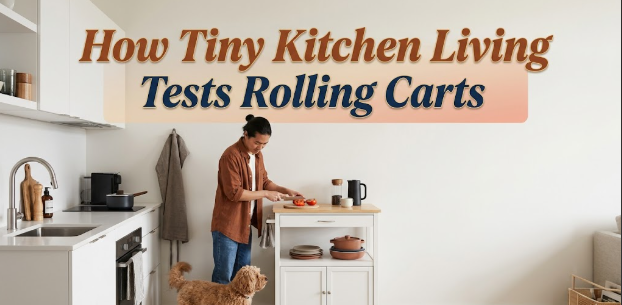
A rolling cart looks like the easiest purchase in small kitchen living. Four wheels, a few shelves, done. Then it shows up, and it’s either perfect or it’s a parking problem you now resent every time you walk past it.
That’s the gap most articles skip. They’ll tell you carts are great for extra storage, which is true and also useless on its own. What actually matters is whether a specific cart fits a specific kitchen’s traffic pattern, door swing, and the stuff you actually own. We test carts at Tiny Kitchen Living the same way we’d test anything else going into a space with six square feet to spare: by living with it for two weeks before deciding it earns a permanent spot.
- Why Rolling Carts Get Tested More Than Bought
Most storage pieces get evaluated once, at the store or on a product page, and that’s the end of it. Carts deserve a longer look because their value depends entirely on motion. A bookshelf sits still and does one job. A cart is supposed to move, tuck away, roll out when you need a second prep surface, and disappear again. If it can’t actually do that in your layout, you’ve bought a stationary shelf with wheels you’ll never use.
We’ve watched this play out the same way more than once. Someone reads that a cart “replaces a pantry,” buys one sized for a much bigger kitchen, and then discovers it blocks the fridge door every single time it’s parked where it’s supposed to live. The cart wasn’t the problem. The fit was.
If you’re already dealing with cabinets that filled up faster than expected, the same measuring habits apply here, and we’ve gone deeper into why cabinet space runs out faster than you’d think in a separate piece that’s worth a look before you start shopping for anything new.
- What We Actually Measure Before Recommending One
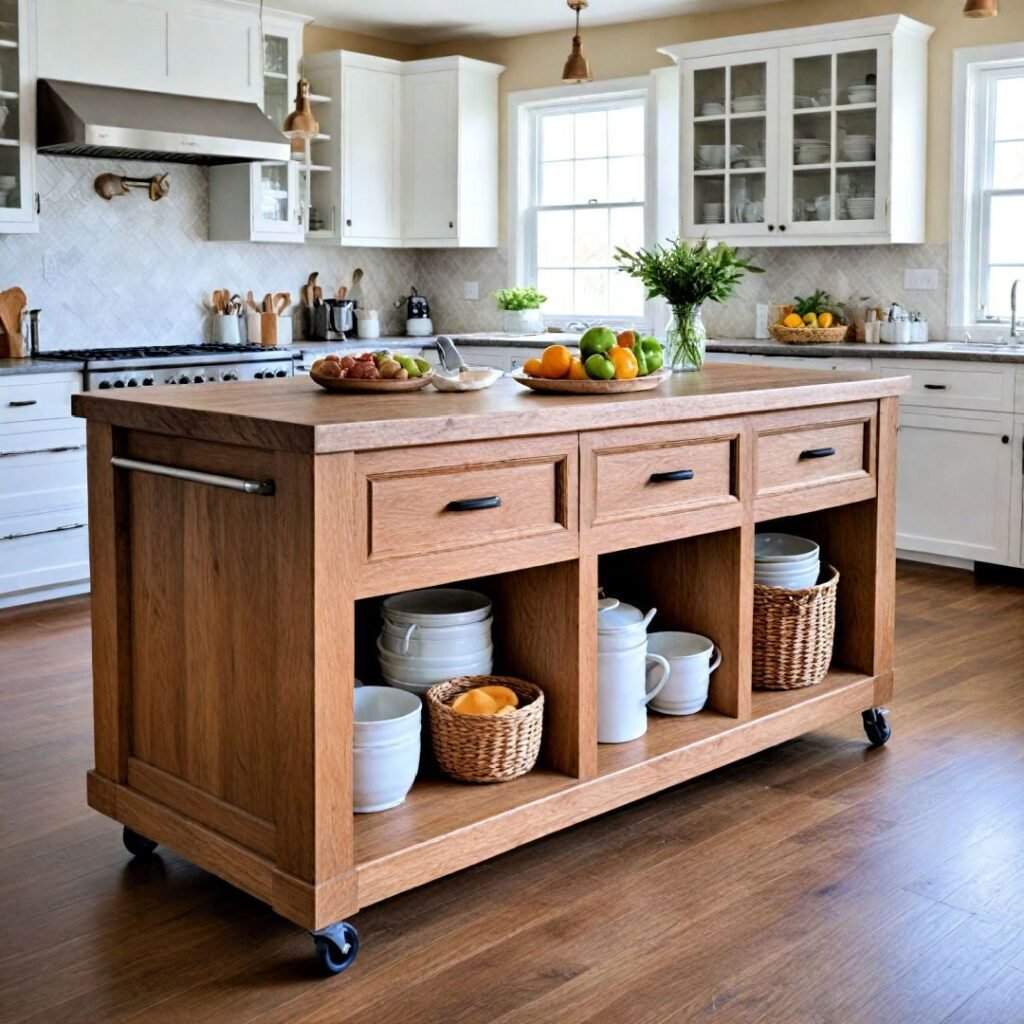
Three numbers matter more than style or shelf count: the width of your narrowest walkway, the swing radius of your fridge and oven doors, and the depth of the spot where the cart will live when it’s not in active use. Skip any one of those and you risk a cart that technically fits the floor space but makes the kitchen harder to move through, not easier.
Here’s where people usually go wrong: they measure the floor space where the cart will sit, but not the space it needs to roll out of and into. A cart that’s 16 inches wide needs at least 18 inches of clear path to actually travel, and most studio kitchens don’t have an extra two inches lying around anywhere convenient.
Weight capacity gets ignored too, and it shouldn’t. A cart rated for light decorative use will bow under a stand mixer and a stack of cast iron within a few months. Check the rating, not just the description.
And sometimes, after running those three measurements, the honest answer is that a cart isn’t the right tool at all. If the walkway math doesn’t work, a vertical fix tends to solve more with less floor impact, and we broke down that exact tradeoff in shelf risers vs drawer organizers: which helps more.
- The Models Worth Considering
We don’t rank carts by brand loyalty. We rank them by what kind of small kitchen problem they actually solve.
| Cart Type | Best For | Watch Out For |
|---|---|---|
| Narrow 3-tier (under 14″) | Slim gaps next to fridge or stove | Tips easily if top shelf is overloaded |
| Butcher block top cart | Extra prep surface, knife work | Needs oiling, not great near a sink splash zone |
| Wire shelf cart with locking wheels | Pantry overflow, canned goods, bulk items | Wire shelves aren’t ideal for loose or small items |
| Slim bar cart style | Coffee station, small appliance overflow | Limited weight capacity, mostly cosmetic |
| Drawer-style rolling cart | Utensils, packets, anything that needs to stay contained | Drawers can stick if the floor isn’t level |
None of these is the universal answer. A wire shelf cart sounds like the obvious pantry fix until you realize half of what you’re storing is loose spice packets that’ll slide right through the gaps. We’ve written more on that specific workaround in can a rolling cart replace the pantry you never had, which goes further into what actually holds up over months of real use rather than the first two weeks.
- Where People Go Wrong With Cart Placement
The most common mistake isn’t picking the wrong cart. It’s picking the right cart and putting it in the wrong place.
People tend to park carts in the one open gap they can see, usually next to the fridge, without checking whether that gap is also the path to the trash can, the silverware drawer, or the only counter outlet in the kitchen. And then the cart becomes the thing you have to shimmy past three times while cooking dinner.
A better approach: stand in your kitchen during an actual cooking session, not an empty one, and watch where you naturally move. Note every spot you cross twice. Those spots are off limits for anything stationary, cart included. If you’ve already mapped out where counter space disappears fastest, the piece on counter space killers: 5 habits to break now covers a lot of the same traffic-pattern thinking, just applied to surfaces instead of floor gaps.
There’s also a placement myth worth retiring: the idea that a cart belongs wherever the empty floor space is. Empty floor space and usable floor space aren’t the same thing, and a kitchen that looks underused on paper can still feel cramped the moment something with wheels gets parked in it.
- Getting the Most Out of a Cart You Already Own
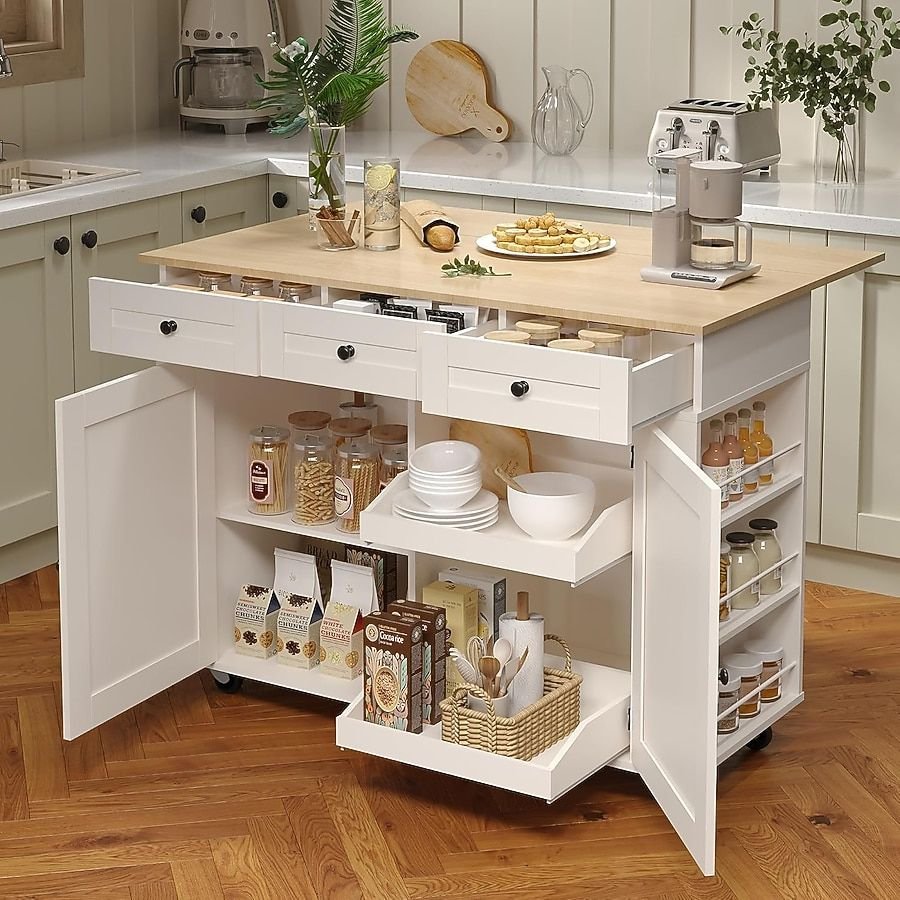
If you’ve already got a cart and it’s not pulling its weight, the fix is usually rearrangement, not replacement. Move the heaviest items to the bottom shelf. It sounds obvious and it’s the thing almost everyone skips, because the bottom shelf is annoying to load and even more annoying to bend down for. But top-heavy carts tip, and they tip at the worst moment, usually while you’re holding something hot.
Group by task rather than by category. A shelf dedicated to “everything I need for coffee” works better than a shelf labeled “small appliances,” because you’ll actually use it the way it’s organized instead of hunting across three shelves for the filters.
And if a kitchen has no real pantry at all, which is more common in studio setups than most people expect, a cart can genuinely cover that gap, but only with a system behind it. We laid out a fuller version of that system in small kitchen has no pantry: now what, including how to rotate stock so the cart doesn’t quietly turn into a dumping ground for things you forgot you bought. For kitchens that have exactly one cabinet to work with and nothing else, one cabinet pantry system: how to build it walks through how to make that single space carry more weight than it was ever designed to.
That last part happens more than anyone admits. A cart starts organized and ends up holding three half-used bags of flour and a charger nobody claims. It’s not a design failure. It’s just what happens to flat surfaces in small spaces if nobody checks them once a month.
FAQs
Do rolling carts actually hold up to daily kitchen use, or are they mostly for show? It depends almost entirely on the wheel quality and the shelf material. Carts with locking caster wheels and a solid (not wire) bottom shelf hold up well for years. Cheaper wire carts with plastic wheels tend to wobble and crack within a year of daily moves.
Can a cart go in front of an appliance if I only move it occasionally? Generally no, even occasional blocking of an oven or dishwasher door creates a habit of working around it, and that habit usually means the appliance gets used less over time. It’s better to find a spot that doesn’t require a negotiation every time.
What’s the actual weight limit I should look for if I plan to store cookware on it? Look for a stated capacity of at least 150 pounds across all shelves combined if cast iron or a stand mixer is involved. Most decorative-style carts top out closer to 50 to 75 pounds, which sounds like plenty until you load three pots on one shelf.
Is a butcher block top cart worth it if I already have a small amount of counter space? Usually yes, because it adds a dedicated prep zone you can roll away after, rather than competing for your existing counter every single time you cook. The tradeoff is upkeep. Butcher block needs occasional oiling to avoid drying out and cracking.
How do I know if my kitchen is too small for a cart at all? If your main walkway is under 30 inches wide at its tightest point, a cart of almost any size is going to interfere with movement rather than help it. In that case, wall-mounted or door-mounted storage tends to solve more problems with less friction, and small kitchen storage ideas worth testing in 2026 has a wider rundown of what to try instead.
We keep coming back to the same conclusion every time we test a new one: the cart is rarely the deciding factor. The kitchen’s traffic pattern is. Get that right first, and almost any reasonably built cart will earn its spot. You can find more breakdowns like this one across the site at the full Tiny Kitchen Living archive.