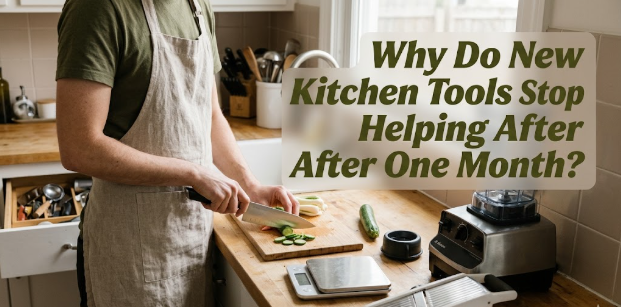
Most kitchen gadgets don’t get returned. They get buried. Three weeks after the box arrives, the garlic press is in the bottom drawer under a takeout menu, and you’re back to mincing with a knife. This isn’t a willpower problem. It’s a design and placement problem, and once you see why it happens, you’ll start noticing it everywhere in your own kitchen.
At Tiny Kitchen Living, we get versions of this question constantly: “I bought the thing everyone recommended and now I never use it, what’s wrong with me?” Nothing is wrong with you. The tool failed a test it was never built to pass.
- The Tool Was Never the Real Solution
A new tool almost always solves a single, narrow task really well. A julienne peeler cuts perfect matchstick carrots. An avocado slicer does exactly one job. The problem is that small kitchens don’t have isolated tasks, they have one continuous workflow, and any tool that doesn’t fit into that flow becomes friction instead of help.
When a tool requires you to dig it out, wash it separately, and put it back in a spot that isn’t where you’re already standing, your brain quietly recalculates the cost. After enough repetitions, “just use the knife” wins, even if the knife is technically slower. Efficiency on paper and efficiency in a cramped galley kitchen are not the same thing.
- Storage Distance Predicts Usage More Than Quality Does
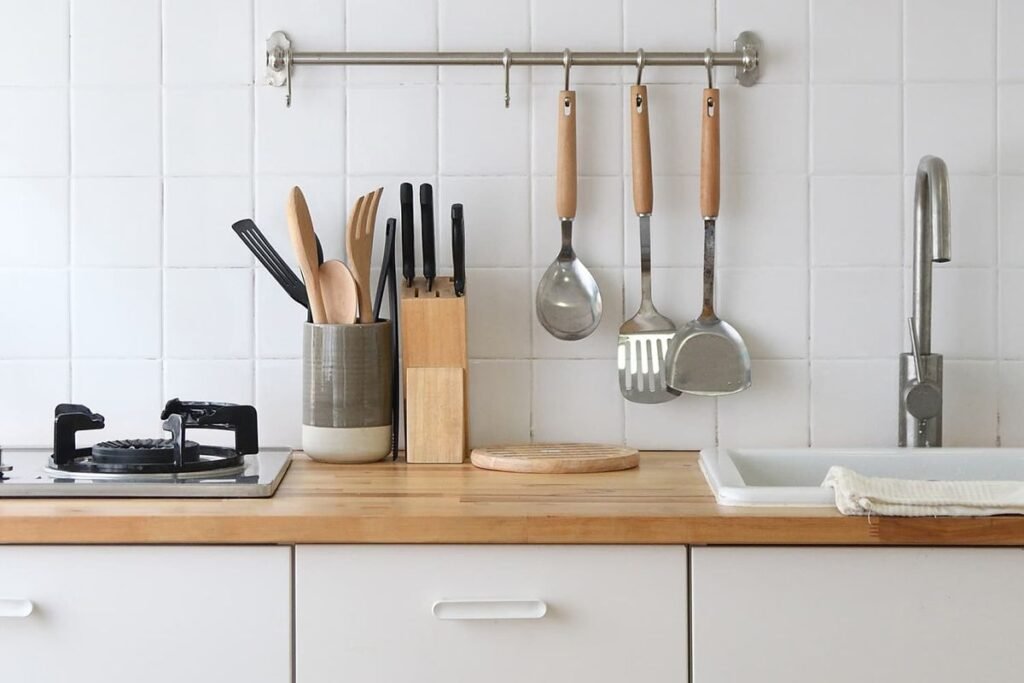
This is the part people underestimate. A tool stored more than one arm’s reach from where you actually cook gets used less, almost regardless of how good it is. We’ve watched this play out in dozens of reader kitchens: the cheap, slightly ugly spatula that lives in the utensil crock by the stove gets used daily. The beautifully designed one in a drawer across the room becomes decorative.
If you’ve already read Shelf Risers vs Drawer Organizers: Which Helps More, you know this is the same principle behind why some storage systems get adopted and others don’t. Storage that shortens the distance between “I need this” and “I’m using this” wins. Storage that adds a step loses, slowly and quietly, over weeks.
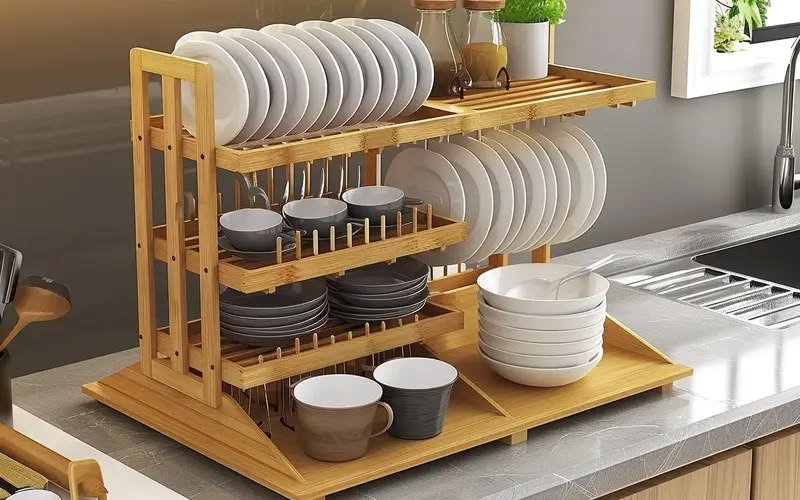
- New Tools Compete With Habits That Already Won
Here’s where people usually go wrong: they assume a better tool will automatically replace an old habit. It won’t, not on its own. Your hands already know how to chop an onion with the knife you’ve used for two years. A new dicer requires you to learn a new motion, under time pressure, while dinner is happening. Most people will not voluntarily slow down a Tuesday night dinner to practice a new gadget, and that’s a reasonable choice, not a failure of discipline.
The tools that actually stick are the ones that require zero relearning. A better cutting board. A sharper knife. A second small pan so you’re not constantly washing the one you have mid-meal. These succeed because they slot into a motion you already perform, instead of asking you to build a new one from scratch.
- Multi-Purpose Tools Lose to Single-Purpose Habits, Most of the Time
There’s a common belief that buying fewer, more multi-purpose tools automatically solves the clutter-and-abandonment cycle. It sounds right, and it’s wrong more often than it’s right. A tool that does five things adequately usually gets used for the one thing it does best, and the other four functions go untouched. The immersion blender that’s also supposed to whisk, chop, and froth milk often just becomes the soup blender, full stop.
What actually changes behavior is matching the tool to a task you already repeat several times a week, not to a task you might theoretically do someday. If you batch-cook grains every Sunday, a rice cooker earns its space immediately. If you almost never make soup, the immersion blender attachment kit was always going to be the thing in the back of the cabinet.
| Why It Gets Abandoned | What Actually Fixes It |
|---|---|
| Stored more than one step from the cooking zone | Move it within arm’s reach of where it’s used, or remove it |
| Requires learning a new hand motion under time pressure | Practice once during a low-stakes, no-deadline cook |
| Solves a task you do rarely | Keep it only if the task happens weekly, otherwise pass it on |
| Needs separate hand-washing mid-meal | Choose tools that go straight into the existing dish pile |
| Marketed as multi-purpose but used for one function | Buy for the single task you actually repeat |
- The Counter and Drawer Space You Don’t Have Makes This Worse
In a full-size kitchen, an underused tool just sits there, mildly annoying but harmless. In a small one, it’s actively in the way of something else. This is part of why we’ve written so much about Counter Space Killers: 5 Habits to Break Now, because the math is unforgiving when your whole counter is the size of a cutting board. Every tool that loses the competition for space is also stealing space from something that would’ve been used daily.
The honest move, and the one we’d actually recommend, is a one-month trial shelf. Anything new goes there first, at true arm’s reach, no exceptions. If it hasn’t earned a permanent spot by the thirty-day mark, it goes back in the box or out the door. This isn’t about being harsh with yourself. It’s about letting real usage decide instead of letting good intentions decide, because good intentions lose every time to a tired Tuesday night.
If your kitchen setup is closer to “barely any storage at all” than “drawers that just need organizing,” it’s worth reading One Cabinet Pantry System: How to Build It before buying anything new. Solving the bigger storage problem first changes which tools are even worth considering.
A Quick Note on Sunk Cost
People hang onto unused tools longer than makes sense because the purchase already happened, and that feels like it should count for something. It doesn’t, not in terms of the decision in front of you now. The thirty dollars is already spent either way. The only question that matters going forward is whether the object earns its square inch of your counter or drawer this month, not whether it deserves to for sentimental or financial reasons.
And if you’re rethinking your approach to small-kitchen tools more broadly, not just one gadget at a time, Small Kitchen Storage Ideas Worth Testing in 2026 is a reasonable next stop, since it covers a lot of the same ground from a wider angle.
Most of what we’ve laid out here isn’t really about gadgets at all. It’s about being honest with how your hands actually move on a weeknight, and letting that decide what stays.
Frequently Asked Questions
Is it normal to stop using a tool I was excited about? Yes, and it happens to almost everyone at some point. It usually means the tool didn’t fit your actual cooking rhythm, not that you bought badly or lack discipline.
Should I try to force myself to use a tool more before giving up on it? Give it one genuine low-pressure attempt, ideally on a weekend with no time crunch. If it still feels slower or more awkward than your current habit after that, it’s fine to retire it.
Does buying cheaper tools fix the abandonment problem? Not directly. Price has very little to do with whether a tool gets used. Placement and fit with your existing habits matter far more than cost.
What’s the single biggest factor in whether a new tool sticks? Distance from where you’re already standing when you cook. Tools within true arm’s reach of the stove or main prep spot get used. Tools even one cabinet away tend to fade out within weeks.
Is it worth keeping a tool “just in case” I need it someday? Generally no, especially in a small kitchen where every “just in case” item is actively displacing something used weekly. If the need is rare enough to be hypothetical, it’s usually rare enough to skip.
You can browse the full archive of storage and cooking guides on the Tiny Kitchen Living sitemap if you want to keep working through this room by room.